Department of Cancer Biology, Dana-Farber Cancer Institute, Boston, MA, USA.
Wiley Interdiscip Rev Syst Biol Med. 2012 Mar-Apr;4(2):141-62. doi: 10.1002/wsbm.166. Epub 2012 Jan 9.
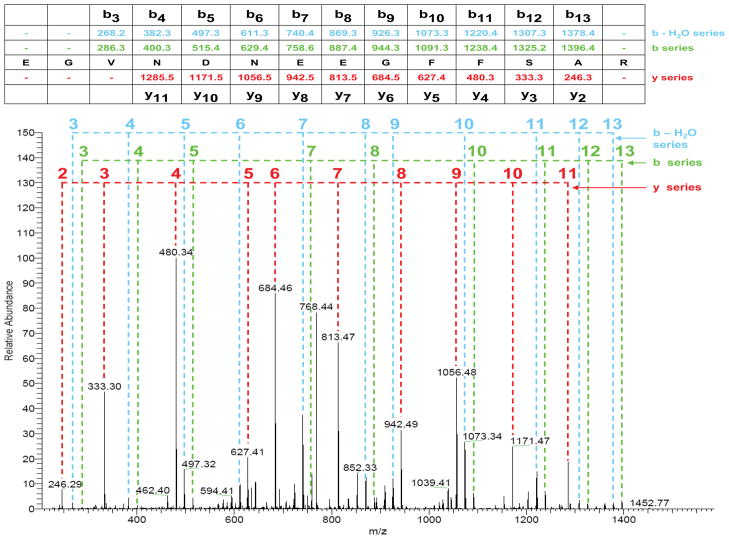
Mass spectrometry has become the method of choice for proteome characterization, including multicomponent protein complexes (typically tens to hundreds of proteins) and total protein expression (up to tens of thousands of proteins), in biological samples. Qualitative sequence assignment based on MS/MS spectra is relatively well-defined, while statistical metrics for relative quantification have not completely stabilized. Nonetheless, proteomics studies have progressed to the point whereby various gene-, pathway-, or network-oriented computational frameworks may be used to place mass spectrometry data into biological context. Despite this progress, the dynamic range of protein expression remains a significant hurdle, and impedes comprehensive proteome analysis. Methods designed to enrich specific protein classes have emerged as an effective means to characterize enzymes or other catalytically active proteins that are otherwise difficult to detect in typical discovery mode proteomics experiments. Collectively, these approaches will facilitate identification of biomarkers and pathways relevant to diagnosis and treatment of human disease.
质谱分析已成为蛋白质组学研究的首选方法,包括对生物样本中多组分蛋白质复合物(通常包含数十到数百种蛋白质)和总蛋白质表达(多达数万种蛋白质)的分析。基于 MS/MS 谱的定性序列分配相对明确,而相对定量的统计指标尚未完全稳定。尽管如此,蛋白质组学研究已经取得了进展,各种基于基因、途径或网络的计算框架可用于将质谱数据置于生物学背景下。尽管取得了这一进展,但蛋白质表达的动态范围仍然是一个重大障碍,阻碍了全面的蛋白质组分析。旨在富集特定蛋白质类别的方法已成为一种有效的手段,可用于鉴定在典型的发现模式蛋白质组学实验中难以检测的酶或其他具有催化活性的蛋白质。这些方法共同将有助于鉴定与人类疾病的诊断和治疗相关的生物标志物和途径。