Laboratory of Infectious Diseases, National Institute of Allergy and Infectious Diseases, National Institutes of Health, Bethesda, Maryland, United States of America.
PLoS Pathog. 2011 Dec;7(12):e1002443. doi: 10.1371/journal.ppat.1002443. Epub 2011 Dec 29.
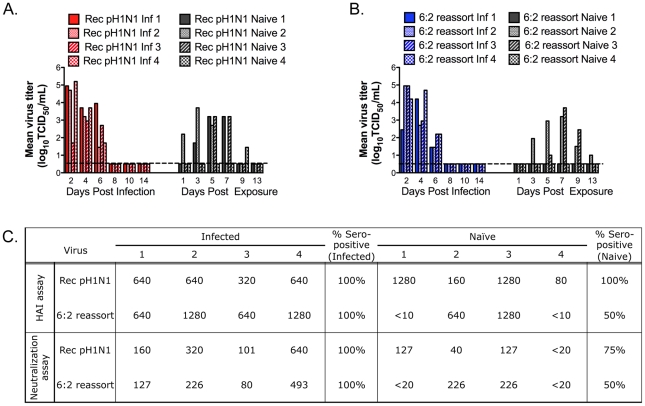
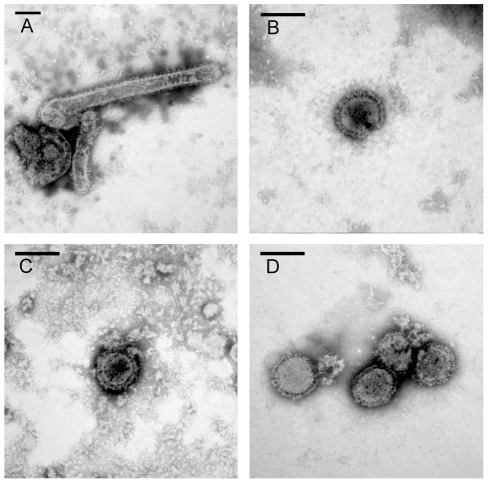
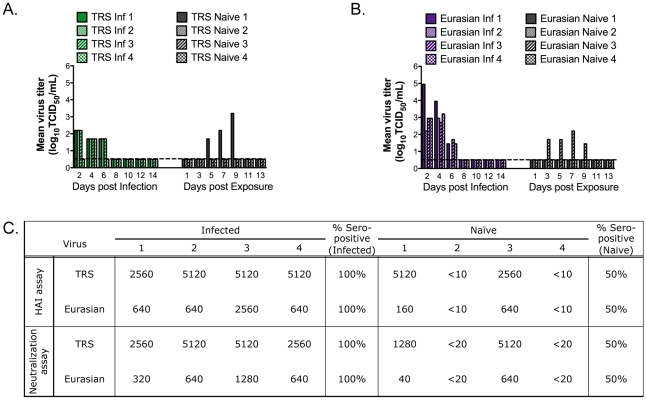
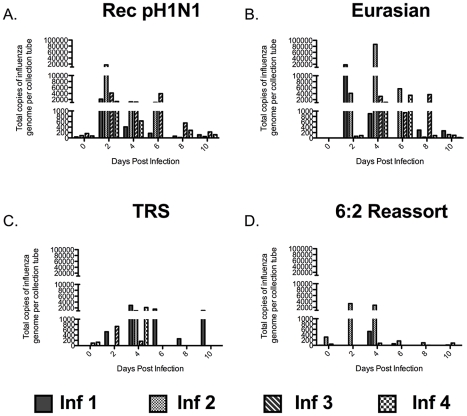
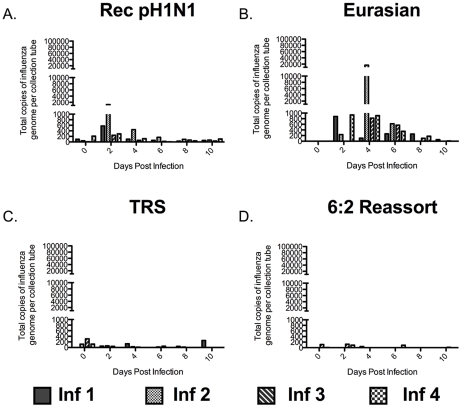
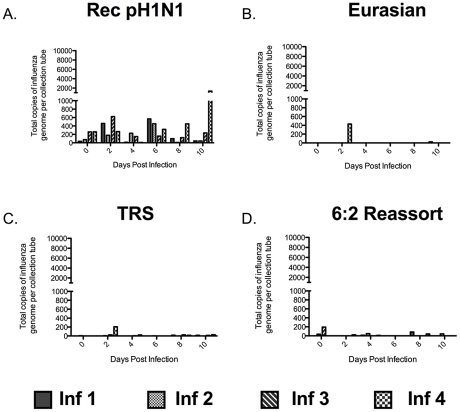
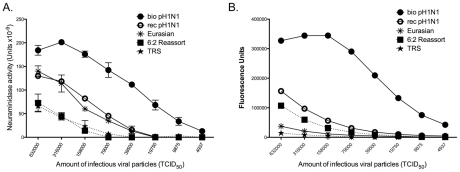
The epidemiological success of pandemic and epidemic influenza A viruses relies on the ability to transmit efficiently from person-to-person via respiratory droplets. Respiratory droplet (RD) transmission of influenza viruses requires efficient replication and release of infectious influenza particles into the air. The 2009 pandemic H1N1 (pH1N1) virus originated by reassortment of a North American triple reassortant swine (TRS) virus with a Eurasian swine virus that contributed the neuraminidase (NA) and M gene segments. Both the TRS and Eurasian swine viruses caused sporadic infections in humans, but failed to spread from person-to-person, unlike the pH1N1 virus. We evaluated the pH1N1 and its precursor viruses in a ferret model to determine the contribution of different viral gene segments on the release of influenza virus particles into the air and on the transmissibility of the pH1N1 virus. We found that the Eurasian-origin gene segments contributed to efficient RD transmission of the pH1N1 virus likely by modulating the release of influenza viral RNA-containing particles into the air. All viruses replicated well in the upper respiratory tract of infected ferrets, suggesting that factors other than viral replication are important for the release of influenza virus particles and transmission. Our studies demonstrate that the release of influenza viral RNA-containing particles into the air correlates with increased NA activity. Additionally, the pleomorphic phenotype of the pH1N1 virus is dependent upon the Eurasian-origin gene segments, suggesting a link between transmission and virus morphology. We have demonstrated that the viruses are released into exhaled air to varying degrees and a constellation of genes influences the transmissibility of the pH1N1 virus.
流感大流行和流感病毒在流行病学上的成功依赖于通过呼吸道飞沫在人与人之间高效传播的能力。流感病毒通过呼吸道飞沫(RD)传播需要有效复制并将传染性流感颗粒释放到空气中。2009 年大流行的 H1N1(pH1N1)病毒源于北美三重重配猪(TRS)病毒与欧亚猪病毒的重组,后者贡献了神经氨酸酶(NA)和 M 基因片段。TRS 和欧亚猪病毒都在人类中引起了散发性感染,但与 pH1N1 病毒不同,它们无法在人与人之间传播。我们在雪貂模型中评估了 pH1N1 及其前体病毒,以确定不同病毒基因片段对流感病毒颗粒释放到空气中的贡献以及 pH1N1 病毒的传播能力。我们发现,欧亚起源的基因片段通过调节含流感病毒 RNA 的颗粒释放到空气中,有助于 pH1N1 病毒的高效 RD 传播。所有病毒在感染雪貂的上呼吸道中均能很好地复制,这表明除病毒复制外,还有其他因素对流感病毒颗粒的释放和传播很重要。我们的研究表明,含流感病毒 RNA 的颗粒释放到空气中与 NA 活性的增加相关。此外,pH1N1 病毒的多态表型取决于欧亚起源的基因片段,这表明传播和病毒形态之间存在联系。我们已经证明,病毒以不同程度释放到呼出的空气中,并且一组基因会影响 pH1N1 病毒的传染性。