Shinomiya Hiroto
Department of Immunology and Host Defenses, Ehime University Graduate School of Medicine, Toon, Ehime 791-0295, Japan.
Int J Cell Biol. 2012;2012:213492. doi: 10.1155/2012/213492. Epub 2012 Jan 4.
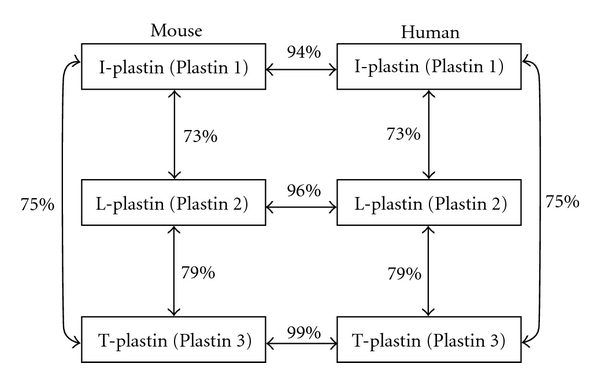
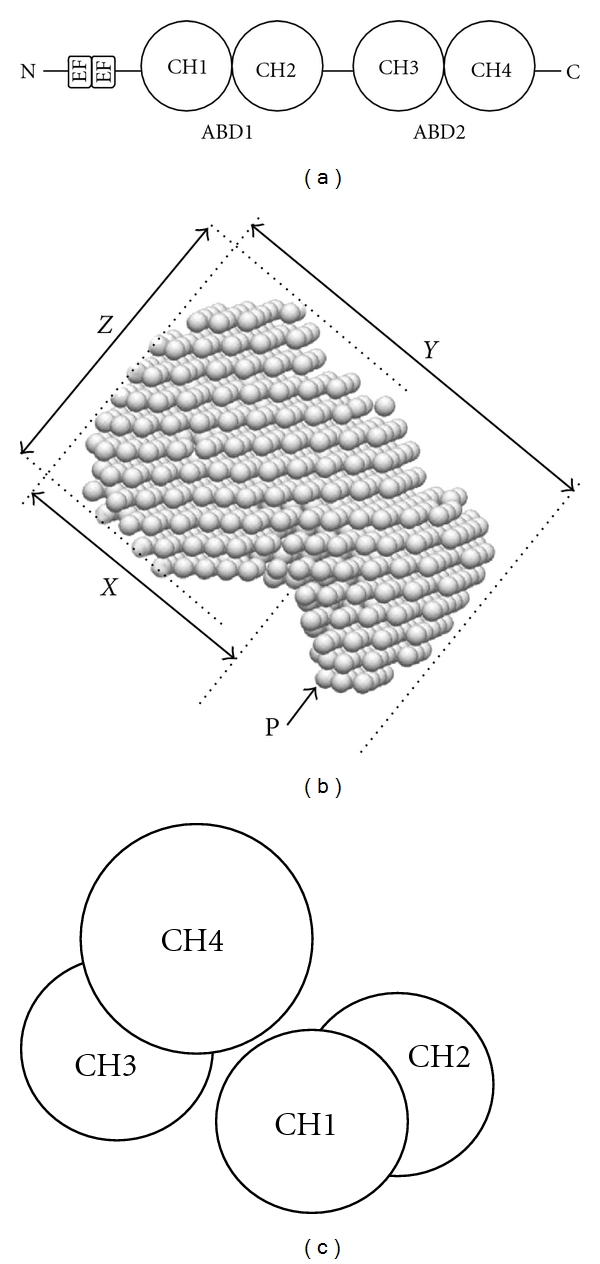
Sophisticated regulation of the actin cytoskeleton by a variety of actin-binding proteins is essential for eukaryotic cells to perform their diverse functions. The plastin (also know, as fimbrin) protein family belongs to actin-bundling proteins, and the protein family is evolutionarily conserved and expressed in yeast, plant, and animal cells. Plastins are characterized by EF-hand Ca(2+)-binding domains and actin-binding domains and can cross-link actin filaments into higher-order assemblies like bundles. Three isoforms have been identified in mammals. T-plastin is expressed in cells from solid tissues, such as neurons in the brain. I-plastin expression is restricted to intestine and kidney; the isoform plays a vital role in the function of absorptive epithelia in these organs. L-plastin is expressed in hematopoietic cell lineages and in many types of cancer cells; the isoform is thus considered to be a useful biomarker for cancer.
多种肌动蛋白结合蛋白对肌动蛋白细胞骨架进行精细调控,这对于真核细胞执行其多样功能至关重要。丝束蛋白(也称为fimbrin)蛋白家族属于肌动蛋白成束蛋白,该蛋白家族在进化上保守,在酵母、植物和动物细胞中均有表达。丝束蛋白的特征在于EF手型钙离子结合结构域和肌动蛋白结合结构域,并且能够将肌动蛋白丝交联成更高阶的组装体,如束状结构。在哺乳动物中已鉴定出三种亚型。T-丝束蛋白在实体组织的细胞中表达,如大脑中的神经元。I-丝束蛋白的表达局限于肠道和肾脏;该亚型在这些器官的吸收上皮功能中起着至关重要的作用。L-丝束蛋白在造血细胞谱系和多种癌细胞中表达;因此,该亚型被认为是一种有用的癌症生物标志物。