Advanced Centre for Treatment Research and Education in Cancer Tata Memorial Centre (ACTREC), Kharghar, Navi Mumbai, India.
BMC Cancer. 2012 Jan 20;12:32. doi: 10.1186/1471-2407-12-32.
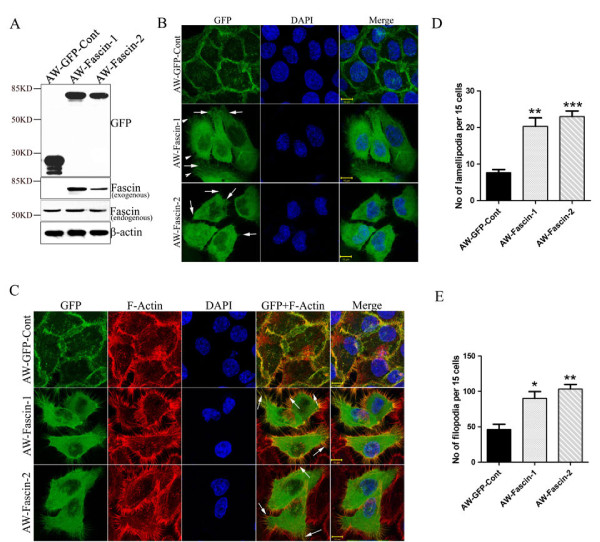
Fascin is a globular actin cross-linking protein, which plays a major role in forming parallel actin bundles in cell protrusions and is found to be associated with tumor cell invasion and metastasis in various type of cancers including oral squamous cell carcinoma (OSCC). Previously, we have demonstrated that fascin regulates actin polymerization and thereby promotes cell motility in K8-depleted OSCC cells. In the present study we have investigated the role of fascin in tumor progression of OSCC.
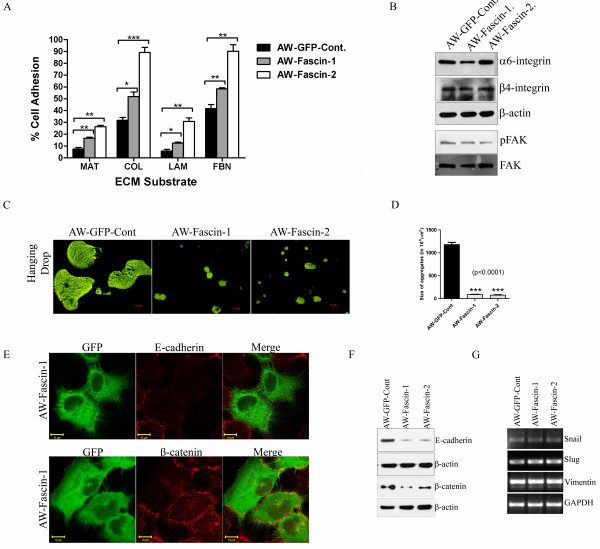
To understand the role of fascin in OSCC development and/or progression, fascin was overexpressed along with vector control in OSCC derived cells AW13516. The phenotype was studied using wound healing, Boyden chamber, cell adhesion, Hanging drop, soft agar and tumorigenicity assays. Further, fascin expression was examined in human OSCC samples (N = 131) using immunohistochemistry and level of its expression was correlated with clinico-pathological parameters of the patients.
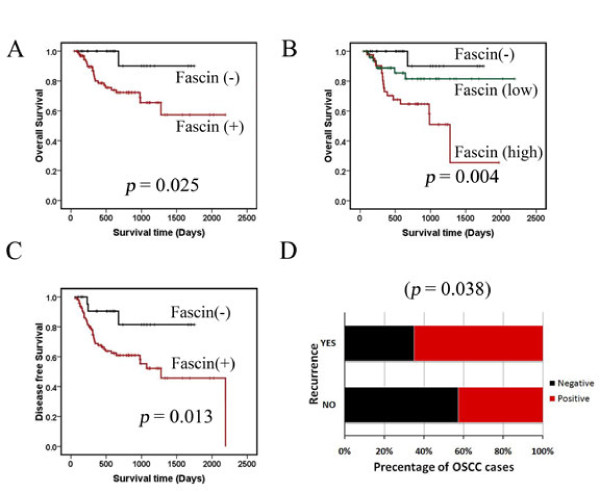
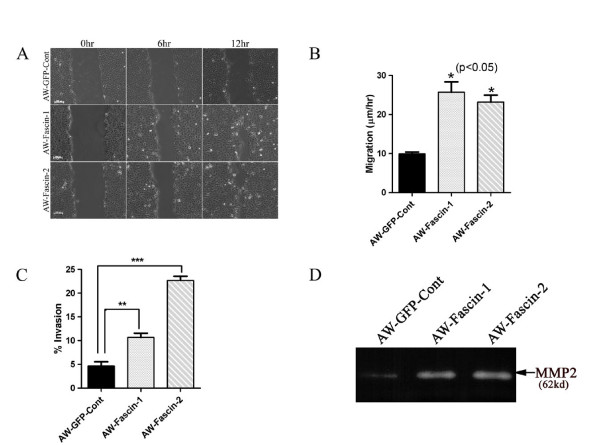
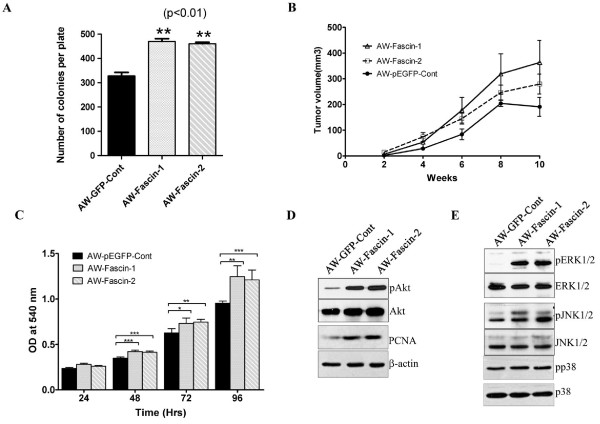
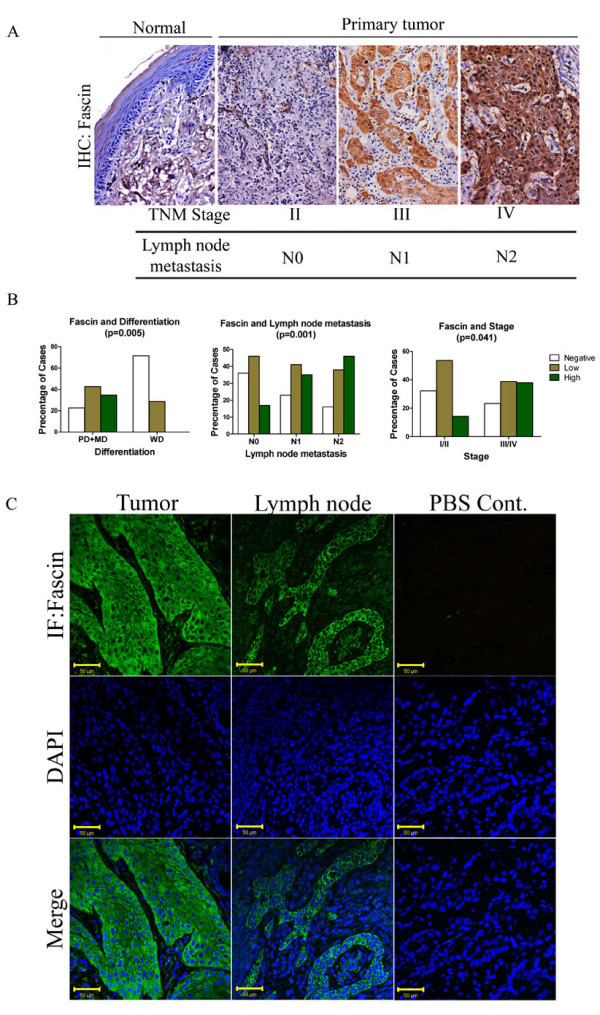
Fascin overexpression in OSCC derived cells led to significant increase in cell migration, cell invasion and MMP-2 activity. In addition these cells demonstrated increased levels of phosphorylated AKT, ERK1/2 and JNK1/2. Our in vitro results were consistent with correlative studies of fascin expression with the clinico-pathological parameters of the OSCC patients. Fascin expression in OSCC showed statistically significant correlation with increased tumor stage (P = 0.041), increased lymph node metastasis (P = 0.001), less differentiation (P = 0.005), increased recurrence (P = 0.038) and shorter survival (P = 0.004) of the patients.
In conclusion, our results indicate that fascin promotes tumor progression and activates AKT and MAPK pathways in OSCC-derived cells. Further, our correlative studies of fascin expression in OSCC with clinico-pathological parameters of the patients indicate that fascin may prove to be useful in prognostication and treatment of OSCC.
Fascin 是一种球状肌动蛋白交联蛋白,在细胞突起中形成平行肌动蛋白束中起主要作用,并且在包括口腔鳞状细胞癌(OSCC)在内的各种类型的癌症中与肿瘤细胞的侵袭和转移有关。先前,我们已经证明 fascin 调节肌动蛋白聚合,从而促进 K8 耗尽的 OSCC 细胞的细胞迁移。在本研究中,我们研究了 fascin 在 OSCC 肿瘤进展中的作用。
为了了解 fascin 在 OSCC 发展和/或进展中的作用,我们在源自 OSCC 的细胞 AW13516 中与载体对照一起过表达 fascin。使用划痕愈合、Boyden 室、细胞黏附、悬滴、软琼脂和致瘤性测定研究表型。进一步,使用免疫组织化学检查人 OSCC 样本(N = 131)中的 fascin 表达,并将其表达水平与患者的临床病理参数相关联。
OSCC 衍生细胞中 fascin 的过表达导致细胞迁移、细胞侵袭和 MMP-2 活性显著增加。此外,这些细胞表现出磷酸化 AKT、ERK1/2 和 JNK1/2 的水平增加。我们的体外结果与 OSCC 患者 fascin 表达与临床病理参数的相关性研究一致。OSCC 中的 fascin 表达与肿瘤分期增加(P = 0.041)、淋巴结转移增加(P = 0.001)、分化减少(P = 0.005)、复发增加(P = 0.038)和患者生存时间缩短(P = 0.004)呈统计学显著相关。
总之,我们的结果表明,fascin 在 OSCC 衍生细胞中促进肿瘤进展并激活 AKT 和 MAPK 途径。此外,我们对 OSCC 中 fascin 表达与患者临床病理参数的相关性研究表明,fascin 可能在 OSCC 的预后和治疗中证明是有用的。