Pak William L, Shino Shikoh, Leung Hung-Tat
Department of Biological Sciences, Purdue University, 915 W. State Street, West Lafayette, IN 47907-2054, USA.
J Neurogenet. 2012 Jun;26(2):216-37. doi: 10.3109/01677063.2011.642430. Epub 2012 Jan 27.
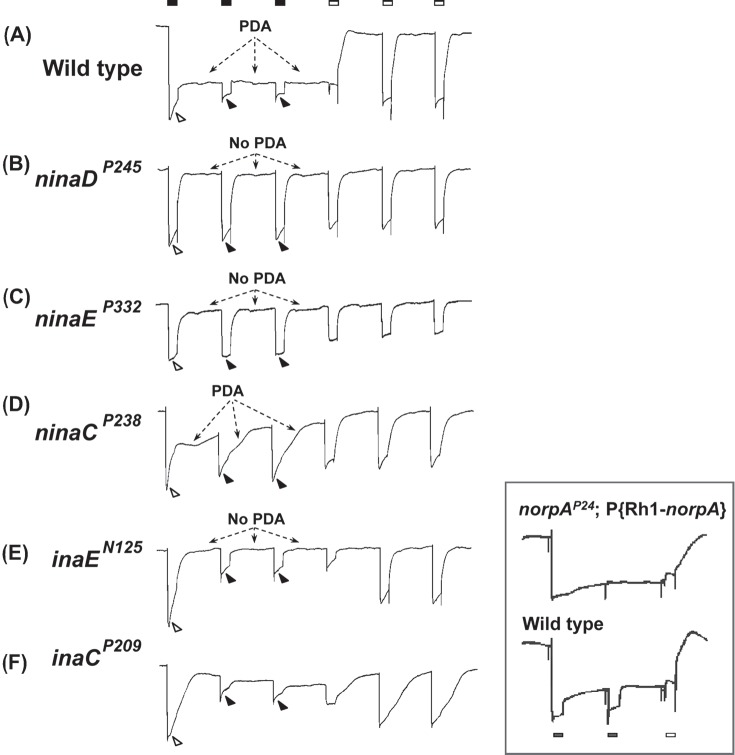
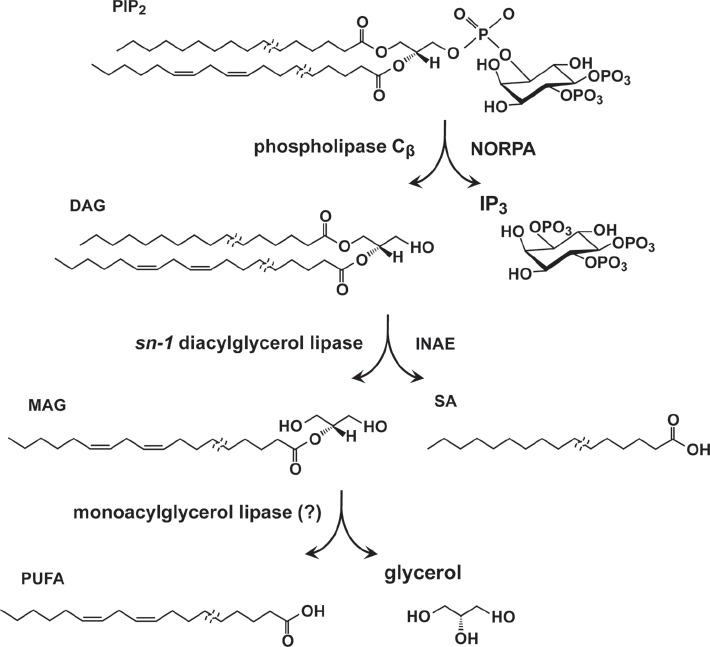
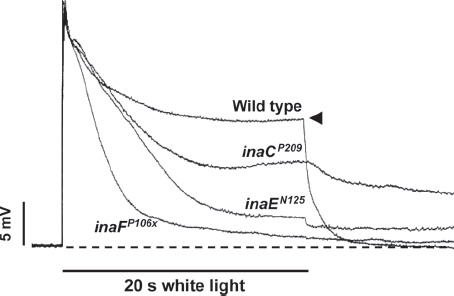
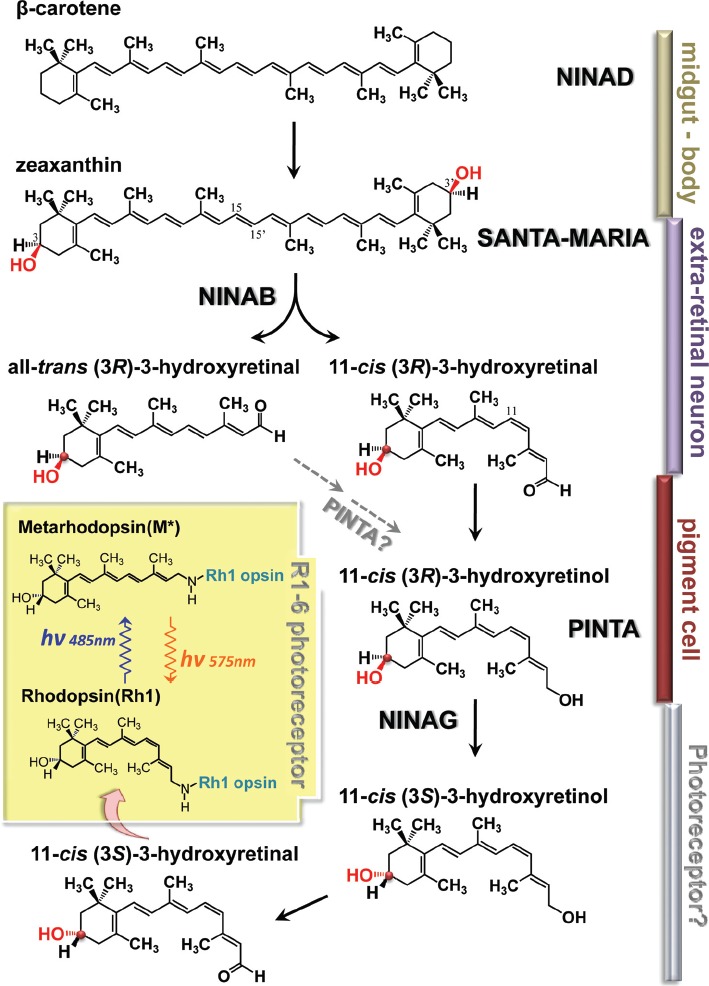
Our objective is to present a comprehensive view of the PDA (prolonged depolarizing afterpotential)-defective Drosophila mutants, nina's and ina's, from the discussion of the PDA and the PDA-based mutant screening strategy to summaries of the knowledge gained through the studies of mutants generated using the strategy. The PDA is a component of the light-evoked photoreceptor potential that is generated when a substantial fraction of rhodopsin is photoconverted to its active form, metarhodopsin. The PDA-based mutant screening strategy was adopted to enhance the efficiency and efficacy of ERG (electroretinogram)-based screening for identifying phototransduction-defective mutants. Using this strategy, two classes of PDA-defective mutants were identified and isolated, nina and ina, each comprising multiple complementation groups. The nina mutants are characterized by allele-dependent reduction in the major rhodopsin, Rh1, whereas the ina mutants display defects in some aspects of functions related to the transduction channel, TRP (transient receptor potential). The signaling proteins that have been identified and elucidated through the studies of nina mutants include the Drosophila opsin protein (NINAE), the chaperone protein for nascent opsin (NINAA), and the multifunctional protein, NINAC, required in multiple steps of the Drosophila phototransduction cascade. Also identified by the nina mutants are some of the key enzymes involved in the biogenesis of the rhodopsin chromophore. As for the ina mutants, they led to the discovery of the scaffold protein, INAD, responsible for the nucleation of the supramolecular signaling complex. Also identified by the ina mutants is one of the key members of the signaling complex, INAC (ePKC), and two other proteins that are likely to be important, though their roles in the signaling cascade have not yet been fully elucidated. In most of these cases, the protein identified is the first member of its class to be so recognized.
我们的目标是呈现对PDA(延长去极化后电位)缺陷型果蝇突变体nina和ina的全面观点,从对PDA及基于PDA的突变体筛选策略的讨论,到对通过使用该策略产生的突变体研究中所获知识的总结。PDA是光诱发光感受器电位的一个组成部分,当大部分视紫红质被光转化为其活性形式视紫红质时产生。基于PDA的突变体筛选策略被采用以提高基于视网膜电图(ERG)筛选的效率和效能,用于鉴定光转导缺陷型突变体。使用该策略,鉴定并分离出两类PDA缺陷型突变体,nina和ina,每类包含多个互补群。nina突变体的特征是主要视紫红质Rh1的等位基因依赖性减少,而ina突变体在与转导通道TRP(瞬时受体电位)相关的功能的某些方面表现出异常。通过对nina突变体的研究已鉴定并阐明的信号蛋白包括果蝇视蛋白(NINAE)、新生视蛋白的伴侣蛋白(NINAA)以及果蝇光转导级联反应多个步骤所需的多功能蛋白NINAC。nina突变体还鉴定出了一些参与视紫红质发色团生物合成的关键酶。至于ina突变体,它们导致发现了负责超分子信号复合物成核的支架蛋白INAD。ina突变体还鉴定出了信号复合物的关键成员之一INAC(ePKC)以及另外两个可能很重要的蛋白,尽管它们在信号级联反应中的作用尚未完全阐明。在大多数这些情况下,所鉴定的蛋白质是其所属类别中第一个被如此识别的成员。