Division of Respiratory and Critical Care Medicine, Department of Internal Medicine, Taichung Veterans General Hospital, Taichung, Taiwan.
Int J Antimicrob Agents. 2012 Mar;39(3):201-5. doi: 10.1016/j.ijantimicag.2011.11.014. Epub 2012 Jan 28.
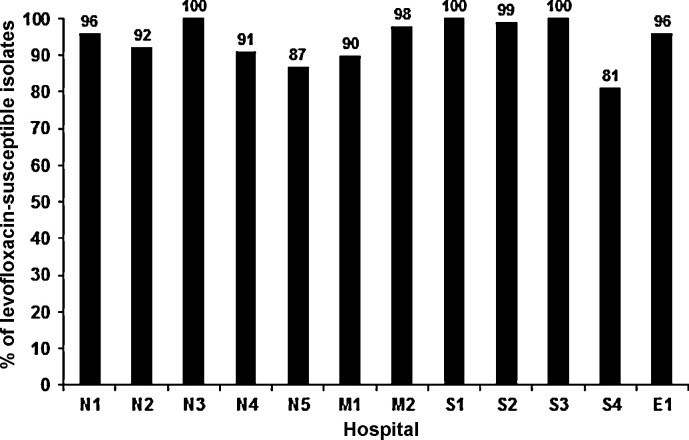
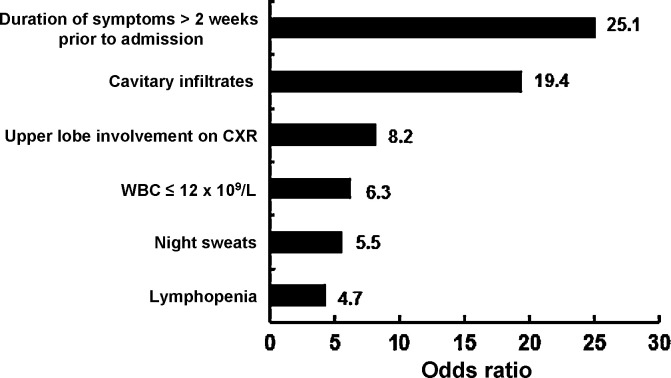
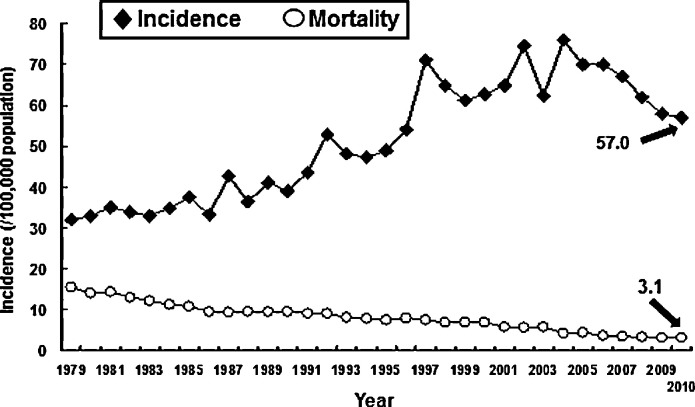
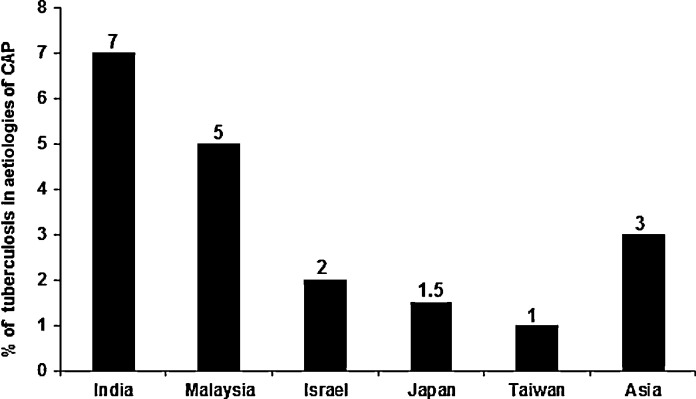
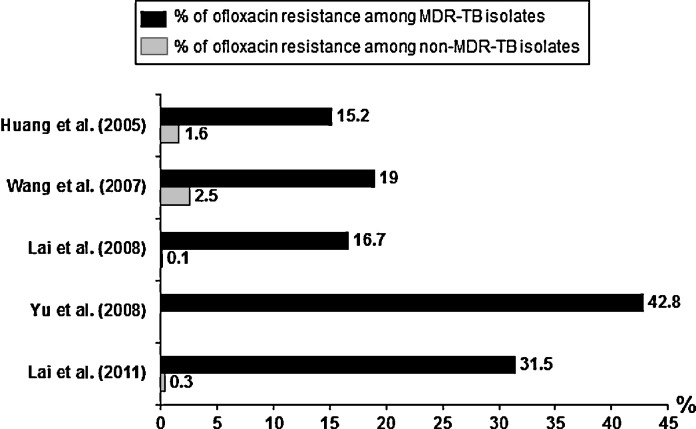
The role of fluoroquinolones (FQs) as empirical therapy for community-acquired pneumonia (CAP) remains controversial in countries with high tuberculosis (TB) endemicity owing to the possibility of delayed TB diagnosis and treatment and the emergence of FQ resistance in Mycobacterium tuberculosis. Although the rates of macrolide-resistant Streptococcus pneumoniae and amoxicillin/clavulanic acid-resistant Haemophilus influenzae have risen to alarming levels, the rates of respiratory FQ (RFQ) resistance amongst these isolates remain relatively low. It is reported that ca. 1-7% of CAP cases are re-diagnosed as pulmonary TB in Asian countries. A longer duration (≥ 7 days) of symptoms, a history of night sweats, lack of fever (> 38 °C), infection involving the upper lobe, presence of cavitary infiltrates, opacity in the lower lung without the presence of air, low total white blood cell count and the presence of lymphopenia are predictive of pulmonary TB. Amongst patients with CAP who reside in TB-endemic countries who are suspected of having TB, imaging studies as well as aggressive microbiological investigations need to be performed early on. Previous exposure to a FQ for >10 days in patients with TB is associated with the emergence of FQ-resistant M. tuberculosis isolates. However, rates of M. tuberculosis isolates with FQ resistance are significantly higher amongst multidrug-resistant M. tuberculosis isolates than amongst susceptible isolates. Consequently, in Taiwan and also in other countries with TB endemicity, a short-course (5-day) regimen of a RFQ is still recommended for empirical therapy for CAP patients if the patient is at low risk for TB.
氟喹诺酮类药物(FQs)作为经验性治疗社区获得性肺炎(CAP)的作用在结核病高发国家仍存在争议,因为这可能导致结核病的诊断和治疗延迟,以及结核分枝杆菌对 FQs 的耐药性出现。尽管耐大环内酯类肺炎链球菌和阿莫西林/克拉维酸耐药流感嗜血杆菌的发生率已上升到令人担忧的水平,但这些分离株中呼吸 FQ(RFQ)的耐药率仍然相对较低。据报道,亚洲国家约有 1-7%的 CAP 病例被重新诊断为肺结核。症状持续时间较长(≥7 天)、盗汗史、无发热(>38°C)、上叶感染、有空洞浸润的病灶、肺下部不透明但无气、总白细胞计数低和淋巴细胞减少与肺结核有关。在结核病高发国家居住的 CAP 患者中,如果怀疑患有结核病,需要尽早进行影像学检查和积极的微生物学检查。在结核病患者中,之前使用 FQ 超过 10 天与出现 FQ 耐药的结核分枝杆菌分离株有关。然而,在耐多药结核分枝杆菌分离株中,FQ 耐药的结核分枝杆菌分离株的发生率明显高于敏感分离株。因此,在台湾和其他结核病高发国家,如果患者患结核病的风险较低,仍推荐使用氟喹诺酮类药物的 5 天短程方案作为 CAP 患者经验性治疗的方案。