Department of Biomedical Engineering, Case Western Reserve University , 10900 Euclid Avenue, Cleveland, Ohio 44106, United States.
Biomacromolecules. 2012 Mar 12;13(3):706-13. doi: 10.1021/bm201596w. Epub 2012 Feb 22.
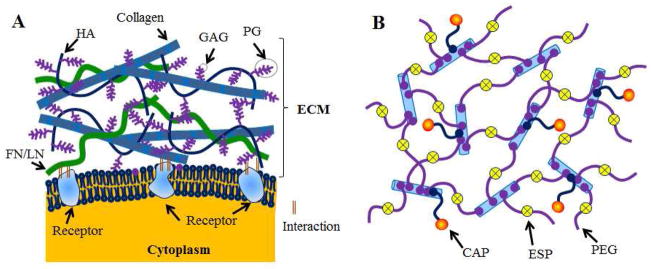
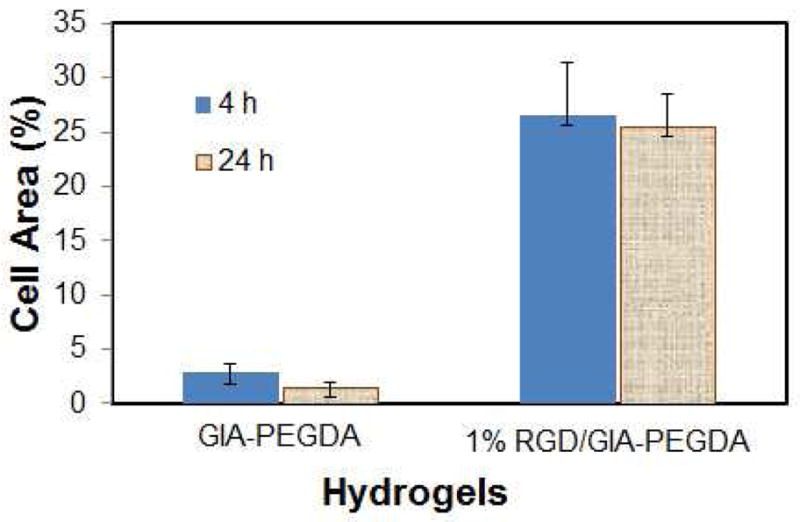
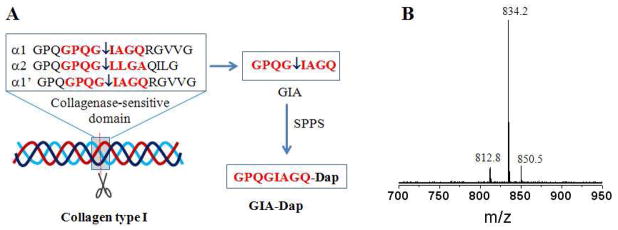
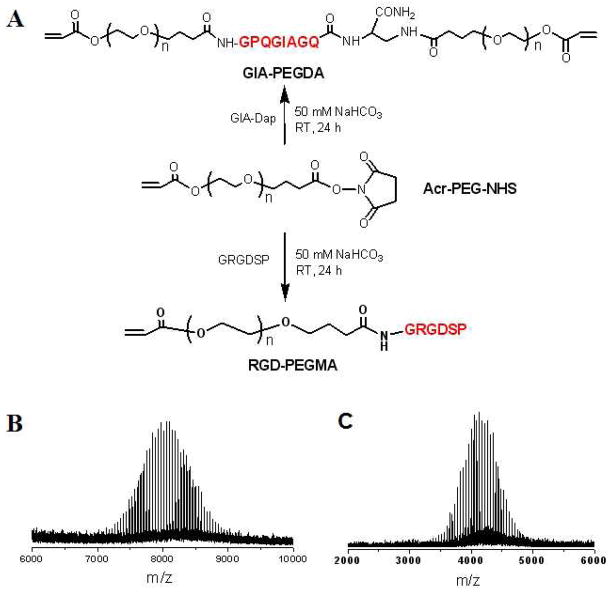
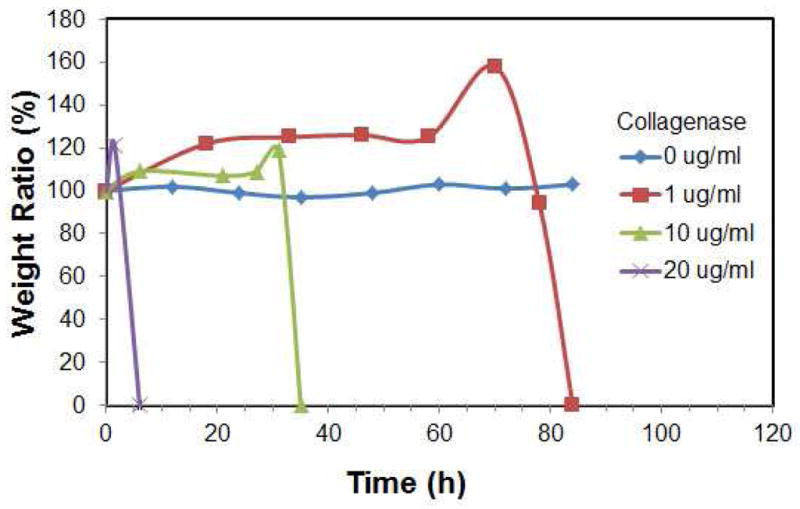
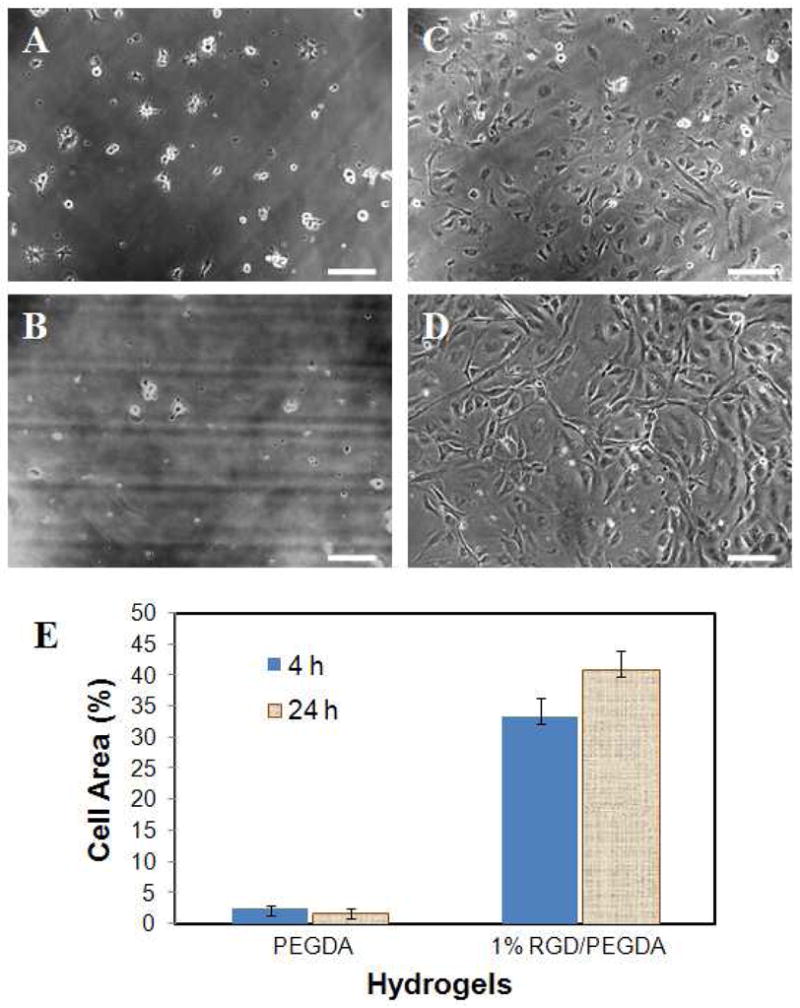
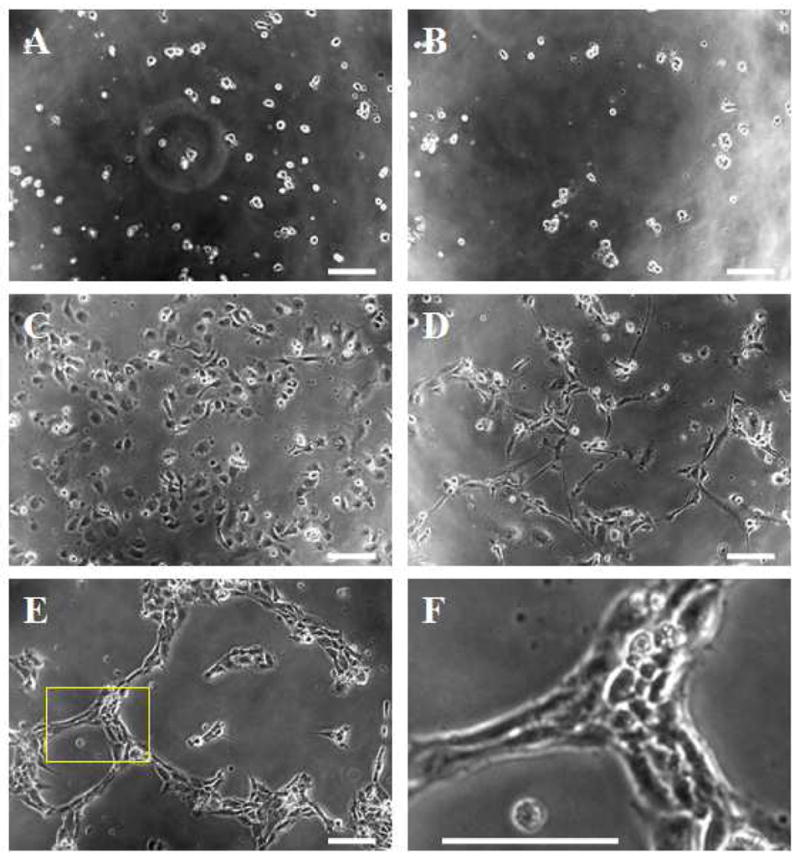
The extracellular matrix (ECM) is an attractive model for designing synthetic scaffolds with a desirable environment for tissue engineering. Here, we report on the synthesis of ECM-mimetic poly(ethylene glycol) (PEG) hydrogels for inducing endothelial cell (EC) adhesion and capillary-like network formation. A collagen type I-derived peptide GPQGIAGQ (GIA)-containing PEGDA (GIA-PEGDA) was synthesized with the collagenase-sensitive GIA sequence attached in the middle of the PEGDA chain, which was then copolymerized with RGD capped-PEG monoacrylate (RGD-PEGMA) to form biomimetic hydrogels. The hydrogels degraded in vitro with the rate dependent on the concentration of collagenase and also supported the adhesion of human umbilical vein ECs (HUVECs). Biomimetic RGD/GIA-PEGDA hydrogels with incorporation of 1% RGD-PEGDA into GIA-PEGDA hydrogels induced capillary-like organization when HUVECs were seeded on the hydrogel surface, while RGD/PEGDA and GIA-PEGDA hydrogels did not. These results indicate that both cell adhesion and biodegradability of scaffolds play important roles in the formation of capillary-like networks.
细胞外基质 (ECM) 是设计具有理想组织工程环境的合成支架的有吸引力的模型。在这里,我们报告了合成具有模仿细胞外基质的聚乙二醇 (PEG) 水凝胶,以诱导内皮细胞 (EC) 黏附和形成类似毛细血管的网络。一种含有胶原蛋白 I 衍生肽 GPQGIAGQ (GIA) 的 PEGDA (GIA-PEGDA) 是通过将胶原酶敏感的 GIA 序列连接到 PEGDA 链的中间合成的,然后与 RGD 封端的 PEG 单丙烯酸酯 (RGD-PEGMA) 共聚形成仿生水凝胶。水凝胶在体外降解,其降解速率取决于胶原酶的浓度,并且还支持人脐静脉内皮细胞 (HUVEC) 的黏附。当将 HUVEC 接种到水凝胶表面时,仿生 RGD/GIA-PEGDA 水凝胶中含有 1%的 RGD-PEGDA 会诱导类似毛细血管的组织,而 RGD/PEGDA 和 GIA-PEGDA 水凝胶则不会。这些结果表明支架的细胞黏附和生物降解性在形成类似毛细血管的网络中都起着重要作用。