Department of Biochemistry, and Center for RNA Biology, The Ohio State University, Columbus, OH 43210, USA.
Nucleic Acids Res. 2012 May;40(10):4666-80. doi: 10.1093/nar/gks013. Epub 2012 Jan 31.
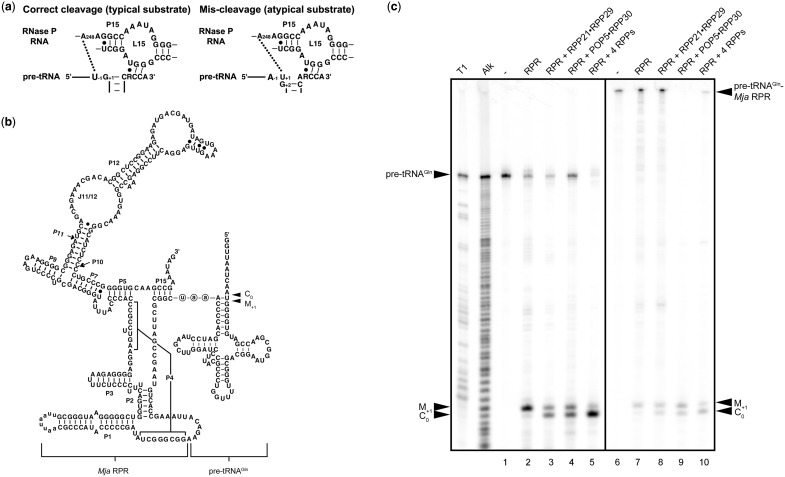
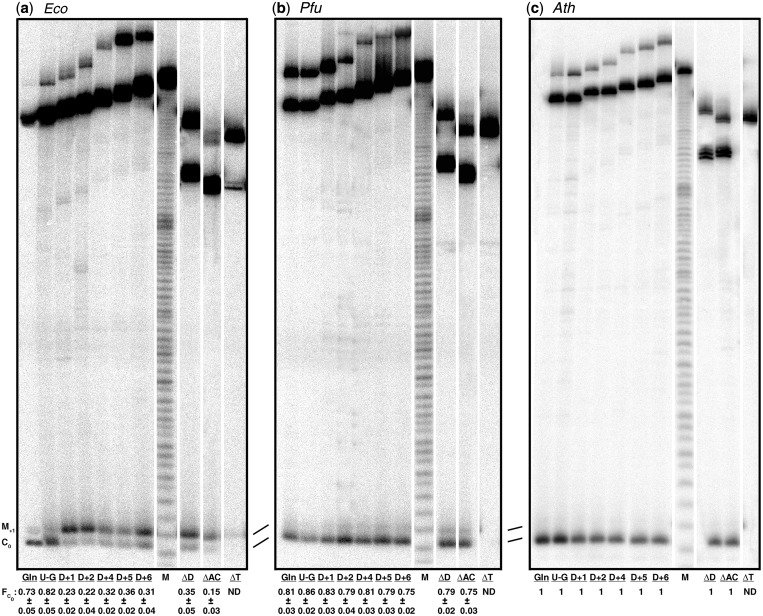
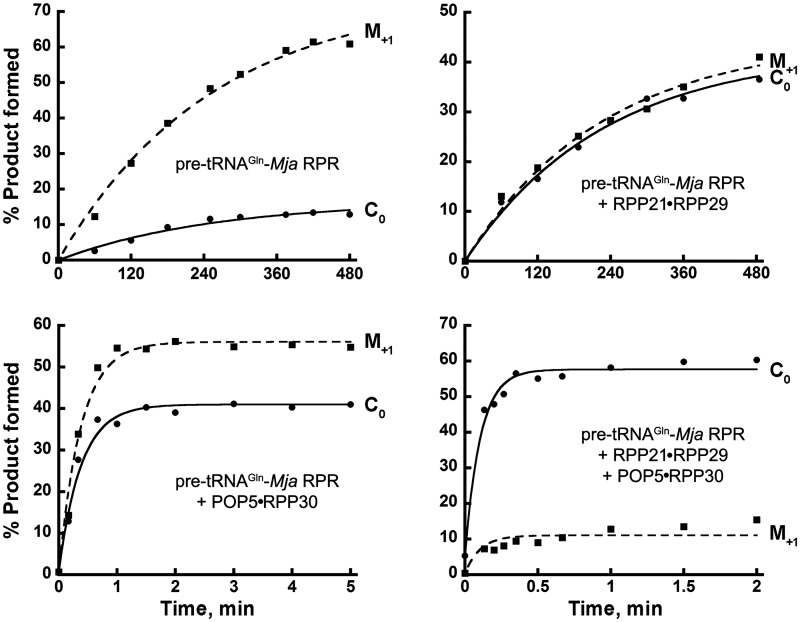
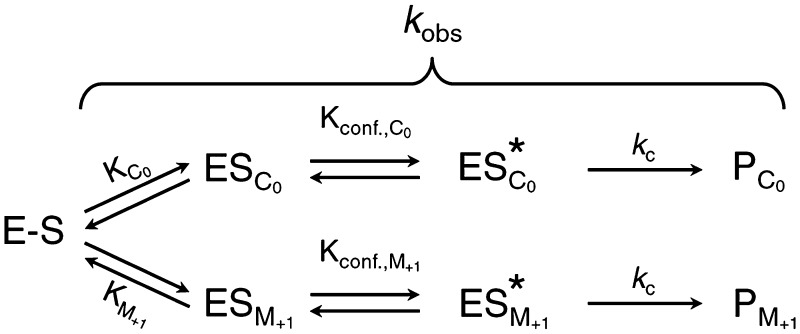
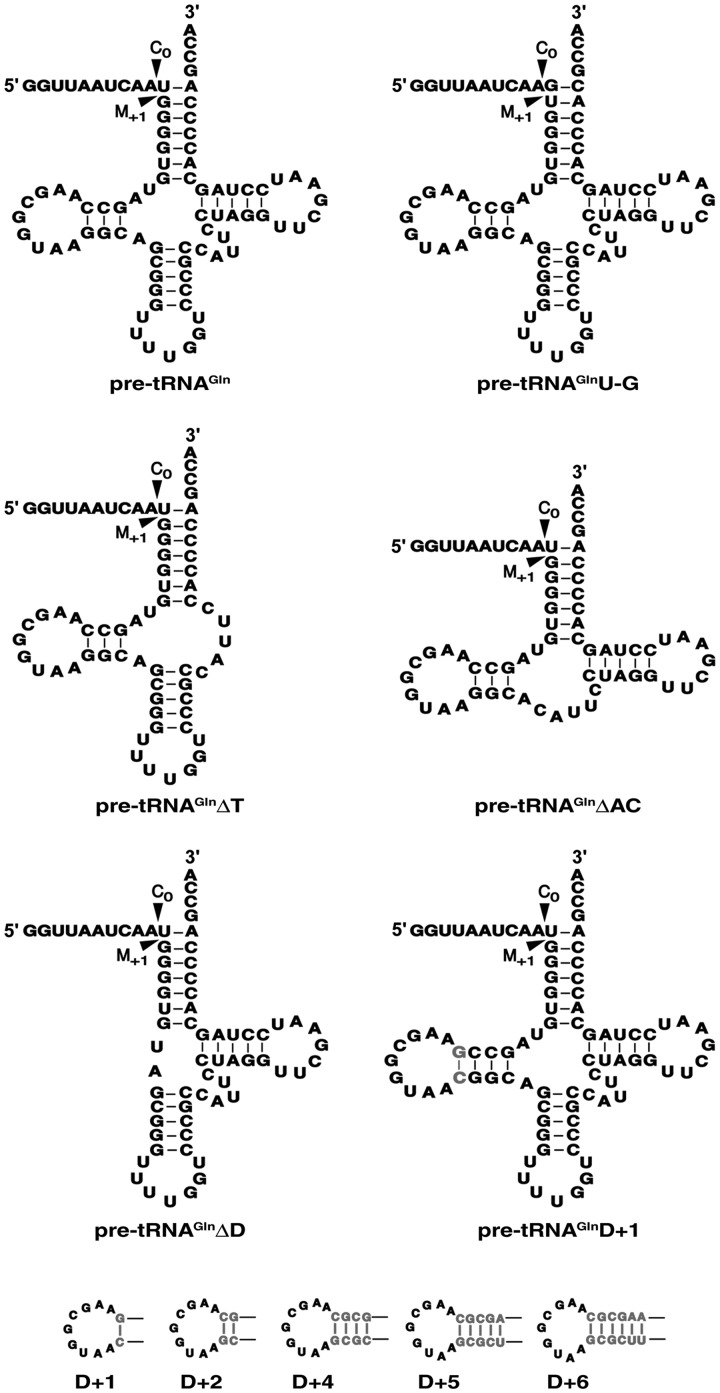
RNase P, which catalyzes tRNA 5'-maturation, typically comprises a catalytic RNase P RNA (RPR) and a varying number of RNase P proteins (RPPs): 1 in bacteria, at least 4 in archaea and 9 in eukarya. The four archaeal RPPs have eukaryotic homologs and function as heterodimers (POP5•RPP30 and RPP21•RPP29). By studying the archaeal Methanocaldococcus jannaschii RPR's cis cleavage of precursor tRNA(Gln) (pre-tRNA(Gln)), which lacks certain consensus structures/sequences needed for substrate recognition, we demonstrate that RPP21•RPP29 and POP5•RPP30 can rescue the RPR's mis-cleavage tendency independently by 4-fold and together by 25-fold, suggesting that they operate by distinct mechanisms. This synergistic and preferential shift toward correct cleavage results from the ability of archaeal RPPs to selectively increase the RPR's apparent rate of correct cleavage by 11,140-fold, compared to only 480-fold for mis-cleavage. Moreover, POP5•RPP30, like the bacterial RPP, helps normalize the RPR's rates of cleavage of non-consensus and consensus pre-tRNAs. We also show that archaeal and eukaryal RNase P, compared to their bacterial relatives, exhibit higher fidelity of 5'-maturation of pre-tRNA(Gln) and some of its mutant derivatives. Our results suggest that protein-rich RNase P variants might have evolved to support flexibility in substrate recognition while catalyzing efficient, high-fidelity 5'-processing.
RNase P 催化 tRNA 5'-成熟,通常由催化 RNase P RNA (RPR) 和数量不等的 RNase P 蛋白 (RPP) 组成:细菌中 1 个,古菌中至少 4 个,真核生物中 9 个。这四种古菌 RPP 都有真核生物的同源物,作为异源二聚体发挥功能(POP5•RPP30 和 RPP21•RPP29)。通过研究古菌 Methanocaldococcus jannaschii RPR 对缺乏某些用于底物识别的共识结构/序列的前体 tRNA(Gln)(pre-tRNA(Gln)) 的顺式切割,我们证明 RPP21•RPP29 和 POP5•RPP30 可以分别独立地将 RPR 的错误切割倾向恢复 4 倍,共同恢复 25 倍,这表明它们通过不同的机制发挥作用。这种协同的、偏向于正确切割的趋势是由于古菌 RPP 能够选择性地将 RPR 正确切割的表观速率提高 11,140 倍,而错误切割的提高仅为 480 倍。此外,POP5•RPP30 与细菌 RPP 一样,有助于使 RPR 对非共识和共识 pre-tRNA 的切割速率正常化。我们还表明,与细菌的对应物相比,古菌和真核生物的 RNase P 在 pre-tRNA(Gln)及其一些突变衍生物的 5'-成熟中具有更高的保真度。我们的研究结果表明,富含蛋白质的 RNase P 变体可能已经进化为支持在催化高效、高保真 5'-加工的同时提高底物识别的灵活性。