Chen Chi-Shuo, Soni Sushant, Le Catherine, Biasca Matthew, Farr Erik, Chen Eric Y-T, Chin Wei-Chun
Bioengineering Program, School of Engineering, University of California, Merced, CA, USA.
Nanoscale Res Lett. 2012 Feb 14;7(1):126. doi: 10.1186/1556-276X-7-126.
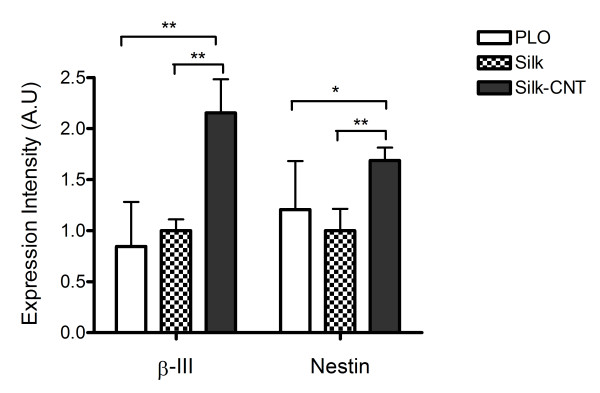
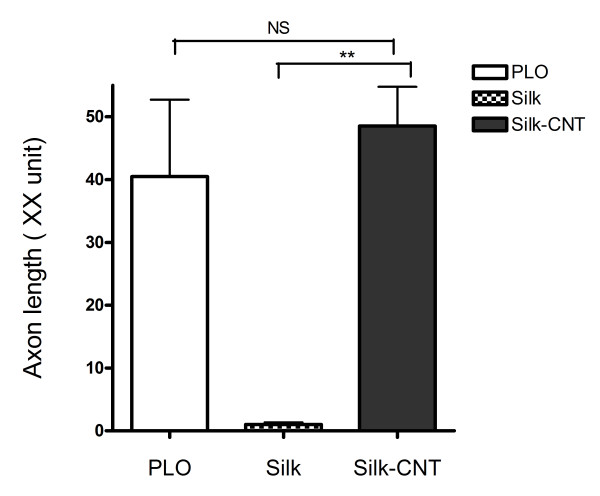
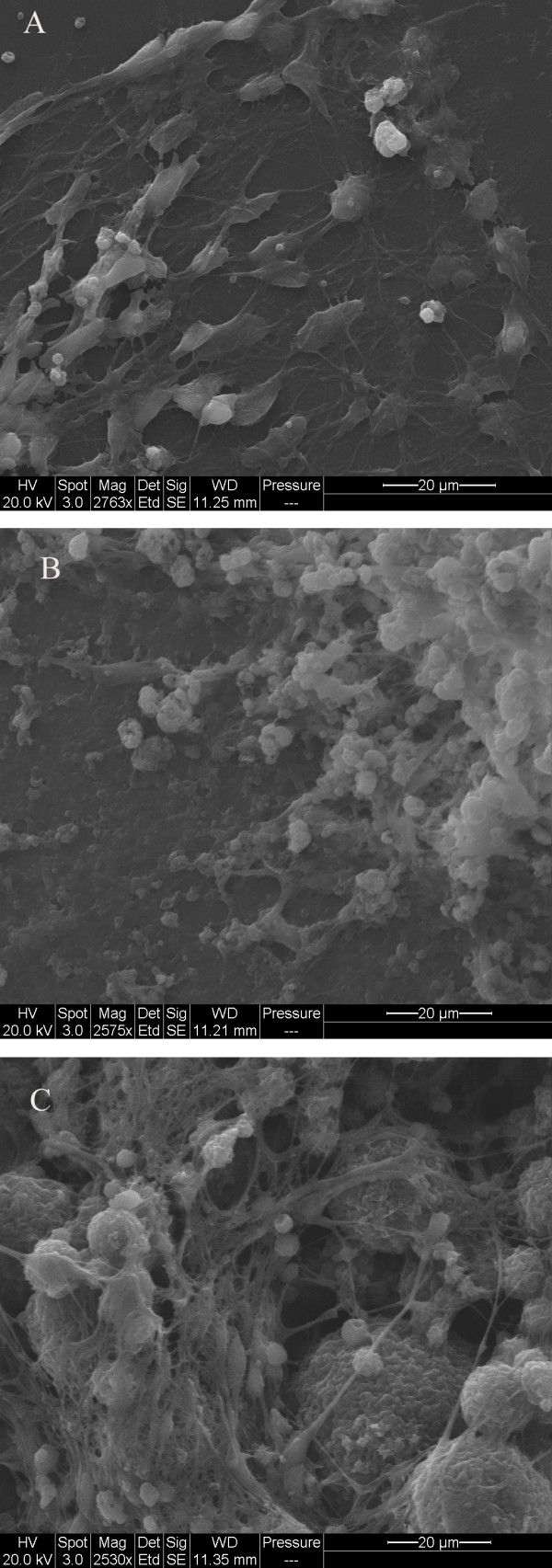
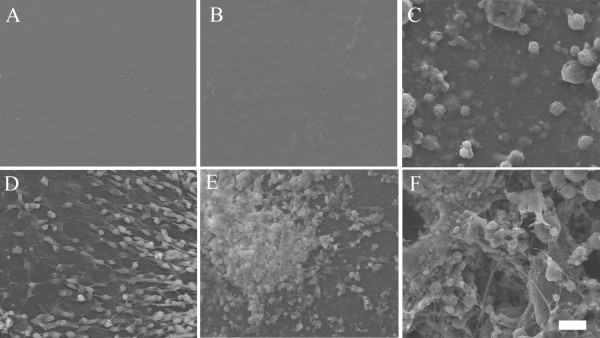
Human embryonic stem cells [hESCs] are able to differentiate into specific lineages corresponding to regulated spatial and temporal signals. This unique attribute holds great promise for regenerative medicine and cell-based therapy for many human diseases such as spinal cord injury [SCI] and multiple sclerosis [MS]. Carbon nanotubes [CNTs] have been successfully used to promote neuronal differentiation, and silk has been widely applied in tissue engineering. This study aims to build silk-CNT composite scaffolds for improved neuron differentiation efficiency from hESCs.Two neuronal markers (β-III tubulin and nestin) were utilized to determine the hESC neuronal lineage differentiation. In addition, axonal lengths were measured to evaluate the progress of neuronal development. The results demonstrated that cells on silk-CNT scaffolds have a higher β-III tubulin and nestin expression, suggesting augmented neuronal differentiation. In addition, longer axons with higher density were found to associate with silk-CNT scaffolds.Our silk-CNT-based composite scaffolds can promote neuronal differentiation of hESCs. The silk-CNT composite scaffolds developed here can serve as efficient supporting matrices for stem cell-derived neuronal transplants, offering a promising opportunity for nerve repair treatments for SCI and MS patients.
人类胚胎干细胞[hESCs]能够根据调控的时空信号分化为特定的细胞谱系。这一独特特性为再生医学以及针对许多人类疾病(如脊髓损伤[SCI]和多发性硬化症[MS])的细胞治疗带来了巨大希望。碳纳米管[CNTs]已成功用于促进神经元分化,而丝素已广泛应用于组织工程。本研究旨在构建丝素 - 碳纳米管复合支架,以提高hESCs向神经元分化的效率。利用两种神经元标志物(β - III微管蛋白和巢蛋白)来确定hESC向神经元谱系的分化情况。此外,测量轴突长度以评估神经元发育进程。结果表明,在丝素 - 碳纳米管支架上的细胞具有更高的β - III微管蛋白和巢蛋白表达,表明神经元分化增强。此外,发现与丝素 - 碳纳米管支架相关的轴突更长且密度更高。我们基于丝素 - 碳纳米管的复合支架能够促进hESCs的神经元分化。此处开发的丝素 - 碳纳米管复合支架可作为干细胞衍生神经元移植的有效支撑基质,为SCI和MS患者的神经修复治疗提供了一个有前景的机会。