Department of Psychiatry, Yale University School of Medicine, New Haven, CT 06519, USA.
Biol Psychiatry. 2012 Apr 15;71(8):749-57. doi: 10.1016/j.biopsych.2012.01.006. Epub 2012 Feb 14.
Mesocorticolimbic neurocircuitry and impulsivity have both been implicated in pathological gambling (PG) and in reward processing. However, the neural underpinnings of specific phases of reward and loss processing in PG and their relationships to impulsivity remain only partially understood. The present functional magnetic resonance imaging study examined brain activity associated with different phases of reward and loss processing in PG. Given an inverse relationship between ventral striatal recruitment during anticipation of monetary rewards and impulsivity in alcohol dependence, the current study explored whether a similar association might also be present in PG.
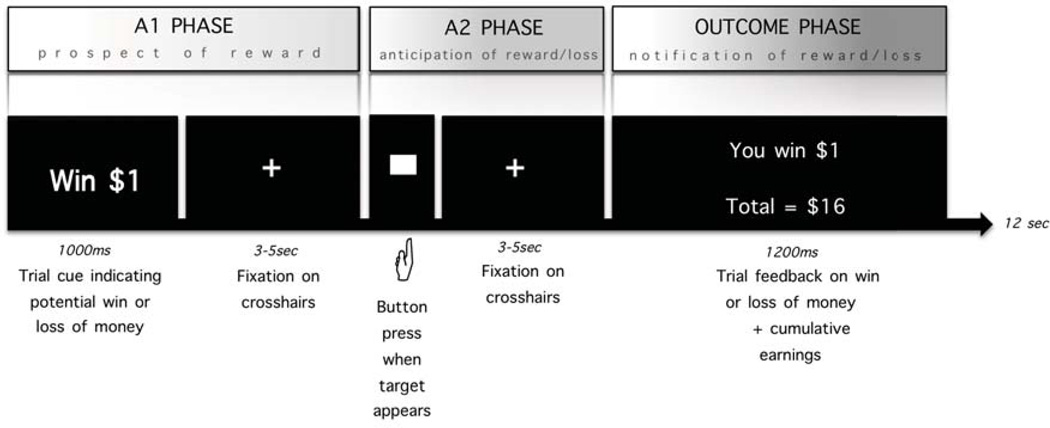
Fourteen adults with PG and 14 control comparison participants performed the Monetary Incentive Delay Task to identify brain activation changes associated with reward/loss prospect, reward/loss anticipation, and reward/loss notification. Impulsivity was assessed separately using the Barratt Impulsiveness Scale.
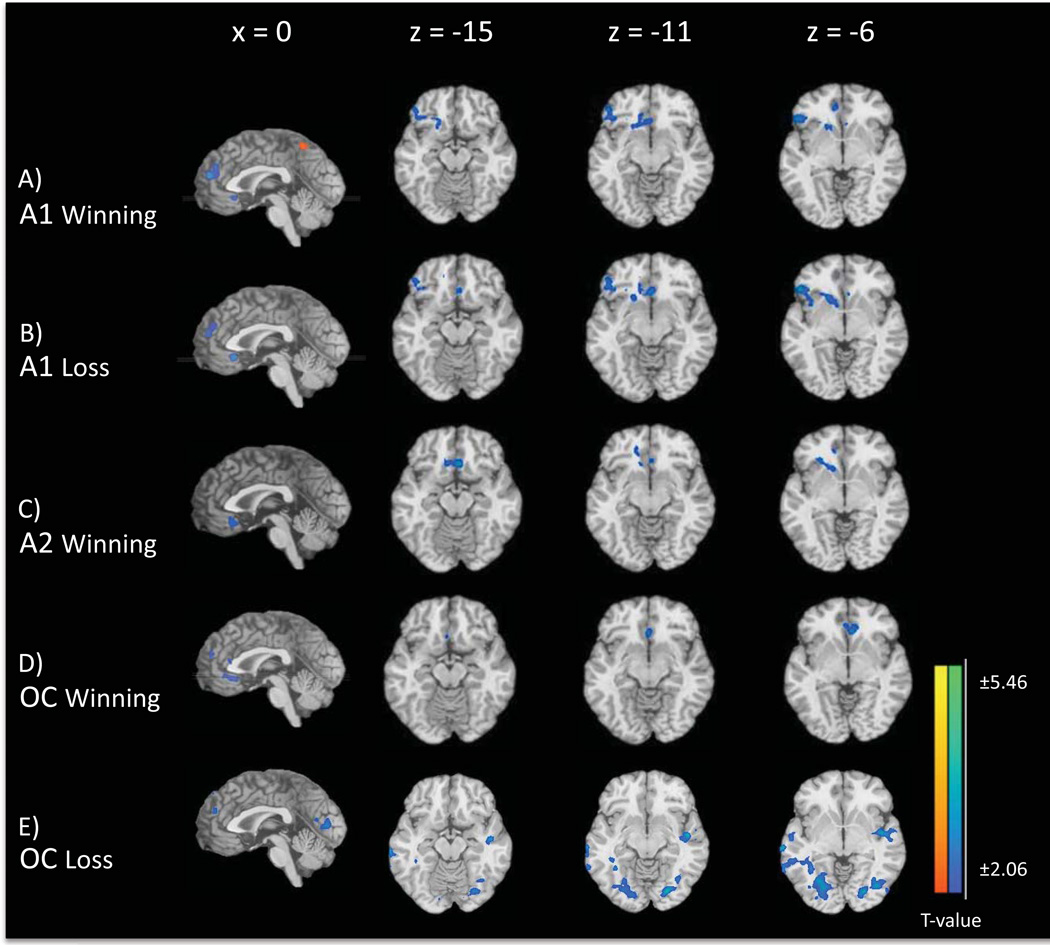
Relative to the control comparison group, the PG group exhibited significantly reduced activity in the ventromedial prefrontal cortex, insula, and ventral striatum during several phases, including the prospect and anticipation phases of both gains and losses. Activity in the ventral striatum correlated inversely with levels of impulsivity in PG participants, consistent with prior findings in alcohol dependence.
Relatively decreased activity in corticostriatal neurocircuitry during multiple phases of reward processing suggests consistent alterations in neurocircuitry underlying incentive valuation and loss prediction. Together with findings in alcohol dependence, these results suggest that impulsive tendencies in addictions may be reflected in diminished ventral striatal activations to reward anticipation and may represent targets for treatment development in addictions.
中脑边缘神经回路和冲动性都与病理性赌博(PG)和奖励处理有关。然而,PG 中奖励和损失处理的特定阶段的神经基础及其与冲动性的关系仍部分未知。本功能磁共振成像研究检查了 PG 中不同奖励和损失处理阶段相关的大脑活动。鉴于腹侧纹状体在预测金钱奖励期间的募集与酒精依赖中的冲动性呈负相关,目前的研究探索了这种关联是否也可能存在于 PG 中。
14 名 PG 成人和 14 名对照比较参与者进行了货币激励延迟任务,以确定与奖励/损失预期、奖励/损失预期和奖励/损失通知相关的大脑激活变化。冲动性分别使用巴瑞特冲动量表进行评估。
与对照组相比,PG 组在多个阶段,包括收益和损失的预期和预期阶段,表现出腹侧前额叶皮层、岛叶和腹侧纹状体的活动明显减少。PG 参与者的腹侧纹状体活动与冲动性水平呈负相关,与酒精依赖中的先前发现一致。
在多个奖励处理阶段,皮质纹状体神经回路的相对活动减少表明,激励评估和损失预测的神经回路存在一致的改变。结合酒精依赖中的发现,这些结果表明,成瘾中的冲动倾向可能反映在对奖励预期的腹侧纹状体激活减少上,并且可能成为成瘾治疗开发的目标。