Department of Clinical Medicine and Cardiovascular and ImmunologicalSciences, University Federico II, Naples, Italy.
Diabetes. 2012 Apr;61(4):944-53. doi: 10.2337/db11-1132. Epub 2012 Feb 16.
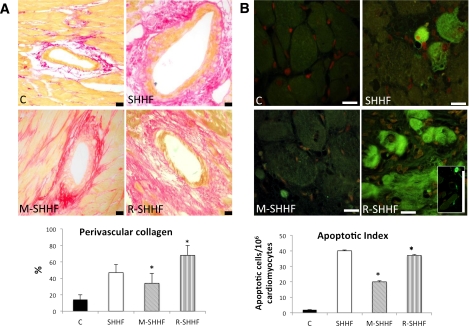
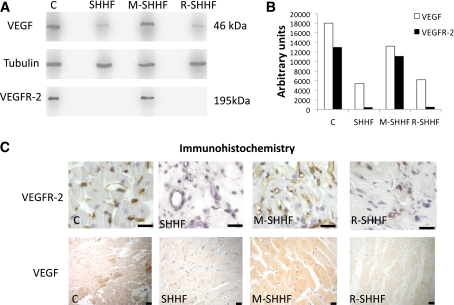
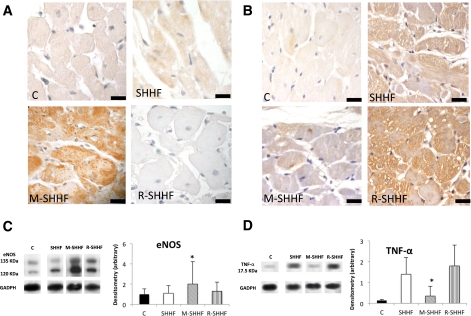
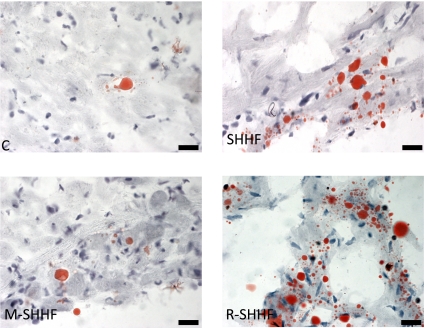
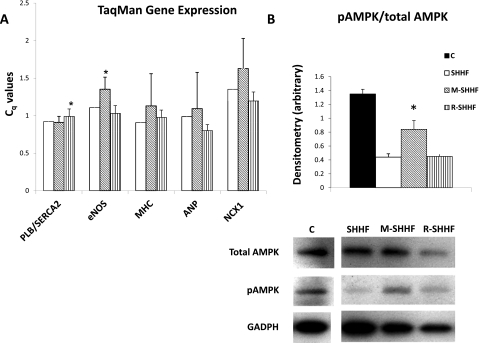
Insulin resistance is a recently identified mechanism involved in the pathophysiology of chronic heart failure (CHF). We investigated the effects of two insulin-sensitizing drugs (metformin and rosiglitazone) in a genetic model of spontaneously hypertensive, insulin-resistant rats (SHHF). Thirty SHHF rats were randomized into three treatment groups as follows: 1) metformin (100 mg/kg per day), 2) rosiglitazone (2 mg/kg per day), and 3) no drug. Ten Sprague-Dawley rats served as normal controls. At the end of the treatment period (12 months), the cardiac phenotype was characterized by histology, echocardiography, and isolated perfused heart studies. Metformin attenuated left ventricular (LV) remodeling, as shown by reduced LV volumes, wall stress, perivascular fibrosis, and cardiac lipid accumulation. Metformin improved both systolic and diastolic indices as well as myocardial mechanical efficiency, as shown by improved ability to convert metabolic energy into mechanical work. Metformin induced a marked activation of AMP-activated protein kinase, endothelial nitric oxide synthase, and vascular endothelial growth factor and reduced tumor necrosis factor-α expression and myocyte apoptosis. Rosiglitazone did not affect LV remodeling, increased perivascular fibrosis, and promoted further cardiac lipid accumulation. In conclusion, long-term treatment with metformin, but not with rosiglitazone, prevents the development of severe CHF in the SHHF model by a wide-spectrum interaction that involves molecular, structural, functional, and metabolic-energetic mechanisms.
胰岛素抵抗是慢性心力衰竭(CHF)病理生理学中最近确定的一种机制。我们研究了两种胰岛素增敏药物(二甲双胍和罗格列酮)在自发性高血压、胰岛素抵抗大鼠(SHHF)遗传模型中的作用。30 只 SHHF 大鼠随机分为三组:1)二甲双胍(100mg/kg/天),2)罗格列酮(2mg/kg/天),3)无药物。10 只 Sprague-Dawley 大鼠作为正常对照。在治疗期末(12 个月),通过组织学、超声心动图和离体灌注心脏研究来描述心脏表型。二甲双胍减轻左心室(LV)重构,表现为 LV 容积、壁应力、血管周围纤维化和心脏脂质积聚减少。二甲双胍改善收缩和舒张指数以及心肌机械效率,表现为将代谢能量转化为机械功的能力提高。二甲双胍可显著激活 AMP 激活的蛋白激酶、内皮型一氧化氮合酶和血管内皮生长因子,并降低肿瘤坏死因子-α表达和心肌细胞凋亡。罗格列酮不会影响 LV 重构,增加血管周围纤维化,并促进心脏脂质进一步积聚。总之,长期使用二甲双胍而非罗格列酮可通过广泛的相互作用预防 SHHF 模型中严重 CHF 的发生,这种相互作用涉及分子、结构、功能和代谢能量机制。