UMR1048, Institut National de la Santé et de la Recherche Médicale (INSERM), Université Toulouse III Paul-Sabatier, Toulouse, France.
PLoS One. 2012;7(2):e31274. doi: 10.1371/journal.pone.0031274. Epub 2012 Feb 15.
The present study was undertaken to characterize the remodeling phenotype of human adipose tissue (AT) macrophages (ATM) and to analyze their paracrine effects on AT progenitor cells.
The phenotype of ATM, immunoselected from subcutaneous (Sc) AT originating from subjects with wide range of body mass index and from paired biopsies of Sc and omental (Om) AT from obese subjects, was studied by gene expression analysis in the native and activated states. The paracrine effects of ScATM on the phenotype of human ScAT progenitor cells (CD34(+)CD31(-)) were investigated.
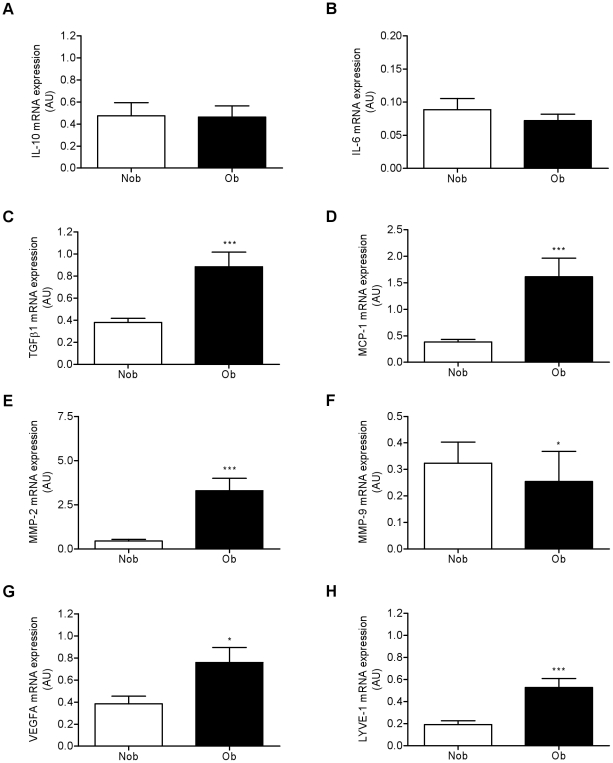
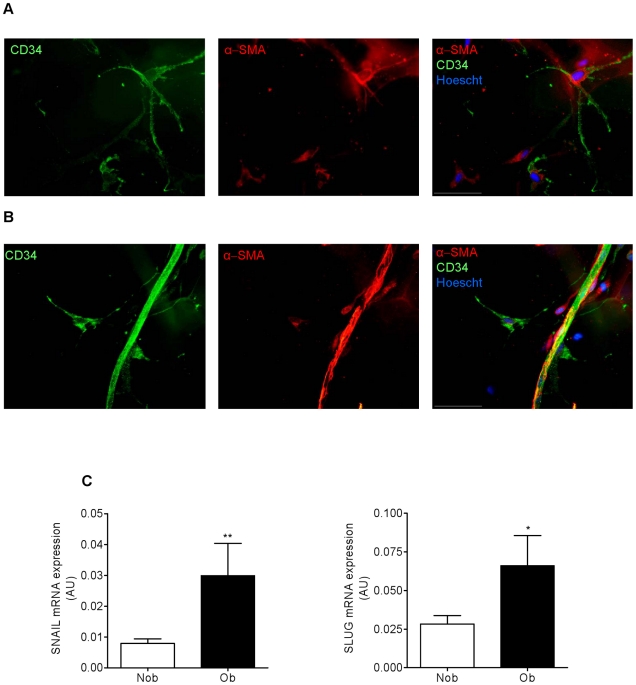
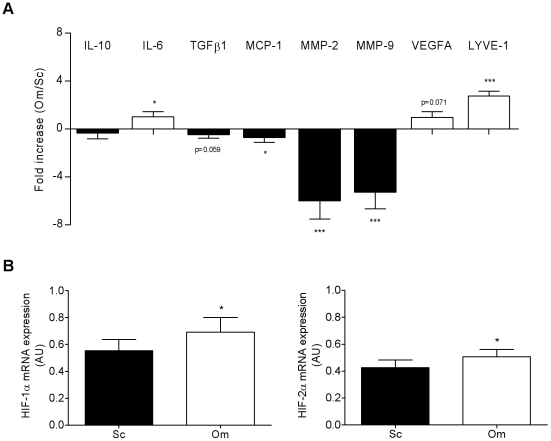
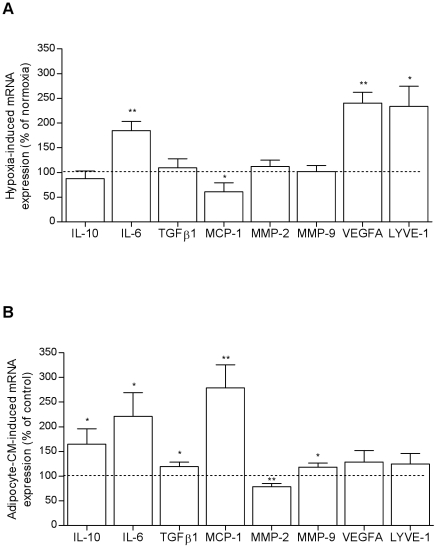
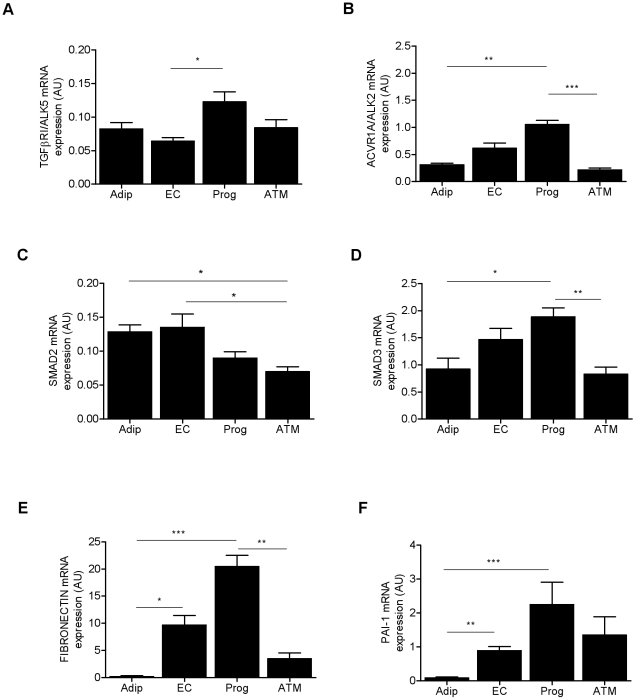
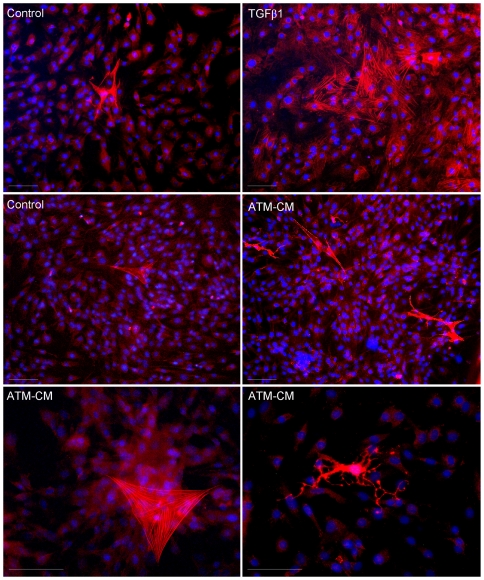
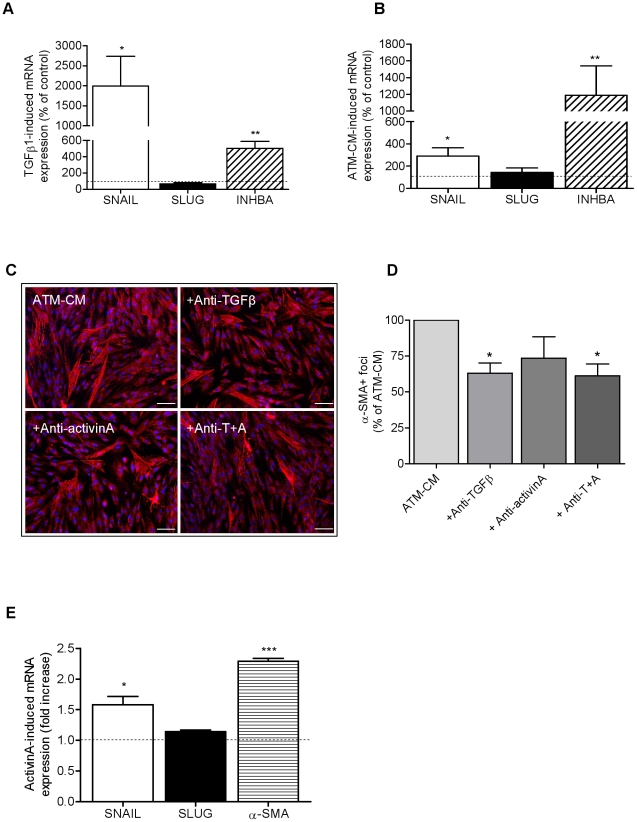
Two main ATM phenotypes were distinguished based on gene expression profiles. For ScAT-derived ATM, obesity and adipocyte-derived factors favored a pro-fibrotic/remodeling phenotype whereas the OmAT location and hypoxic culture conditions favored a pro-angiogenic phenotype. Treatment of native human ScAT progenitor cells with ScATM-conditioned media induced the appearance of myofibroblast-like cells as shown by expression of both α-SMA and the transcription factor SNAIL, an effect mimicked by TGFβ1 and activinA. Immunohistochemical analyses showed the presence of double positive α-SMA and CD34 cells in the stroma of human ScAT. Moreover, the mRNA levels of SNAIL and SLUG in ScAT progenitor cells were higher in obese compared with lean subjects.
Human ATM exhibit distinct pro-angiogenic and matrix remodeling/fibrotic phenotypes according to the adiposity and the location of AT, that may be related to AT microenvironment including hypoxia and adipokines. Moreover, human ScAT progenitor cells have been identified as target cells for ScATM-derived TGFβ and as a potential source of fibrosis through their induction of myofibroblast-like cells.
本研究旨在对人类脂肪组织(AT)巨噬细胞(ATM)的重塑表型进行表征,并分析其对 AT 祖细胞的旁分泌作用。
通过基因表达分析,研究了从 BMI 范围广泛的受试者的皮下(Sc)AT 中免疫分选的 ATM 的表型,以及从肥胖受试者的 Sc 和网膜(Om)AT 的配对活检中免疫分选的 ATM 的表型,这些细胞处于天然和激活状态。研究了 ScATM 对人 ScAT 祖细胞(CD34(+)CD31(-))表型的旁分泌作用。
基于基因表达谱,区分了两种主要的 ATM 表型。对于 ScAT 衍生的 ATM,肥胖和脂肪细胞衍生的因子有利于成纤维/重塑表型,而 OmAT 的位置和低氧培养条件有利于成血管表型。用 ScATM 条件培养基处理天然人 ScAT 祖细胞,诱导出现肌成纤维细胞样细胞,如同时表达α-SMA 和转录因子 SNAIL 所示,这一效应可被 TGFβ1 和激活素 A 模拟。免疫组织化学分析显示,人 ScAT 基质中存在α-SMA 和 CD34 双阳性细胞。此外,与瘦受试者相比,肥胖受试者 ScAT 祖细胞中的 SNAIL 和 SLUG 的 mRNA 水平更高。
根据脂肪组织的肥胖程度和位置,人 ATM 表现出明显的促血管生成和基质重塑/纤维化表型,这可能与包括低氧和脂肪因子在内的 AT 微环境有关。此外,已经鉴定出人 ScAT 祖细胞是 ScATM 衍生的 TGFβ的靶细胞,并通过诱导肌成纤维细胞样细胞成为纤维化的潜在来源。