Department of Geography, University of New Hampshire, Durham, New Hampshire, United States of America.
PLoS One. 2012;7(2):e32408. doi: 10.1371/journal.pone.0032408. Epub 2012 Feb 27.
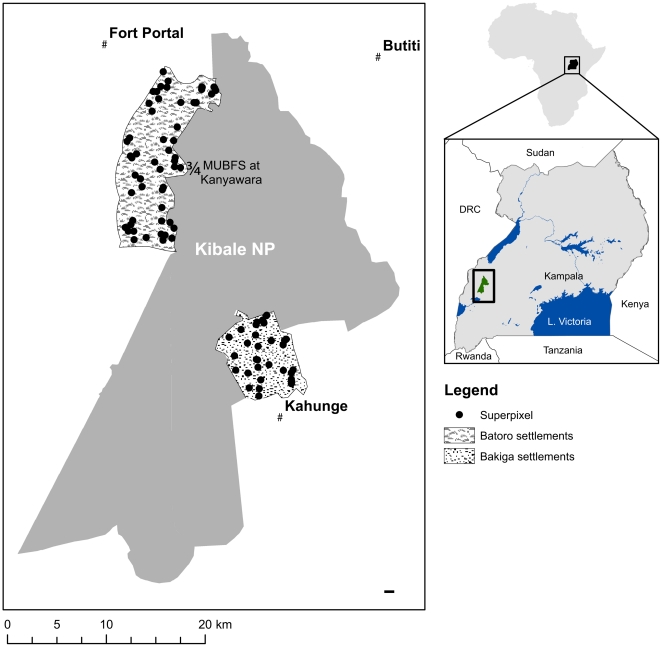
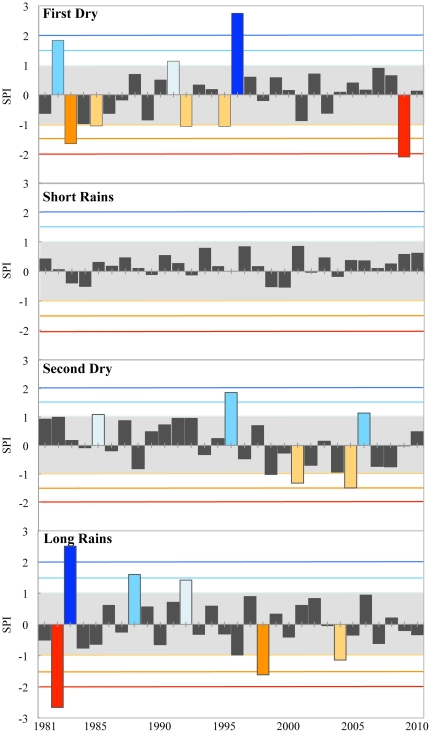
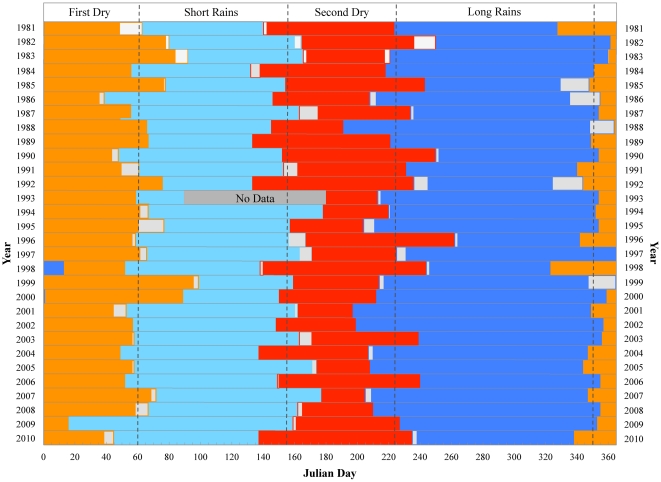
Quantifying local people's perceptions to climate change, and their assessments of which changes matter, is fundamental to addressing the dual challenge of land conservation and poverty alleviation in densely populated tropical regions To develop appropriate policies and responses, it will be important not only to anticipate the nature of expected changes, but also how they are perceived, interpreted and adapted to by local residents. The Albertine Rift region in East Africa is one of the world's most threatened biodiversity hotspots due to dense smallholder agriculture, high levels of land and resource pressures, and habitat loss and conversion. Results of three separate household surveys conducted in the vicinity of Kibale National Park during the late 2000s indicate that farmers are concerned with variable precipitation. Many survey respondents reported that conditions are drier and rainfall timing is becoming less predictable. Analysis of daily rainfall data for the climate normal period 1981 to 2010 indicates that total rainfall both within and across seasons has not changed significantly, although the timing and transitions of seasons has been highly variable. Results of rainfall data analysis also indicate significant changes in the intra-seasonal rainfall distribution, including longer dry periods within rainy seasons, which may contribute to the perceived decrease in rainfall and can compromise food security. Our results highlight the need for fine-scale climate information to assist agro-ecological communities in developing effective adaptive management.
量化当地人对气候变化的感知,以及他们对哪些变化重要的评估,对于解决人口稠密的热带地区的土地保护和扶贫这一双重挑战至关重要。为了制定适当的政策和应对措施,不仅要预测预期变化的性质,还要了解当地居民如何感知、解释和适应这些变化。东非的阿尔伯丁裂谷地区是世界上受威胁最严重的生物多样性热点地区之一,原因是小农农业密集、土地和资源压力高、以及生境丧失和转化。2000 年代后期在基巴莱国家公园附近进行的三项独立家庭调查的结果表明,农民关注的是降水的可变性。许多调查受访者报告说,目前的情况更干燥,降雨时间变得更不可预测。对 1981 年至 2010 年气候正常期的每日降雨数据进行分析表明,尽管季节的时间和过渡变化很大,但季节内和跨季节的总降雨量并没有明显变化。降雨数据分析的结果还表明,季节内降雨分布发生了重大变化,包括雨季内的干燥期延长,这可能导致人们认为降雨量减少,并可能影响粮食安全。我们的研究结果强调了需要精细尺度的气候信息来帮助农业生态社区制定有效的适应性管理。