Aboab Jerome, Niklason Lisbet, Uttman Leif, Brochard Laurent, Jonson Björn
Medical Intensive Care Unit, Hospital Henri Mondor, AP-HP, 51 Avenue du Marechal de Lattre de Tassigny, 94010 Créteil, France.
Crit Care. 2012 Dec 12;16(2):R39. doi: 10.1186/cc11232.
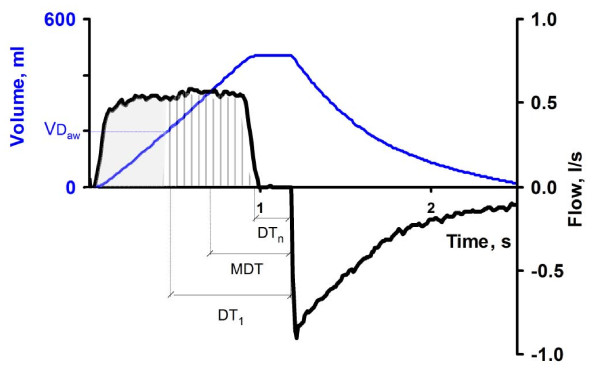
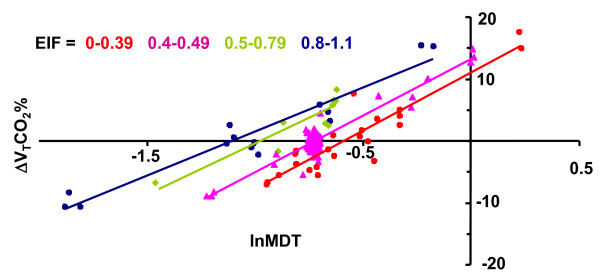
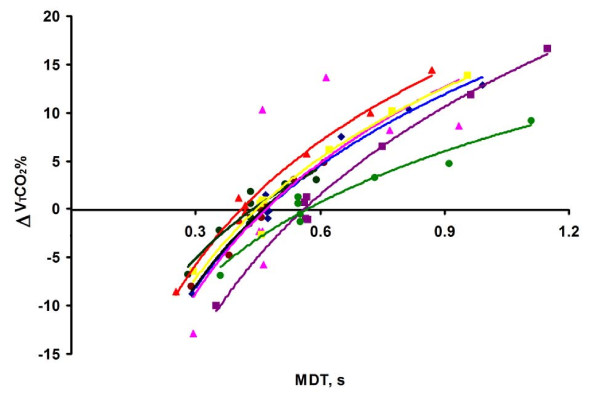
The inspiratory flow pattern influences CO₂ elimination by affecting the time the tidal volume remains resident in alveoli. This time is expressed in terms of mean distribution time (MDT), which is the time available for distribution and diffusion of inspired tidal gas within resident alveolar gas. In healthy and sick pigs, abrupt cessation of inspiratory flow (that is, high end-inspiratory flow (EIF)), enhances CO₂ elimination. The objective was to test the hypothesis that effects of inspiratory gas delivery pattern on CO₂ exchange can be comprehensively described from the effects of MDT and EIF in patients with acute respiratory distress syndrome (ARDS).
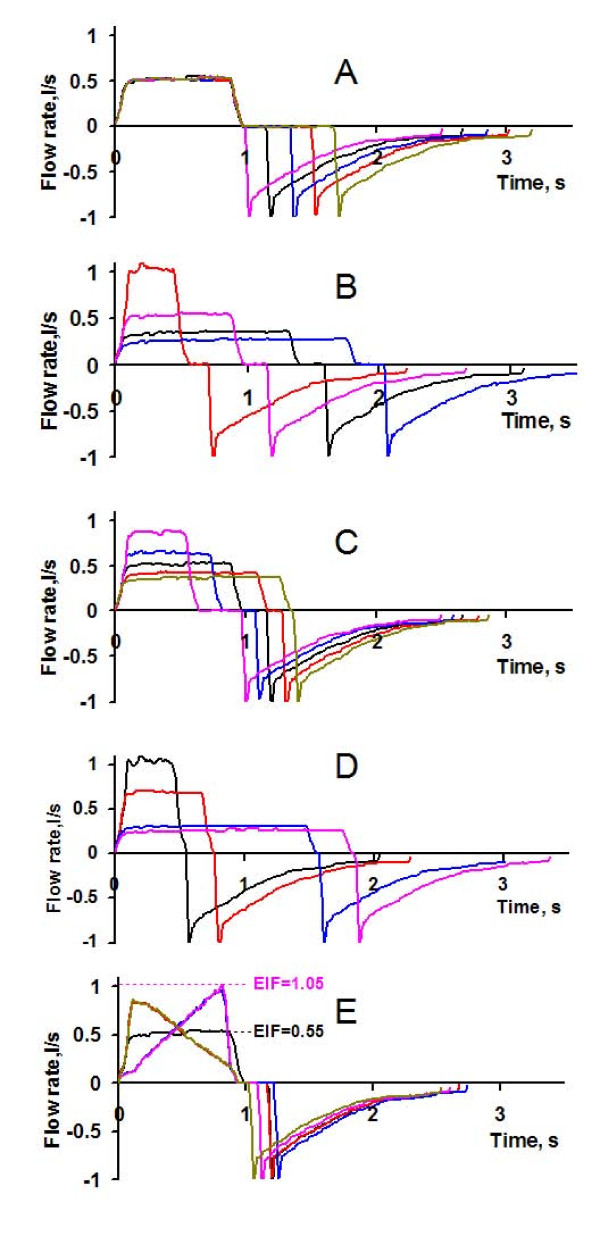
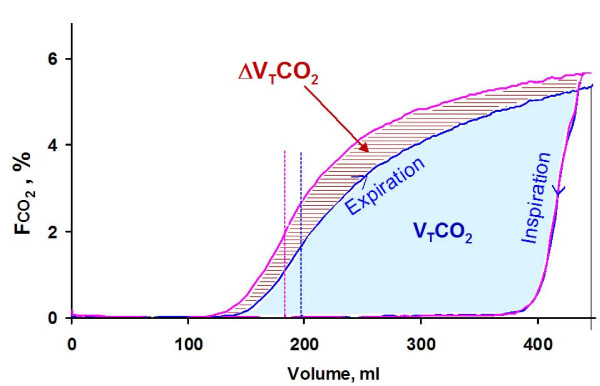
In a medical intensive care unit of a university hospital, ARDS patients were studied during sequences of breaths with varying inspiratory flow patterns. Patients were ventilated with a computer-controlled ventilator allowing single breaths to be modified with respect to durations of inspiratory flow and postinspiratory pause (TP), as well as the shape of the inspiratory flow wave. From the single-breath test for CO₂, the volume of CO₂ eliminated by each tidal breath was derived.
A long MDT, caused primarily by a long TP, led to importantly enhanced CO₂ elimination. So did a high EIF. Effects of MDT and EIF were comprehensively described with a simple equation. Typically, an efficient and a less-efficient pattern of inspiration could result in ± 10% variation of CO₂ elimination, and in individuals, up to 35%.
In ARDS, CO₂ elimination is importantly enhanced by an inspiratory flow pattern with long MDT and high EIF. An optimal inspiratory pattern allows a reduction of tidal volume and may be part of lung-protective ventilation.
吸气气流模式通过影响潮气量在肺泡内停留的时间来影响二氧化碳的排出。这段时间用平均分布时间(MDT)表示,即吸入的潮气量在肺泡内气体中进行分布和扩散的可用时间。在健康和患病的猪身上,吸气气流突然停止(即高吸气末流速(EIF))可增强二氧化碳的排出。目的是检验以下假设:急性呼吸窘迫综合征(ARDS)患者中,吸气气体输送模式对二氧化碳交换的影响可通过MDT和EIF的影响来全面描述。
在一家大学医院的医学重症监护病房,对ARDS患者在具有不同吸气气流模式呼吸序列期间进行研究。患者使用计算机控制的呼吸机进行通气,该呼吸机允许对单次呼吸的吸气气流持续时间、吸气后暂停(TP)以及吸气气流波形进行调整。通过单次呼吸二氧化碳测试,得出每次潮气量排出的二氧化碳量。
主要由长TP导致的长MDT会显著增强二氧化碳的排出。高EIF也有同样效果。MDT和EIF的影响可用一个简单方程全面描述。通常,高效和低效的吸气模式可导致二氧化碳排出量有±10%的变化,而在个体中,变化可达35%。
在ARDS中,具有长MDT和高EIF的吸气气流模式可显著增强二氧化碳的排出。最佳吸气模式可减少潮气量,可能是肺保护性通气的一部分。