Instituto de Nutrición y Tecnología de los Alimentos, Universidad de Chile, Santiago, Región Metropolitana, Chile.
PLoS One. 2012;7(2):e31335. doi: 10.1371/journal.pone.0031335. Epub 2012 Feb 29.
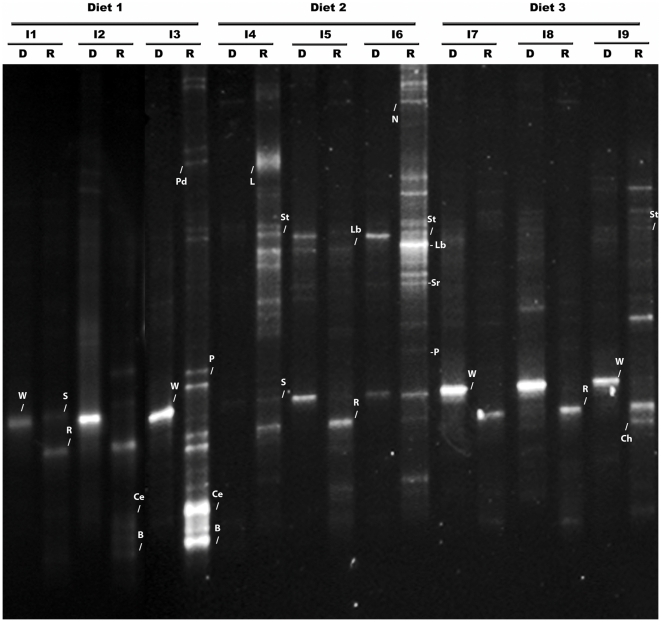
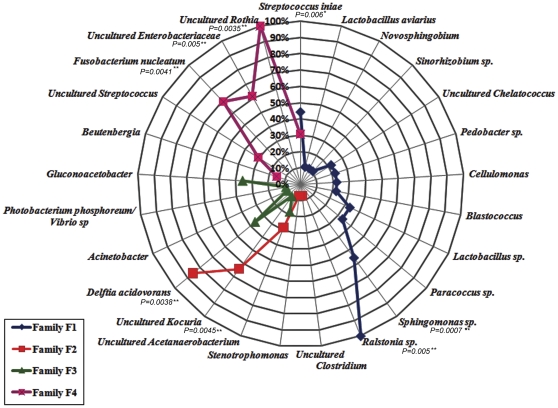
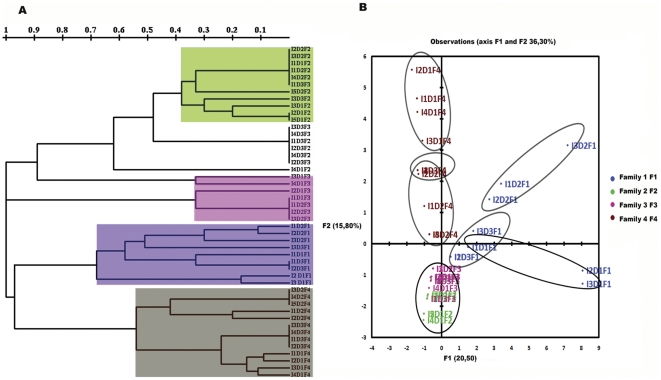
This study assessed the relative contributions of host genetics and diet in shaping the gut microbiota of rainbow trout. Full sibling fish from four unrelated families, each consisting of individuals derived from the mating of one male and one female belonging to a breeding program, were fed diets containing either vegetable proteins or vegetable oils for two months in comparison to a control diet consisting of only fish protein and fish oil. Two parallel approaches were applied on the same samples: transcriptionally active bacterial populations were examined based on RNA analysis and were compared with bacterial populations obtained from DNA analysis. Comparison of temporal temperature gradient gel electrophoresis (TTGE) profiles from DNA and RNA showed important differences, indicating that active bacterial populations were better described by RNA analysis. Results showed that some bacterial groups were significantly (P<0.05) associated with specific families, indicating that microbiota composition may be influenced by the host. In addition, the effect of diet on microbiota composition was dependent on the trout family.
本研究评估了宿主遗传学和饮食在塑造虹鳟鱼肠道微生物群中的相对贡献。来自四个无亲缘关系的家庭的全同胞鱼,每个家庭由一雄一雌交配产生的个体组成,分别用含有蔬菜蛋白或植物油的饮食喂养两个月,与仅含有鱼蛋白和鱼油的对照饮食进行比较。对相同样本应用了两种平行的方法:基于 RNA 分析检查转录活跃的细菌种群,并与从 DNA 分析获得的细菌种群进行比较。比较 DNA 和 RNA 的时温凝胶电泳 (TTGE) 图谱显示出重要差异,表明活跃的细菌种群通过 RNA 分析得到更好的描述。结果表明,一些细菌群体与特定的家族显著相关(P<0.05),表明微生物群的组成可能受到宿主的影响。此外,饮食对微生物群组成的影响取决于虹鳟鱼的家族。