Neuroscience and Experimental Therapeutics, Texas A&M Health Science Center College of Medicine, College Station, Texas, United States of America.
PLoS One. 2012;7(2):e32662. doi: 10.1371/journal.pone.0032662. Epub 2012 Feb 29.
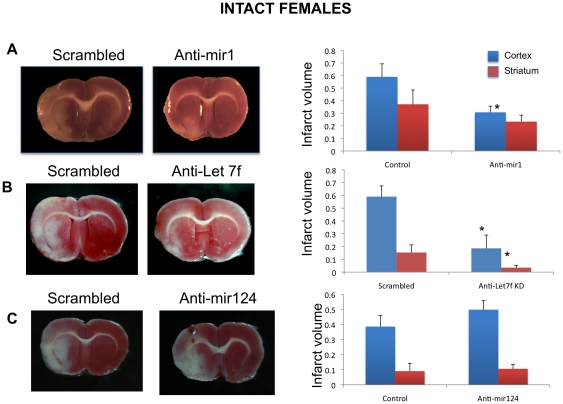
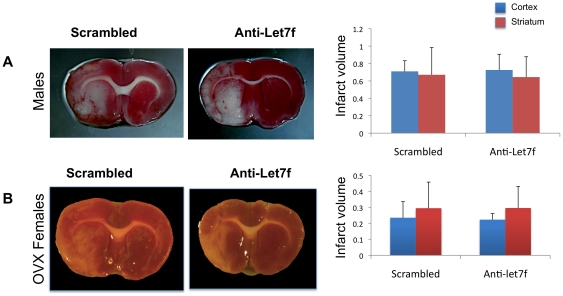
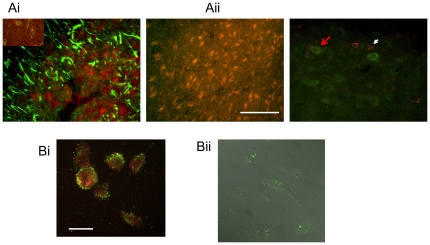
We previously showed that middle-aged female rats sustain a larger infarct following experimental stroke as compared to younger female rats, and paradoxically, estrogen treatment to the older group is neurotoxic. Plasma and brain insulin-like growth factor-1 (IGF-1) levels decrease with age. However, IGF-1 infusion following stroke, prevents estrogen neurotoxicity in middle-aged female rats. IGF1 is neuroprotective and well tolerated, but also has potentially undesirable side effects. We hypothesized that microRNAs (miRNAs) that target the IGF-1 signaling family for translation repression could be alternatively suppressed to promote IGF-1-like neuroprotection. Here, we report that two conserved IGF pathway regulatory microRNAs, Let7f and miR1, can be inhibited to mimic and even extend the neuroprotection afforded by IGF-1. Anti-mir1 treatment, as late as 4 hours following ischemia, significantly reduced cortical infarct volume in adult female rats, while anti-Let7 robustly reduced both cortical and striatal infarcts, and preserved sensorimotor function and interhemispheric neural integration. No neuroprotection was observed in animals treated with a brain specific miRNA unrelated to IGF-1 (anti-miR124). Remarkably, anti-Let7f was only effective in intact females but not males or ovariectomized females indicating that the gonadal steroid environment critically modifies miRNA action. Let7f is preferentially expressed in microglia in the ischemic hemisphere and confirmed in ex vivo cultures of microglia obtained from the cortex. While IGF-1 was undetectable in microglia harvested from the non-ischemic hemisphere, IGF-1 was expressed by microglia obtained from the ischemic cortex and was further elevated by anti-Let7f treatment. Collectively these data support a novel miRNA-based therapeutic strategy for neuroprotection following stroke.
我们之前的研究表明,与年轻雌性大鼠相比,中年雌性大鼠在实验性中风后会出现更大的梗死,而令人费解的是,雌激素治疗老年组是神经毒性的。血浆和大脑胰岛素样生长因子-1(IGF-1)水平随年龄增长而降低。然而,中风后 IGF-1 的输注可防止中年雌性大鼠的雌激素神经毒性。IGF1 具有神经保护作用且耐受性良好,但也可能有不良的副作用。我们假设针对 IGF-1 信号家族进行翻译抑制的 microRNAs(miRNAs)可以被替代抑制,以促进 IGF-1 样神经保护。在这里,我们报告说两种保守的 IGF 途径调节 microRNAs,Let7f 和 miR1,可以被抑制以模拟甚至扩展 IGF-1 提供的神经保护作用。抗 miR1 治疗,即使在缺血后 4 小时,也可显著减少成年雌性大鼠皮质梗死体积,而抗 Let7 则显著减少皮质和纹状体梗死,并保留感觉运动功能和半球间神经整合。用与 IGF-1 无关的脑特异性 miRNA(抗 miR124)治疗的动物未观察到神经保护作用。值得注意的是,抗 Let7f 仅在完整的雌性动物中有效,而在雄性或卵巢切除的雌性动物中无效,这表明性腺类固醇环境会严重改变 miRNA 的作用。Let7f 在缺血半球的小胶质细胞中优先表达,并在来自皮质的小胶质细胞的体外培养中得到证实。虽然 IGF-1 在未缺血半球中从小胶质细胞中不可检测到,但 IGF-1 由来自缺血皮质的小胶质细胞表达,并通过抗 Let7f 治疗进一步升高。这些数据共同支持一种新型基于 miRNA 的治疗策略,用于中风后的神经保护。