Department of Anatomy, University of California, San Francisco, CA 94143-2822, USA.
Science. 2012 Mar 16;335(6074):1351-5. doi: 10.1126/science.1215932.
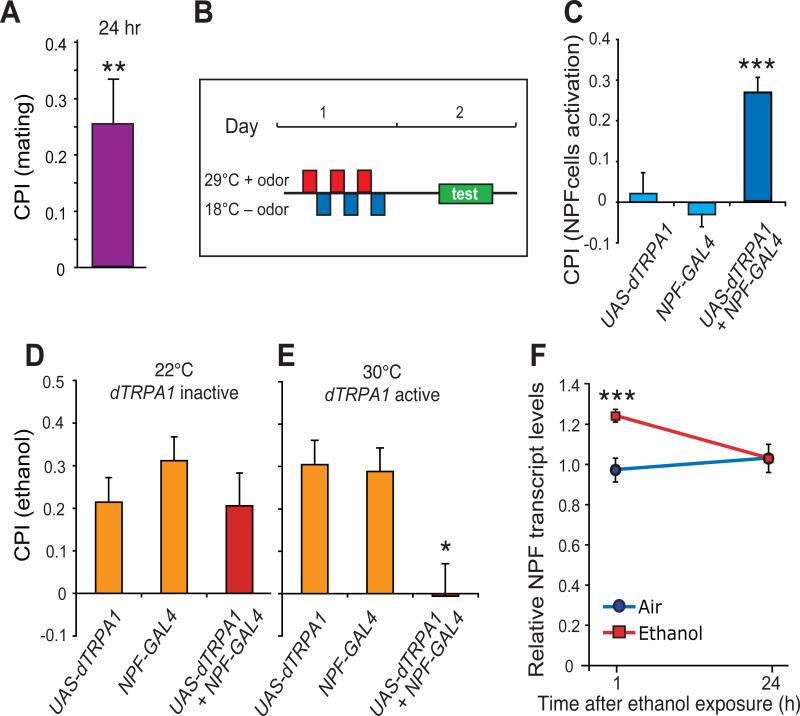
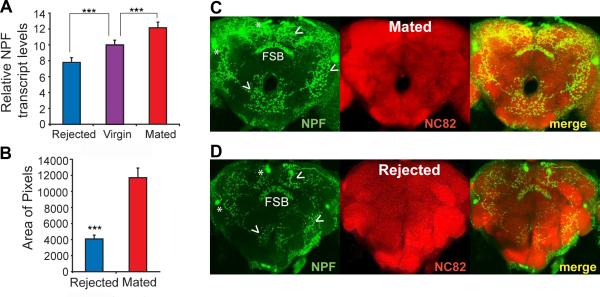
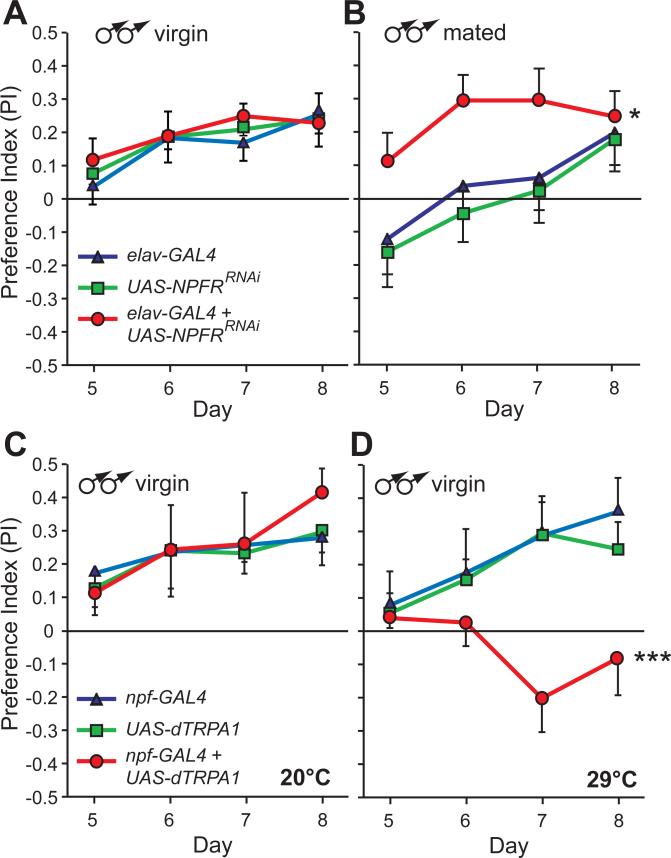
The brain's reward systems reinforce behaviors required for species survival, including sex, food consumption, and social interaction. Drugs of abuse co-opt these neural pathways, which can lead to addiction. Here, we used Drosophila melanogaster to investigate the relationship between natural and drug rewards. In males, mating increased, whereas sexual deprivation reduced, neuropeptide F (NPF) levels. Activation or inhibition of the NPF system in turn reduced or enhanced ethanol preference. These results thus link sexual experience, NPF system activity, and ethanol consumption. Artificial activation of NPF neurons was in itself rewarding and precluded the ability of ethanol to act as a reward. We propose that activity of the NPF-NPF receptor axis represents the state of the fly reward system and modifies behavior accordingly.
大脑的奖励系统强化了物种生存所必需的行为,包括性、食物摄入和社会互动。滥用药物会利用这些神经通路,从而导致成瘾。在这里,我们使用黑腹果蝇来研究自然奖励和药物奖励之间的关系。在雄性中,交配会增加,而性剥夺会减少神经肽 F(NPF)水平。NPF 系统的激活或抑制反过来又会降低或增强乙醇偏好。这些结果将性体验、NPF 系统活性和乙醇消耗联系起来。NPF 神经元的人工激活本身就是一种奖励,并且阻止了乙醇作为奖励的作用。我们提出,NPF-NPF 受体轴的活性代表了苍蝇奖励系统的状态,并相应地改变行为。