Harty J T, Plagemann P G
Department of Microbiology, University of Minnesota Medical School, Minneapolis 55455-0312.
J Virol. 1990 Dec;64(12):6257-62. doi: 10.1128/JVI.64.12.6257-6262.1990.
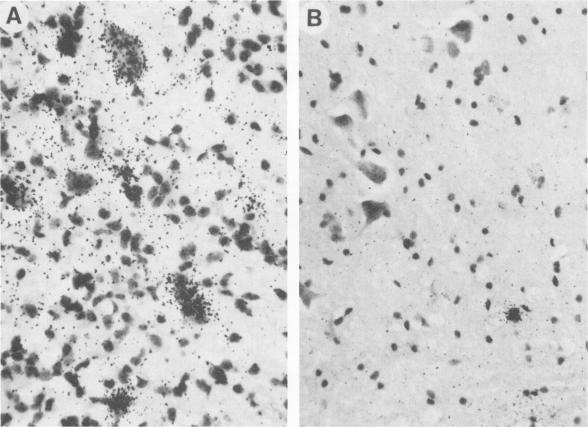
Over 90% of cyclophosphamide-treated, 6- to 7-month-old C58/M mice developed fatal paralytic disease after infection with a virulent strain of lactate dehydrogenase-elevating virus (LDV), with a mean onset of paralysis of about 16 days. Passive immunization with polyclonal antibodies or with a group of anti-LDV monoclonal antibodies (MAbs) with single-epitope specificity 1 day before or at the time of LDV infection prevented the development of paralytic disease without interfering with the replication of LDV in permissive macrophages, the primary host cells of LDV. In situ hybridization of spinal cord sections with an LDV-specific cDNA probe indicated that the MAb specifically prevented the cytocidal infection of motor neurons by LDV without blocking the infection of smaller nonneuronal cells in the spinal cord. The protective antibodies recognize at least two different epitopes on the glycoprotein of LDV, VP-3. Passive immunizations with other anti-LDV MAbs, which recognize at least three other epitopes on VP-3 of LDV, afforded no protection. In contrast to the protective effect of anti-LDV MAb injection before or at the time of LDV infection, their administration postinfection exerted relatively little protection, though it delayed the appearance of paralytic symptoms. However, repeated injections of MAbs until at least 7 days postinfection also afforded a high degree of protection. The results indicate that protective MAbs may interfere with two stages in the development of LDV-induced paralytic disease. When administered at the time of LDV infection, they prevent the initial infection of spinal cord motor neurons. After this initial event, repeated injections of MAb are required to inhibit the spread of LDV between neurons until the endogenous production of protective anti-LDV antibodies in these mice.
超过90%经环磷酰胺处理的6至7月龄C58/M小鼠在感染强毒株乳酸脱氢酶升高病毒(LDV)后会发展为致命的麻痹性疾病,平均麻痹发病时间约为16天。在LDV感染前1天或感染时用多克隆抗体或一组具有单表位特异性的抗LDV单克隆抗体(MAb)进行被动免疫,可预防麻痹性疾病的发生,且不干扰LDV在其主要宿主细胞——允许性巨噬细胞中的复制。用LDV特异性cDNA探针进行脊髓切片原位杂交表明,该单克隆抗体可特异性阻止LDV对运动神经元的杀细胞感染,而不阻断脊髓中较小的非神经元细胞的感染。保护性抗体识别LDV糖蛋白VP - 3上至少两个不同的表位。用识别LDV的VP - 3上至少其他三个表位的其他抗LDV单克隆抗体进行被动免疫则没有保护作用。与在LDV感染前或感染时注射抗LDV单克隆抗体的保护作用相反,感染后给予这些抗体的保护作用相对较小,尽管它延迟了麻痹症状的出现。然而,重复注射单克隆抗体直至感染后至少7天也能提供高度保护。结果表明,保护性单克隆抗体可能干扰LDV诱导的麻痹性疾病发展的两个阶段。在LDV感染时给予,它们可预防脊髓运动神经元的初始感染。在这一初始事件之后,需要重复注射单克隆抗体以抑制LDV在神经元之间的传播,直到这些小鼠内源性产生保护性抗LDV抗体。