Institute of Clinical Medicine, National Cheng Kung University & Hospital, Tainan, Taiwan.
PLoS One. 2012;7(3):e32893. doi: 10.1371/journal.pone.0032893. Epub 2012 Mar 22.
Carbon nanotubes (CNTs) have found wide success in circuitry, photovoltaics, and other applications. In contrast, several hurdles exist in using CNTs towards applications in drug delivery. Raw, non-modified CNTs are widely known for their toxicity. As such, many have attempted to reduce CNT toxicity for intravenous drug delivery purposes by post-process surface modification. Alternatively, a novel sphere-like carbon nanocapsule (CNC) developed by the arc-discharge method holds similar electric and thermal conductivities, as well as high strength. This study investigated the systemic toxicity and biocompatibility of different non-surface modified carbon nanomaterials in mice, including multi-walled carbon nanotubes (MWCNTs), single-walled carbon nanotubes (SWCNTs), carbon nanocapsules (CNCs), and C ₆₀ fullerene (C ₆₀). The retention of the nanomaterials and systemic effects after intravenous injections were studied.
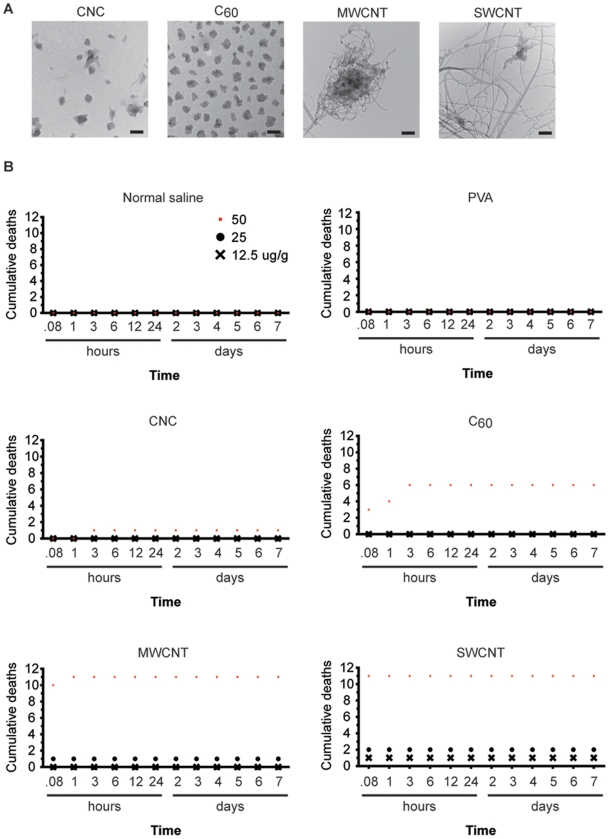
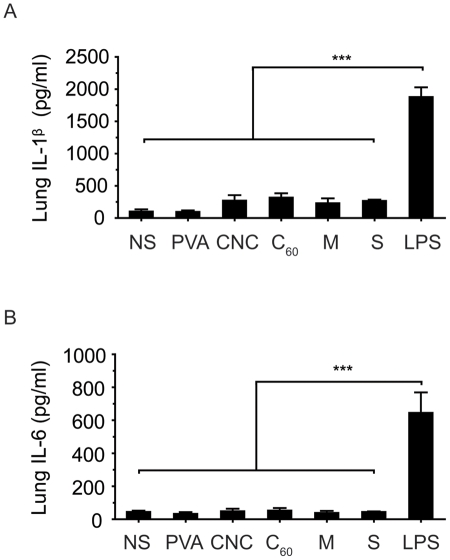
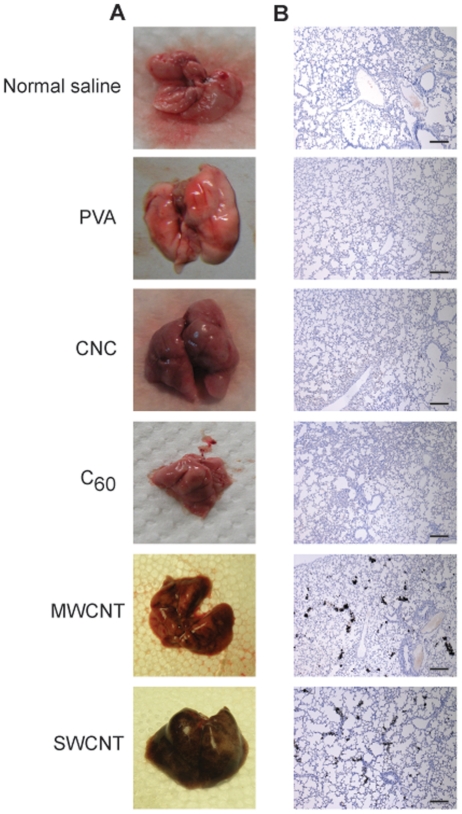
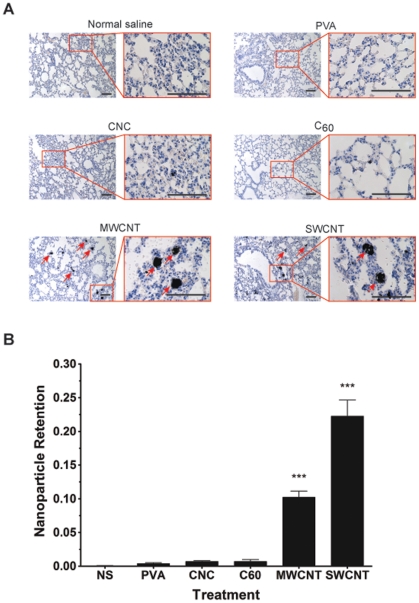
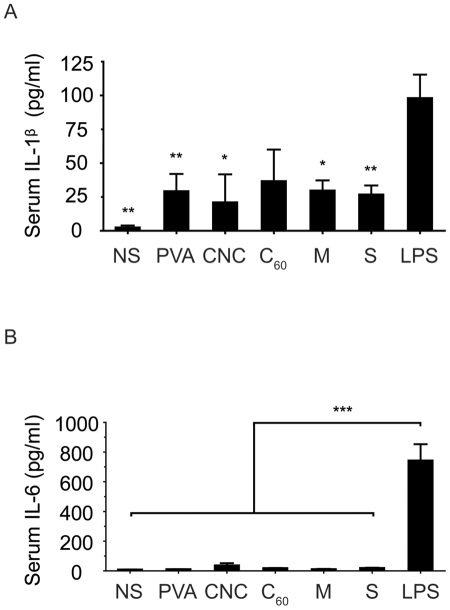
MWCNTs, SWCNTs, CNCs, and C ₆₀ were injected intravenously into FVB mice and then sacrificed for tissue section examination. Inflammatory cytokine levels were evaluated with ELISA. Mice receiving injection of MWCNTs or SWCNTs at 50 µg/g b.w. died while C ₆₀ injected group survived at a 50% rate. Surprisingly, mortality rate of mice injected with CNCs was only at 10%. Tissue sections revealed that most carbon nanomaterials retained in the lung. Furthermore, serum and lung-tissue cytokine levels did not reveal any inflammatory response compared to those in mice receiving normal saline injection.
Carbon nanocapsules are more biocompatible than other carbon nanomaterials and are more suitable for intravenous drug delivery. These results indicate potential biomedical use of non-surface modified carbon allotrope. Additionally, functionalization of the carbon nanocapsules could further enhance dispersion and biocompatibility for intravenous injection.
碳纳米管(CNTs)在电路、光伏等应用中已经取得了广泛的成功。相比之下,在药物输送方面应用 CNT 还存在一些障碍。未经修饰的原始 CNT 以其毒性而广为人知。因此,为了实现静脉内药物输送的目的,许多人试图通过后处理表面修饰来降低 CNT 的毒性。或者,电弧放电法开发的新型球形碳纳米胶囊(CNC)具有相似的导电性和导热性以及高强度。本研究在小鼠中研究了不同非表面修饰的碳纳米材料的全身毒性和生物相容性,包括多壁碳纳米管(MWCNTs)、单壁碳纳米管(SWCNTs)、碳纳米胶囊(CNCs)和 C₆₀富勒烯(C₆₀)。研究了静脉注射后纳米材料的保留和全身效应。
将 MWCNTs、SWCNTs、CNCs 和 C₆₀ 静脉注射到 FVB 小鼠体内,然后处死进行组织切片检查。用 ELISA 评估炎症细胞因子水平。接受 50µg/g b.w. MWCNTs 或 SWCNTs 注射的小鼠死亡,而接受 C₆₀ 注射的小鼠存活率为 50%。令人惊讶的是,注射 CNCs 的小鼠的死亡率仅为 10%。组织切片显示,大多数碳纳米材料都保留在肺部。此外,与接受生理盐水注射的小鼠相比,血清和肺组织细胞因子水平没有显示出任何炎症反应。
碳纳米胶囊比其他碳纳米材料更具生物相容性,更适合静脉内药物输送。这些结果表明未经表面修饰的碳同素异形体具有潜在的生物医学用途。此外,碳纳米胶囊的功能化可以进一步增强其在静脉注射中的分散性和生物相容性。