Department of Pathology, Case Western Reserve University, Cleveland, OH, USA.
Eye (Lond). 2012 Jun;26(6):872-81. doi: 10.1038/eye.2012.52. Epub 2012 Mar 30.
Proliferative vitreoretinopathy (PVR) is the leading cause of failure of surgery for rhegmatogenous retinal detachment. Although indirect evidence suggests that this disease might be autoimmune in nature, direct proof for this hypothesis is lacking. The purpose of this study was to determine in a murine model whether PVR can develop in the absence of T- or B-cell immunity.
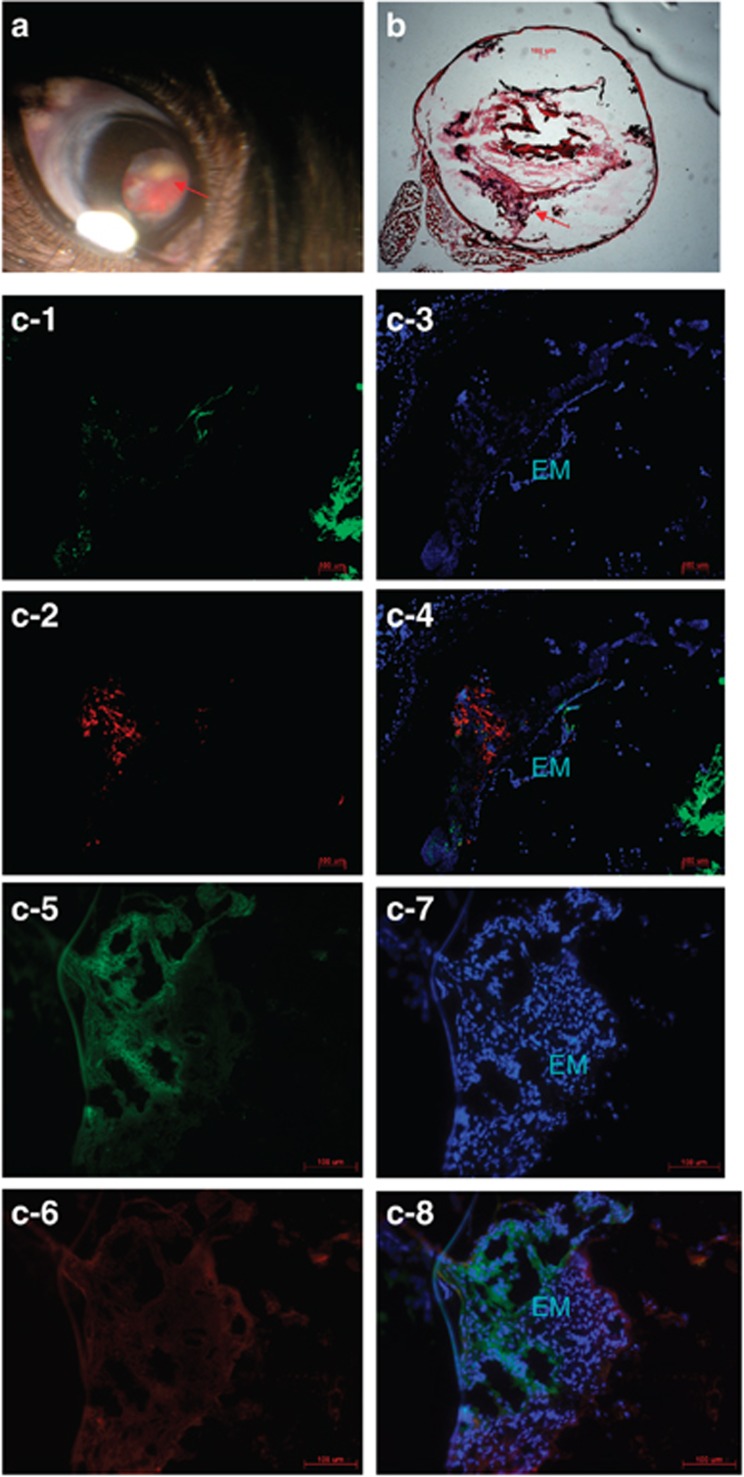
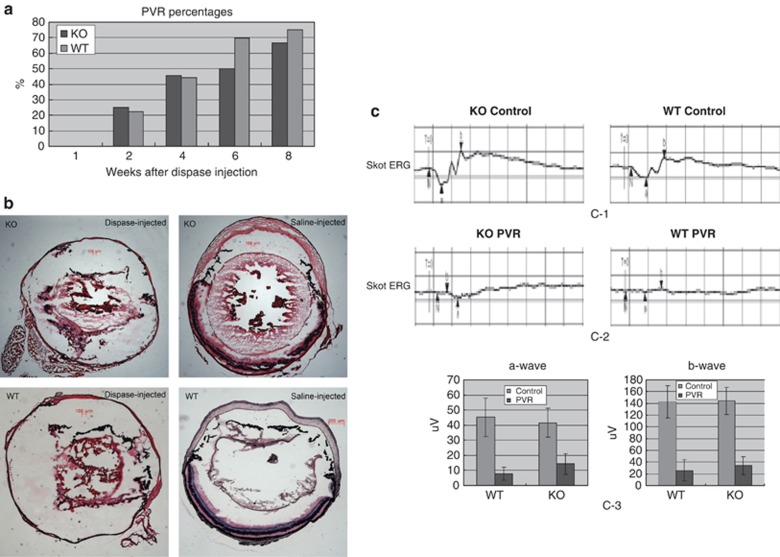
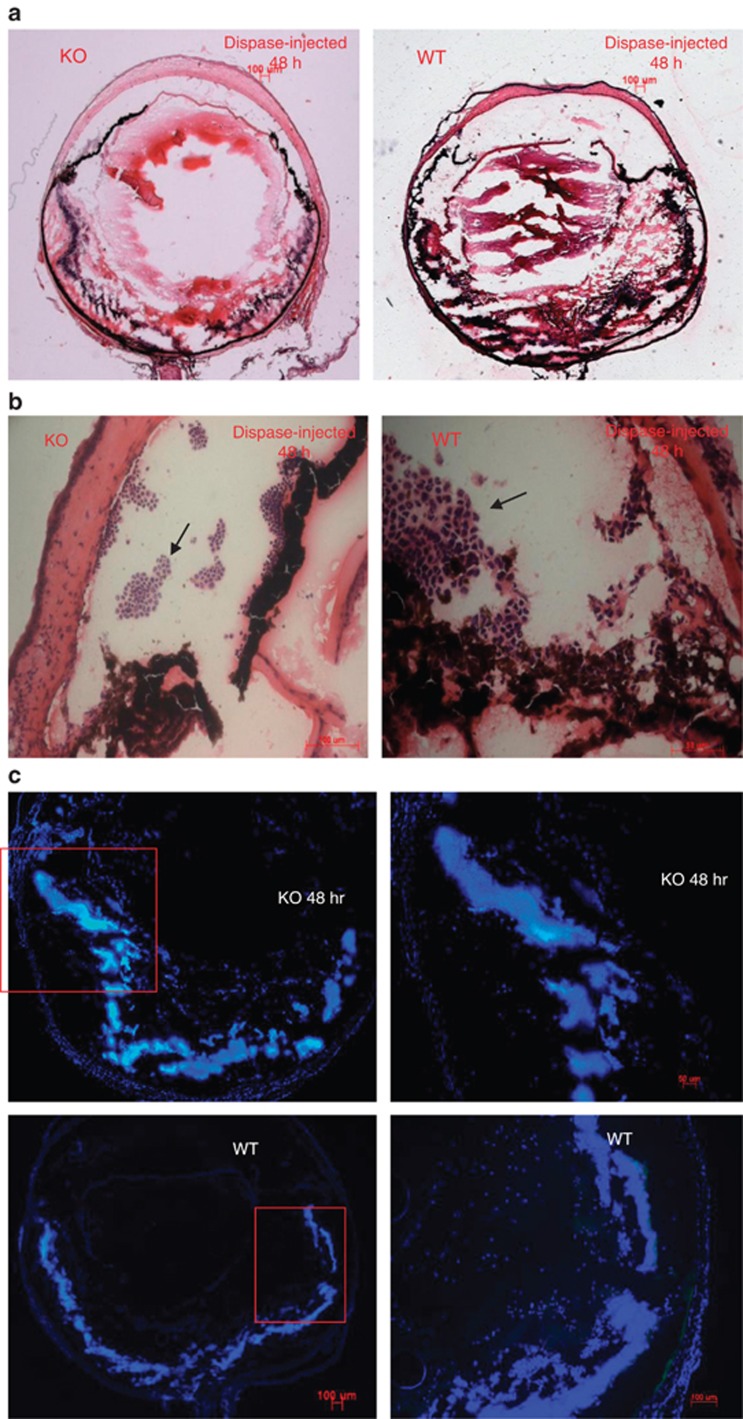
Four- to six-week-old Rag-1 gene knockout (KO) and congenic wild-type mice (WT) on the C57.Bl/6 background were studied. PVR was induced by intravitreal injection of 3 μl dispase at the concentration of 0.2 U/μl. PVR development was monitored by electroretinograms, the macroscopic observation of hemorrhage, cataract, retinal folds, and of an uneven iris, as well as the histological detection of epiretinal membranes on haematoxylin-eosin stained tissue. Additionally, immunofluorescence analysis was performed. These manifestations of PVR were assessed 1, 2, 4, 6, and 8 weeks after the intravitreal injection.
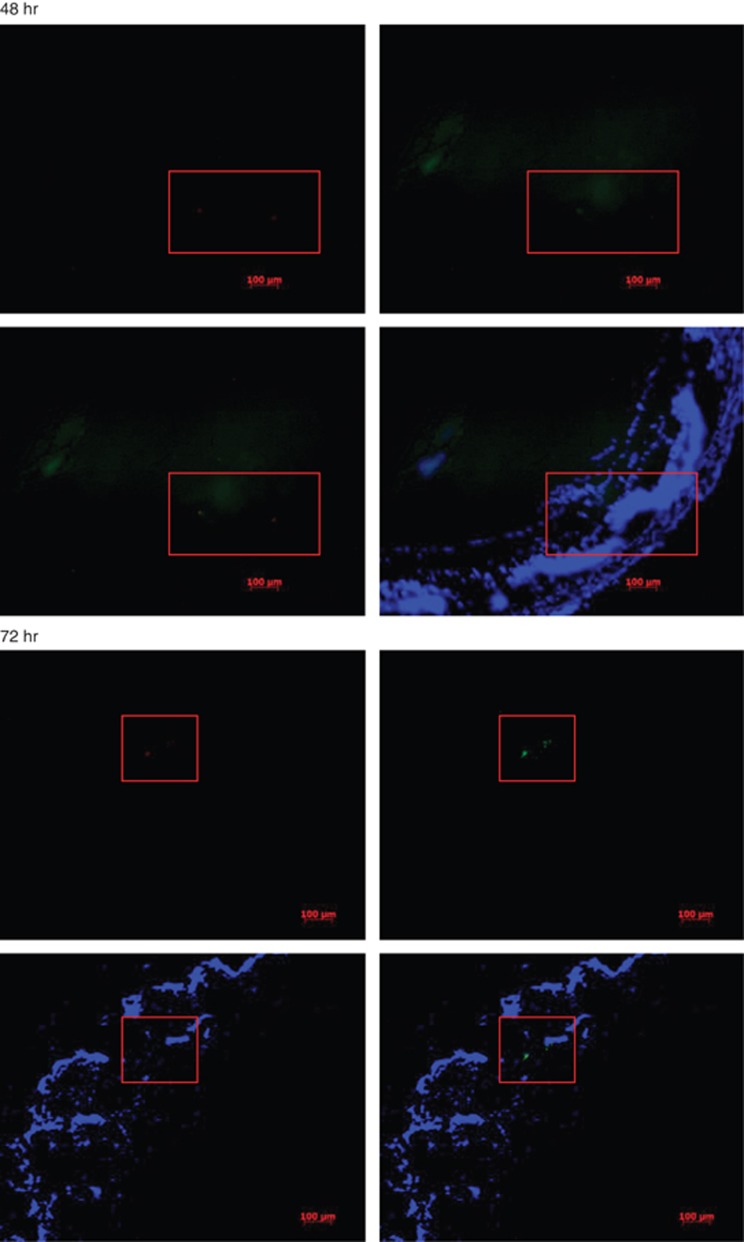
The data showed that the immune-deficient Rag-1 KO mice developed PVR with similar kinetics and severity as did the fully immune competent congenic WT mice. Carboxyfluorescein diacetate succinimidyl ester-labeled T cells that are specific for ovalbumin were detected in the inflamed vitreous and retina showing that T cells that are not specific for autoantigens present in the eye can migrate to PVR lesions. Therefore, the mere presence of T cells in PVR lesions does not imply an autoimmune pathogenesis.
This study suggests that T- and B-cell immunity is not essential for the induction of PVR.
增生性玻璃体视网膜病变(PVR)是孔源性视网膜脱离手术失败的主要原因。尽管间接证据表明这种疾病可能是自身免疫性的,但缺乏对此假说的直接证据。本研究的目的是在小鼠模型中确定 PVR 是否可以在没有 T 或 B 细胞免疫的情况下发生。
研究了 4 至 6 周龄的 Rag-1 基因敲除(KO)和同源野生型(WT)C57.Bl/6 背景小鼠。通过在浓度为 0.2 U/μl 的Dispase 中玻璃体内注射 3μl 来诱导 PVR。通过视网膜电图、出血、白内障、视网膜皱褶和虹膜不均匀的宏观观察以及苏木精-伊红染色组织中视网膜内膜的组织学检测来监测 PVR 的发展。此外,还进行了免疫荧光分析。在玻璃体内注射后 1、2、4、6 和 8 周评估 PVR 的这些表现。
数据显示,免疫缺陷 Rag-1 KO 小鼠与完全免疫功能正常的同源 WT 小鼠一样,以相似的动力学和严重程度发展 PVR。在炎症性玻璃体和视网膜中检测到针对卵清蛋白的特异性羧基荧光素二乙酸琥珀酰亚胺酯标记的 T 细胞,表明并非针对眼部自身抗原的 T 细胞可以迁移到 PVR 病变。因此,PVR 病变中 T 细胞的存在并不意味着自身免疫发病机制。
本研究表明,T 和 B 细胞免疫对于 PVR 的诱导不是必需的。