Panzer Matthew B, Matthews Kyle A, Yu Allen W, Morrison Barclay, Meaney David F, Bass Cameron R
Department of Biomedical Engineering, Duke University Durham, NC, USA.
Front Neurol. 2012 Mar 28;3:46. doi: 10.3389/fneur.2012.00046. eCollection 2012.
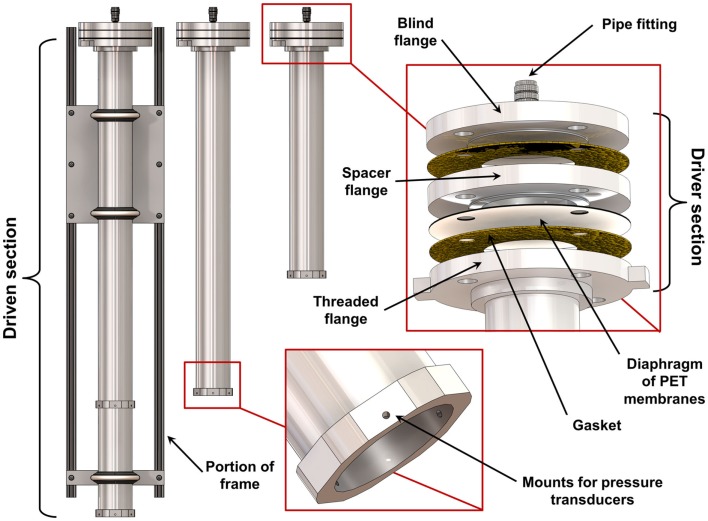
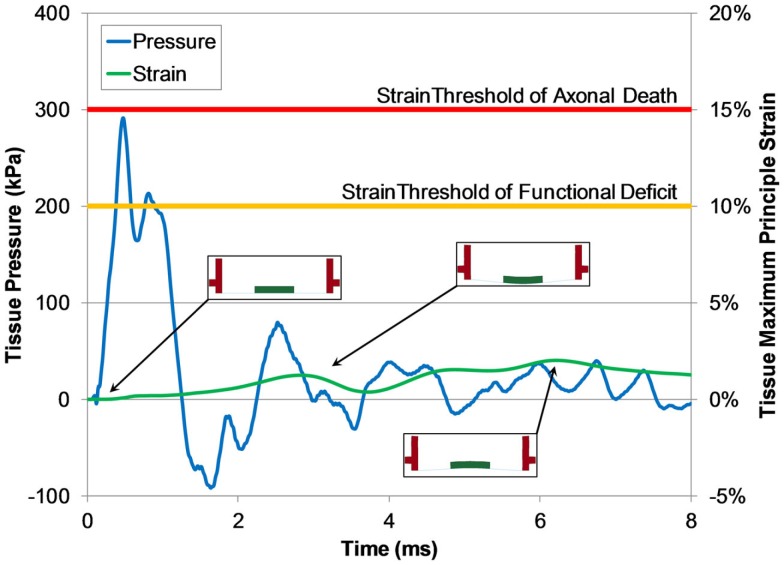
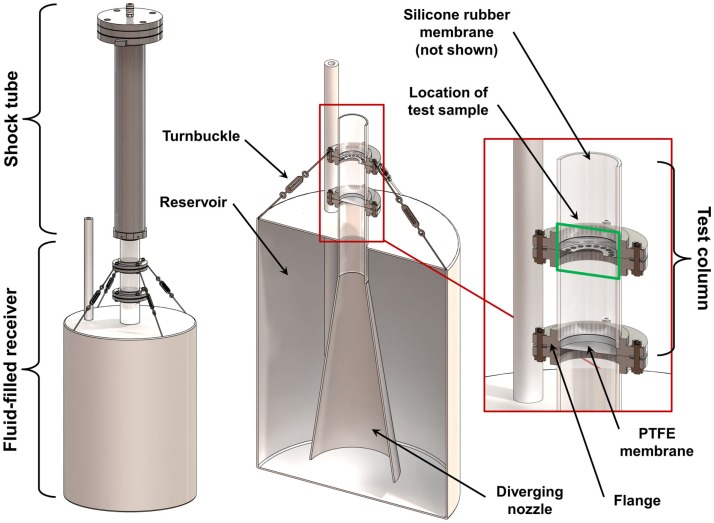
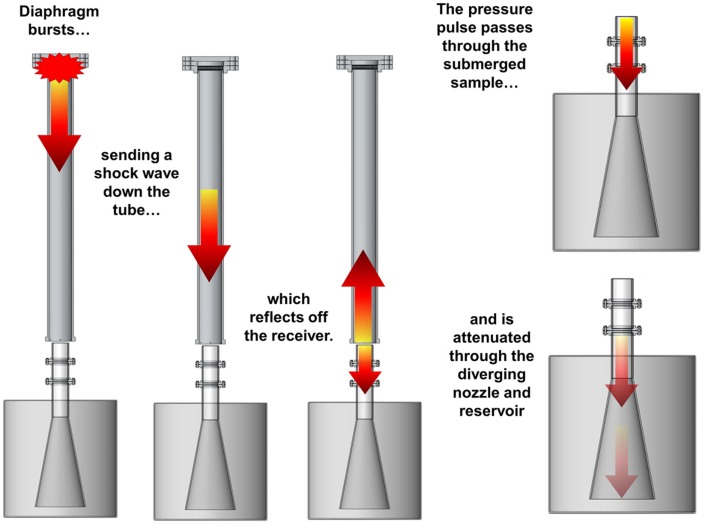
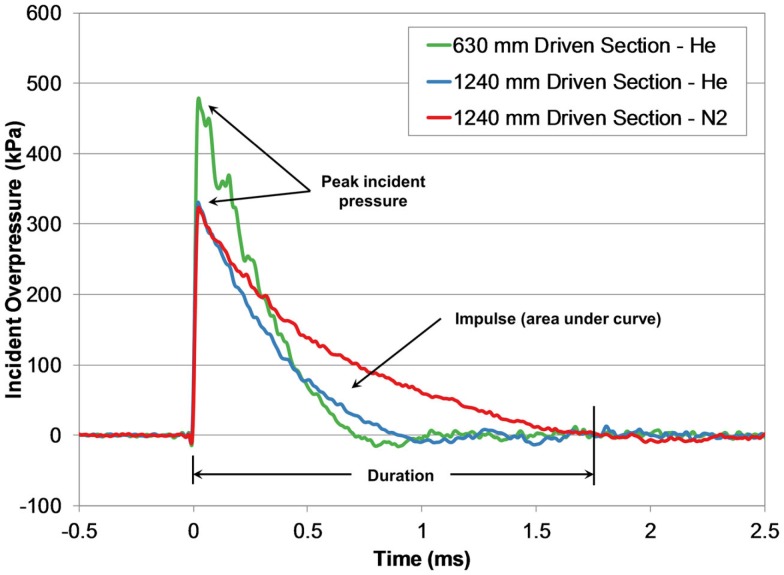
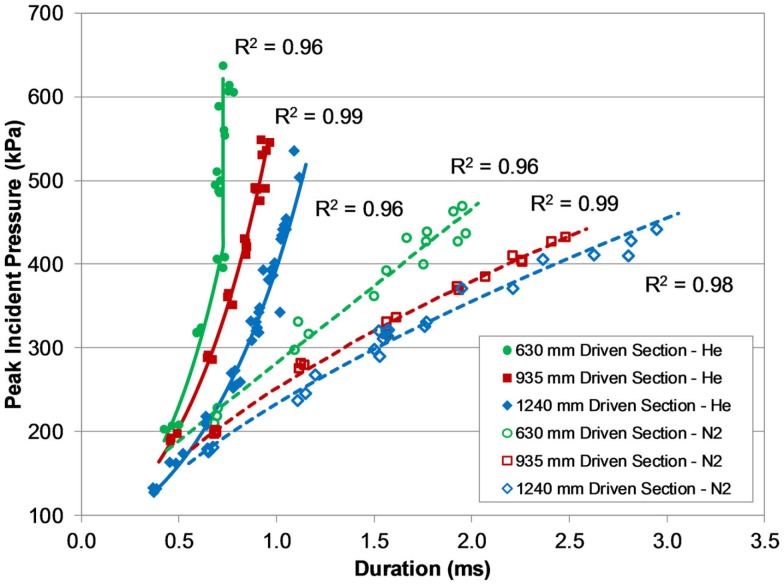
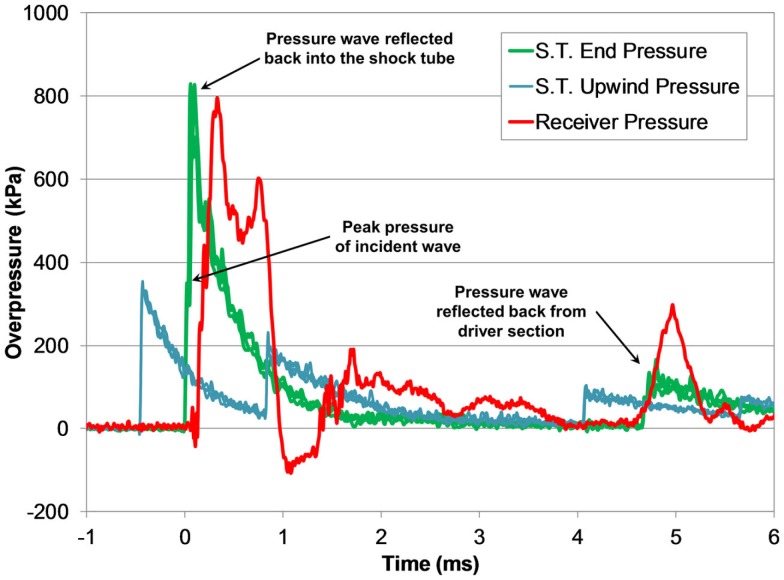
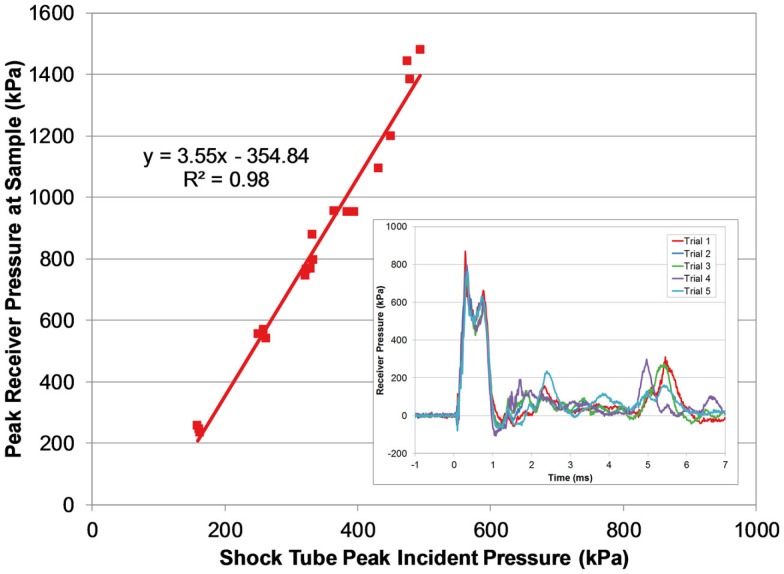
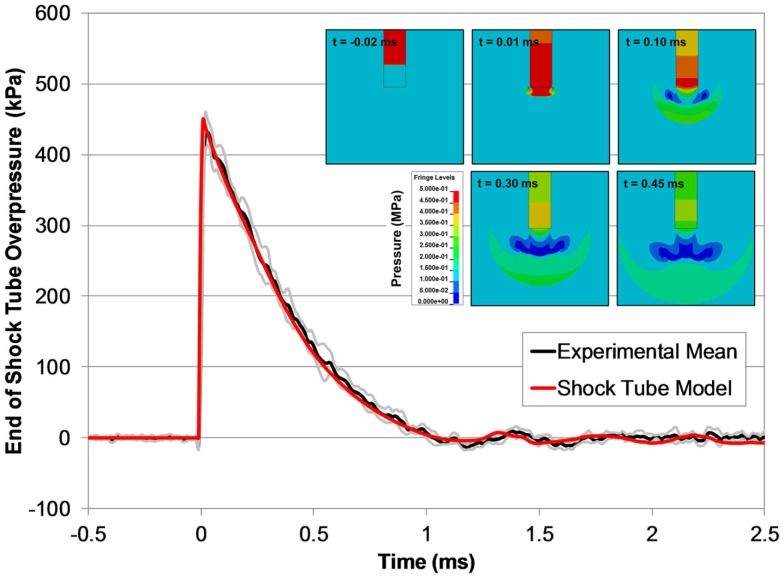
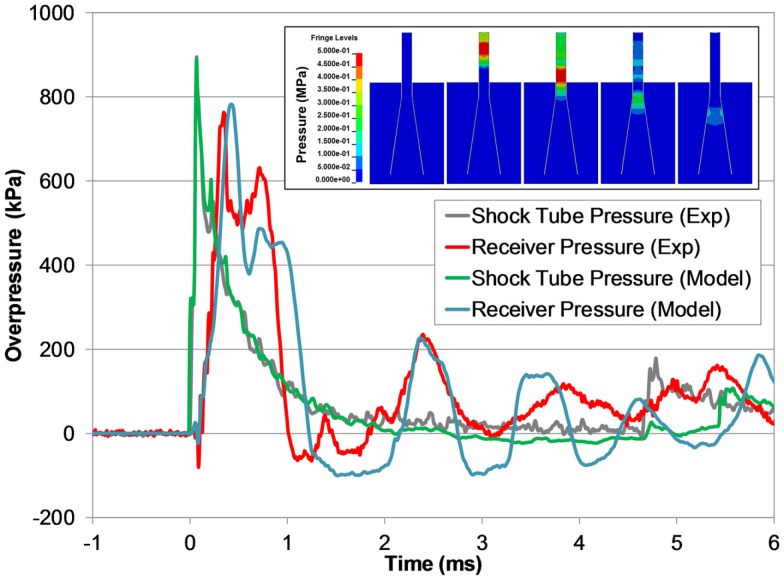
The loading conditions used in some current in vivo and in vitro blast-induced neurotrauma models may not be representative of real-world blast conditions. To address these limitations, we developed a compressed-gas driven shock tube with different driven lengths that can generate Friedlander-type blasts. The shock tube can generate overpressures up to 650 kPa with durations between 0.3 and 1.1 ms using compressed helium driver gas, and peak overpressures up to 450 kPa with durations between 0.6 and 3 ms using compressed nitrogen. This device is used for short-duration blast overpressure loading for small animal in vivo injury models, and contrasts the more frequently used long duration/high impulse blast overpressures in the literature. We also developed a new apparatus that is used with the shock tube to recreate the in vivo intracranial overpressure response for loading in vitro culture preparations. The receiver device surrounds the culture with materials of similar impedance to facilitate the propagation of a single overpressure pulse through the tissue. This method prevents pressure waves reflecting off the tissue that can cause unrealistic deformation and injury. The receiver performance was characterized using the longest helium-driven shock tube, and produced in-fluid overpressures up to 1500 kPa at the location where a culture would be placed. This response was well correlated with the overpressure conditions from the shock tube (R(2) = 0.97). Finite element models of the shock tube and receiver were developed and validated to better elucidate the mechanics of this methodology. A demonstration exposing a culture to the loading conditions created by this system suggest tissue strains less than 5% for all pressure levels simulated, which was well below functional deficit thresholds for strain rates less than 50 s(-1). This novel system is not limited to a specific type of culture model and can be modified to reproduce more complex pressure pulses.
当前一些体内和体外爆炸诱导神经创伤模型所采用的加载条件可能无法代表现实世界中的爆炸情况。为解决这些局限性,我们开发了一种具有不同驱动长度的压缩气体驱动激波管,它能够产生弗里德兰德型爆炸。使用压缩氦驱动气体时,该激波管可产生高达650kPa的超压,持续时间在0.3至1.1毫秒之间;使用压缩氮气时,峰值超压可达450kPa,持续时间在0.6至3毫秒之间。此装置用于小动物体内损伤模型的短持续时间爆炸超压加载,与文献中更常用的长持续时间/高冲量爆炸超压形成对比。我们还开发了一种新装置,与激波管配合使用,以重现体内颅内超压响应,用于加载体外培养制剂。接收装置用具有相似阻抗的材料围绕培养物,以促进单个超压脉冲在组织中的传播。这种方法可防止压力波从组织反射,从而避免造成不切实际的变形和损伤。使用最长的氦驱动激波管对接收器性能进行了表征,在培养物放置位置产生的流体中超压高达1500kPa。该响应与激波管的超压条件具有良好的相关性(R² = 0.97)。开发并验证了激波管和接收器的有限元模型,以更好地阐明该方法的力学原理。将一种培养物暴露于该系统创建的加载条件下的演示表明,在模拟的所有压力水平下,组织应变均小于5%,这远低于应变速率小于50s⁻¹时的功能缺陷阈值。这种新型系统不限于特定类型的培养模型,并且可以进行修改以重现更复杂的压力脉冲。