Richards Timothy D J, Fenton Amanda L, Syed Rahma, Wagner Graham F
Department of Physiology and Pharmacology, Faculty of Medicine and Dentistry, University of Western Ontario, London, ON, Canada N6A 5C1.
ISRN Endocrinol. 2012;2012:257841. doi: 10.5402/2012/257841. Epub 2012 Feb 6.
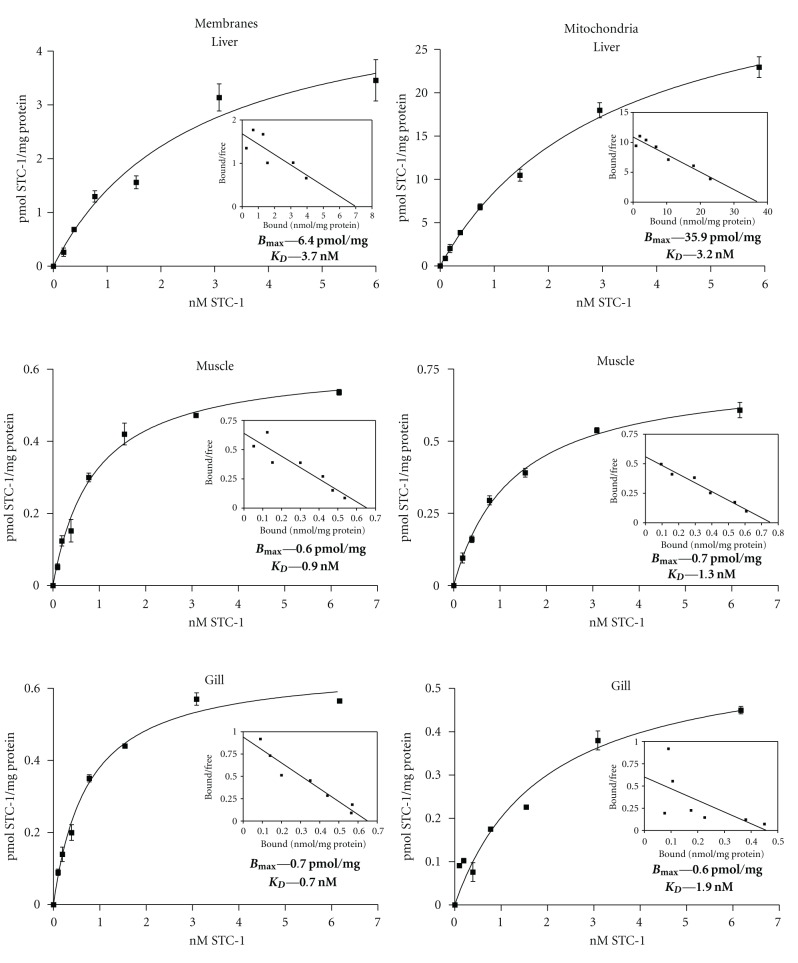
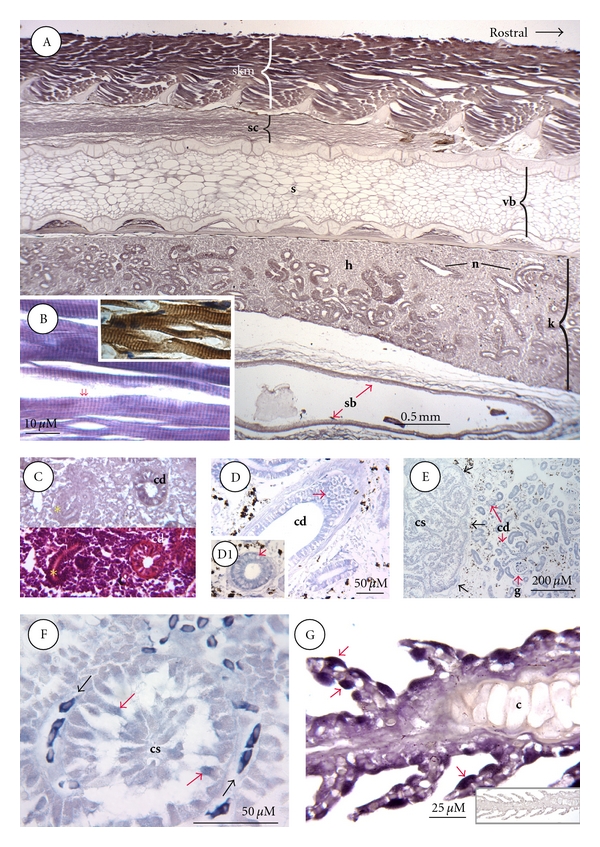
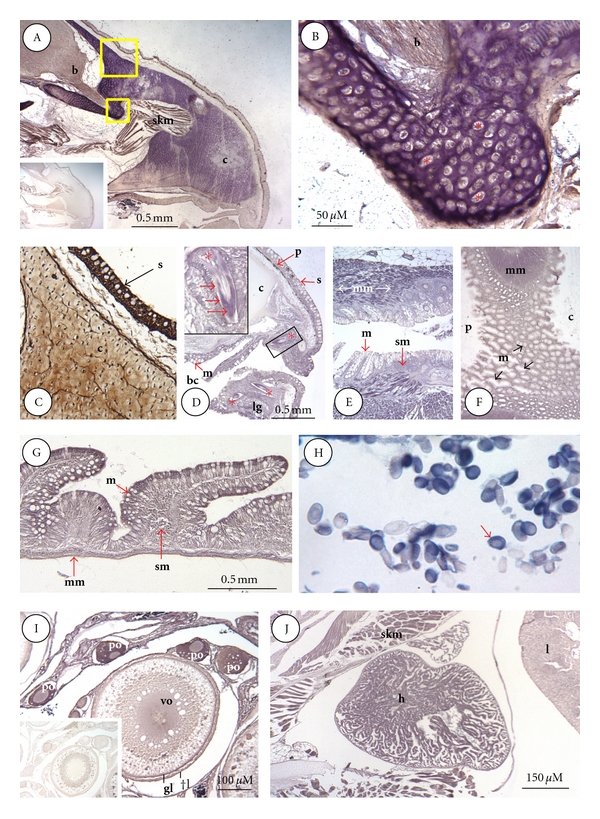
Mammalian stanniocalcin-1 (STC-1) is one of several ligands targeted to mitochondria. High affinity STC-1 receptors are present on the mitochondrial membranes of nephron cells, myocytes, and hepatocytes, to enable ligand sequestration within the matrix. However, STC-1 receptors have not been characterized in fish. Nor is it known if mitochondrial targeting occurs in fish. The aim of the study was to address these questions. Saturation binding assays were carried out to obtain estimates of K(D) and B(max). They revealed the presence of saturable, high-affinity receptors on both membranes and mitochondria of liver, muscle, and gill filament. In situ ligand binding (ISLB) was used to localize receptors at the histological level and revealed some unexpected findings. In cranium, for instance, receptors were found mainly in the cartilage matrix, as opposed to the chondrocytes. In brain, the majority of receptors were located on neuropil areas as opposed to neuronal cell bodies. In skeletal muscle, receptors were confined to periodic striations, tentatively identified as the Z lines. Receptors were even found on STC-1 producing corpuscles of Stannius cells, raising the possibility of there being an autocrine feedback loop or, perhaps, a soluble binding protein that is released with the ligand to regulate its bioavailability.
哺乳动物的鲽鱼降钙素-1(STC-1)是几种靶向线粒体的配体之一。在肾单位细胞、心肌细胞和肝细胞的线粒体膜上存在高亲和力的STC-1受体,以使配体在基质中被隔离。然而,鱼类中的STC-1受体尚未得到表征。鱼类中是否发生线粒体靶向也不清楚。该研究的目的是解决这些问题。进行了饱和结合试验以获得解离常数(K(D))和最大结合容量(B(max))的估计值。试验揭示了在肝脏、肌肉和鳃丝的膜和线粒体上均存在可饱和的高亲和力受体。原位配体结合(ISLB)用于在组织学水平定位受体,并揭示了一些意外发现。例如,在颅骨中,受体主要存在于软骨基质中,而不是软骨细胞中。在大脑中,大多数受体位于神经毡区域,而不是神经元细胞体上。在骨骼肌中,受体局限于周期性横纹,初步确定为Z线。甚至在产生STC-1的斯坦尼斯细胞小体上也发现了受体,这增加了存在自分泌反馈回路的可能性,或者可能存在一种与配体一起释放以调节其生物利用度的可溶性结合蛋白。