Edwin L. Steele Laboratory, Department of Radiation Oncology, Massachusetts General Hospital and Harvard Medical School, Boston, Massachusetts 02114, USA.
Nat Nanotechnol. 2012 Apr 8;7(6):383-8. doi: 10.1038/nnano.2012.45.
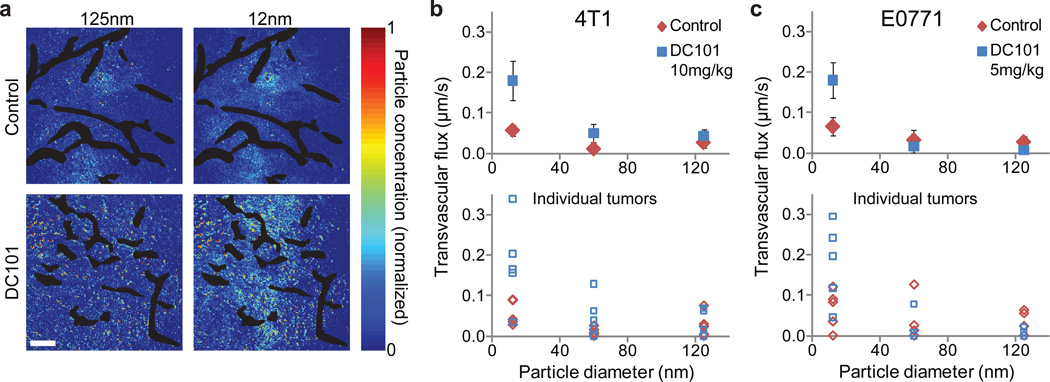
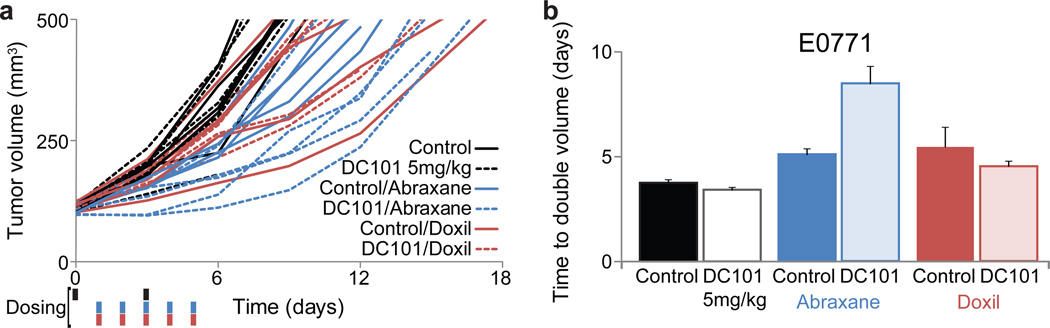
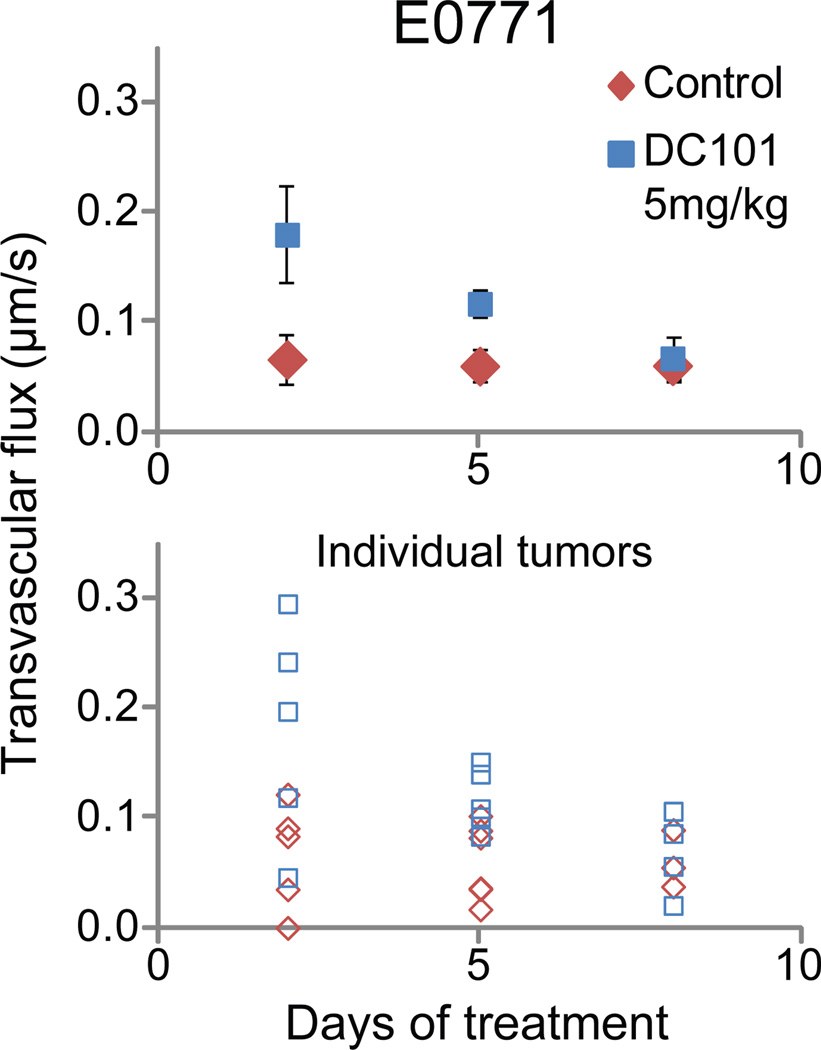
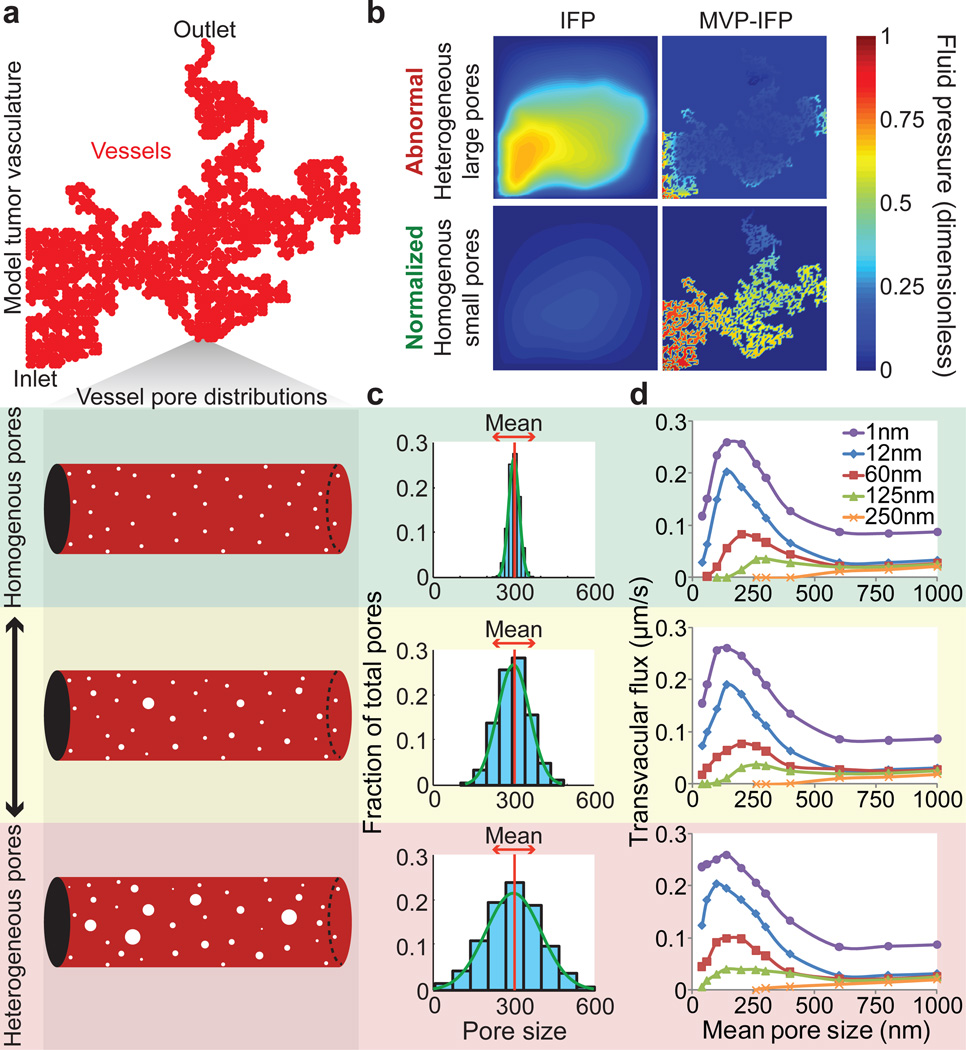
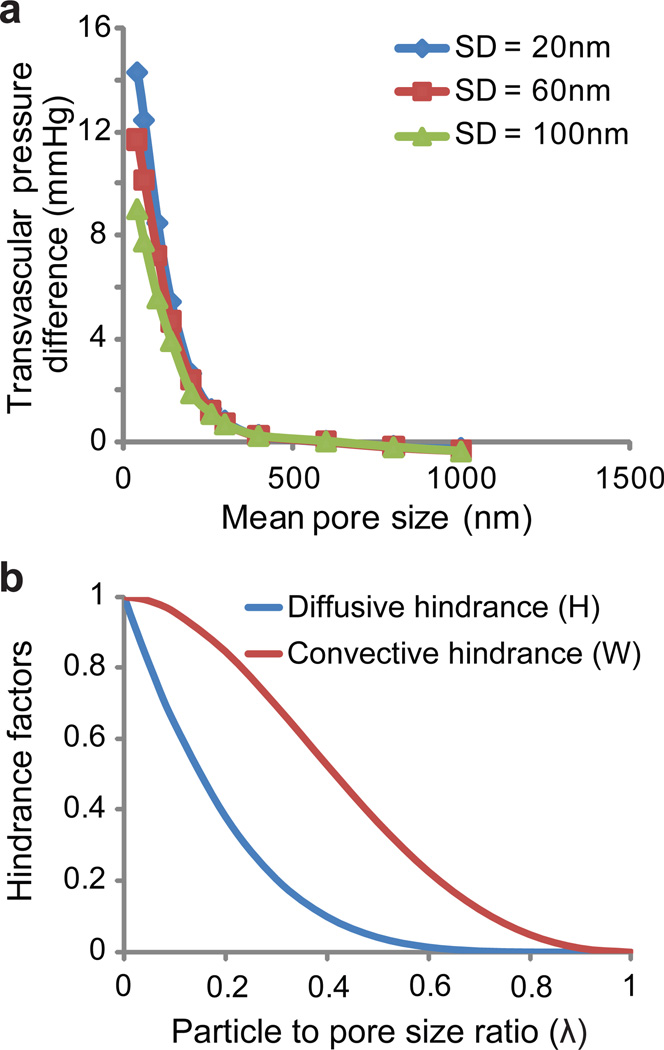
The blood vessels of cancerous tumours are leaky and poorly organized. This can increase the interstitial fluid pressure inside tumours and reduce blood supply to them, which impairs drug delivery. Anti-angiogenic therapies--which 'normalize' the abnormal blood vessels in tumours by making them less leaky--have been shown to improve the delivery and effectiveness of chemotherapeutics with low molecular weights, but it remains unclear whether normalizing tumour vessels can improve the delivery of nanomedicines. Here, we show that repairing the abnormal vessels in mammary tumours, by blocking vascular endothelial growth factor receptor-2, improves the delivery of smaller nanoparticles (diameter, 12 nm) while hindering the delivery of larger nanoparticles (diameter, 125 nm). Using a mathematical model, we show that reducing the sizes of pores in the walls of vessels through normalization decreases the interstitial fluid pressure in tumours, thus allowing small nanoparticles to enter them more rapidly. However, increased steric and hydrodynamic hindrances, also associated with smaller pores, make it more difficult for large nanoparticles to enter tumours. Our results further suggest that smaller (∼12 nm) nanomedicines are ideal for cancer therapy due to their superior tumour penetration.
肿瘤的血管是渗漏的,且组织排列不良。这会增加肿瘤内的间质流体压力,并减少血液供应,从而影响药物输送。抗血管生成疗法——通过使血管渗漏减少而“使肿瘤内的异常血管正常化”——已被证明可以提高低分子量化疗药物的输送和效果,但仍不清楚使肿瘤血管正常化是否可以提高纳米药物的输送。在这里,我们通过阻断血管内皮生长因子受体-2,显示出修复乳腺肿瘤中的异常血管可以改善较小的纳米颗粒(直径 12nm)的输送,同时阻碍较大的纳米颗粒(直径 125nm)的输送。我们使用数学模型表明,通过正常化降低血管壁上孔的大小,可以降低肿瘤内的间质流体压力,从而使小纳米颗粒更快速地进入肿瘤。然而,与较小的孔相关的增加的空间和流体动力学阻碍,使得大纳米颗粒更难以进入肿瘤。我们的结果进一步表明,由于具有更好的肿瘤穿透性,较小的(约 12nm)纳米药物是癌症治疗的理想选择。