Department of Microbiology and Molecular Genetics, Michigan State University, East Lansing, Michigan 48824-1224, USA.
Toxicol Sci. 2012 Jun;127(2):382-90. doi: 10.1093/toxsci/kfs134. Epub 2012 Apr 5.
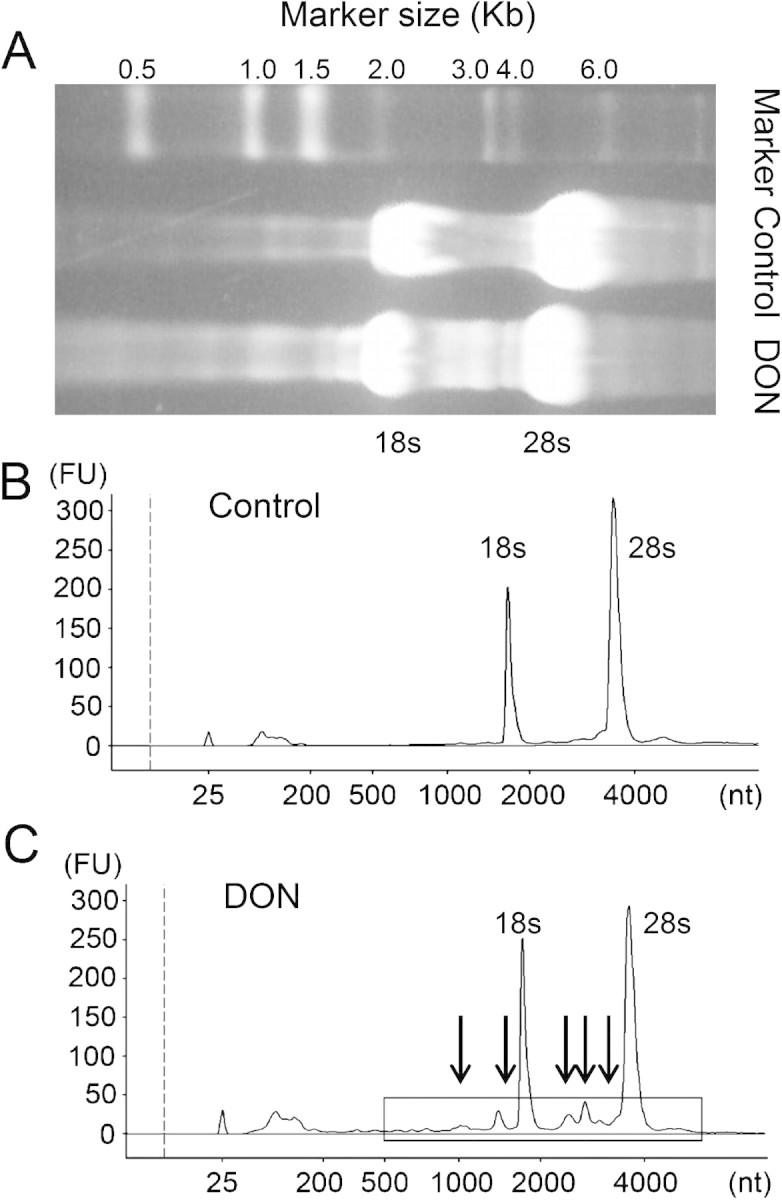
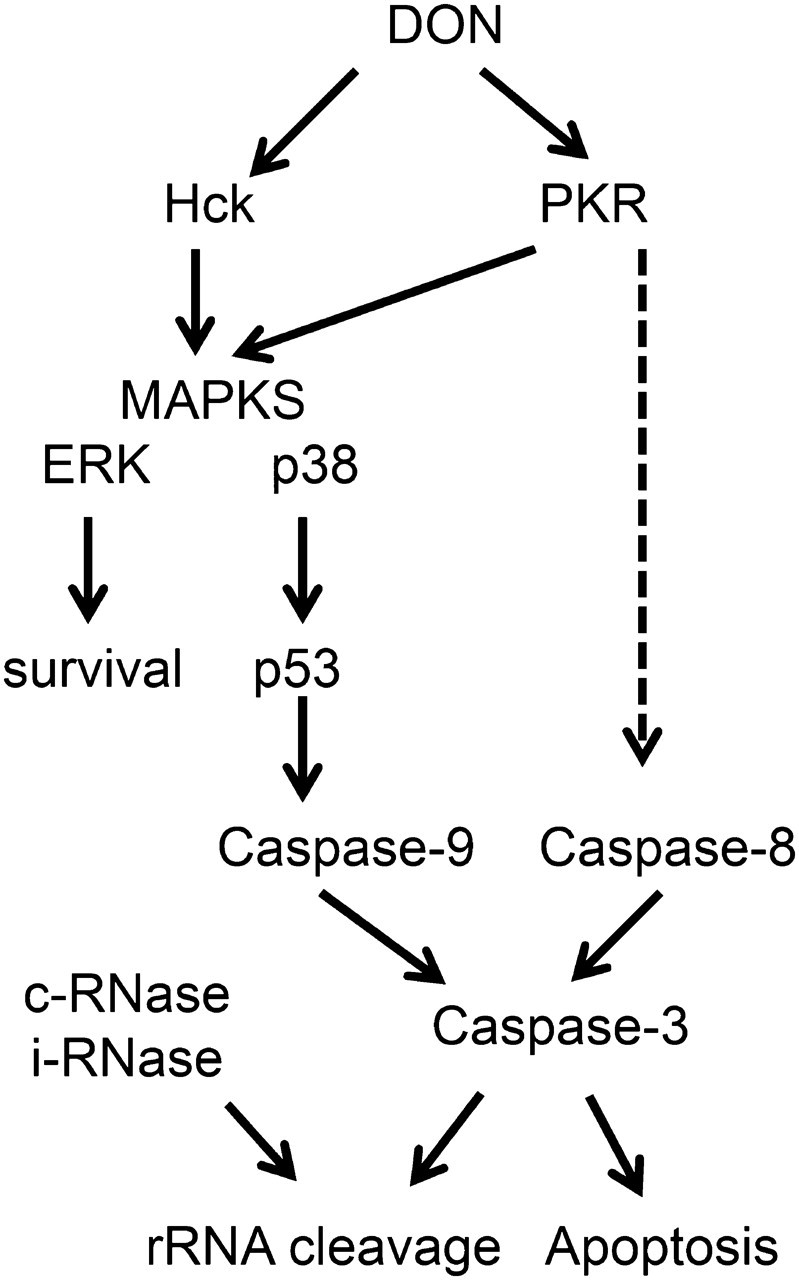
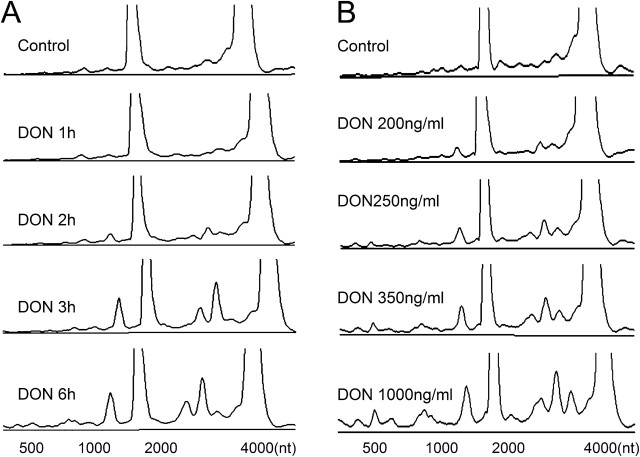
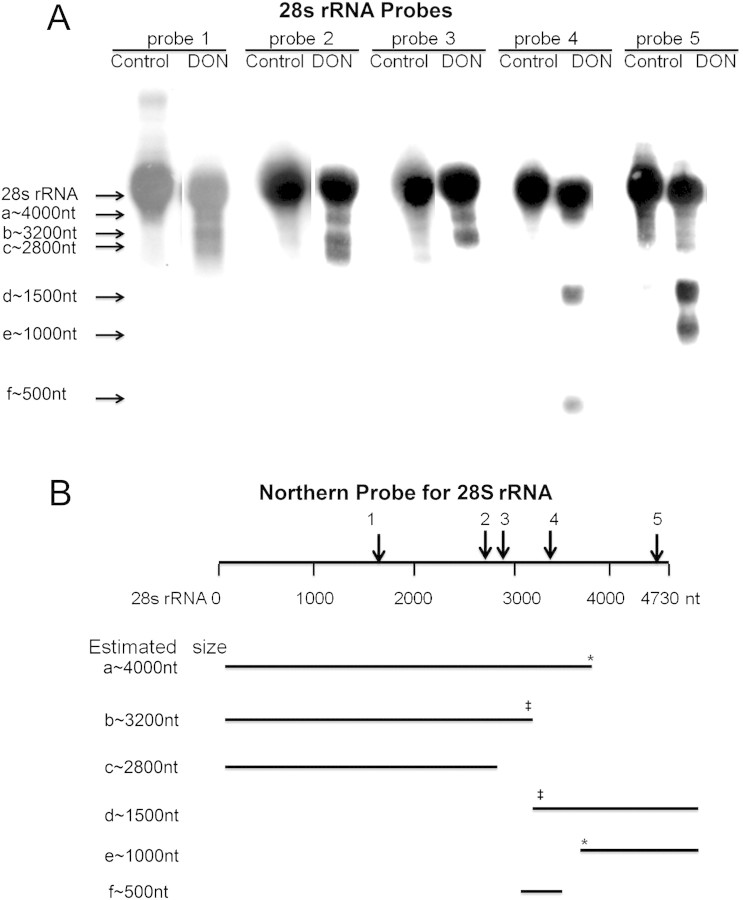
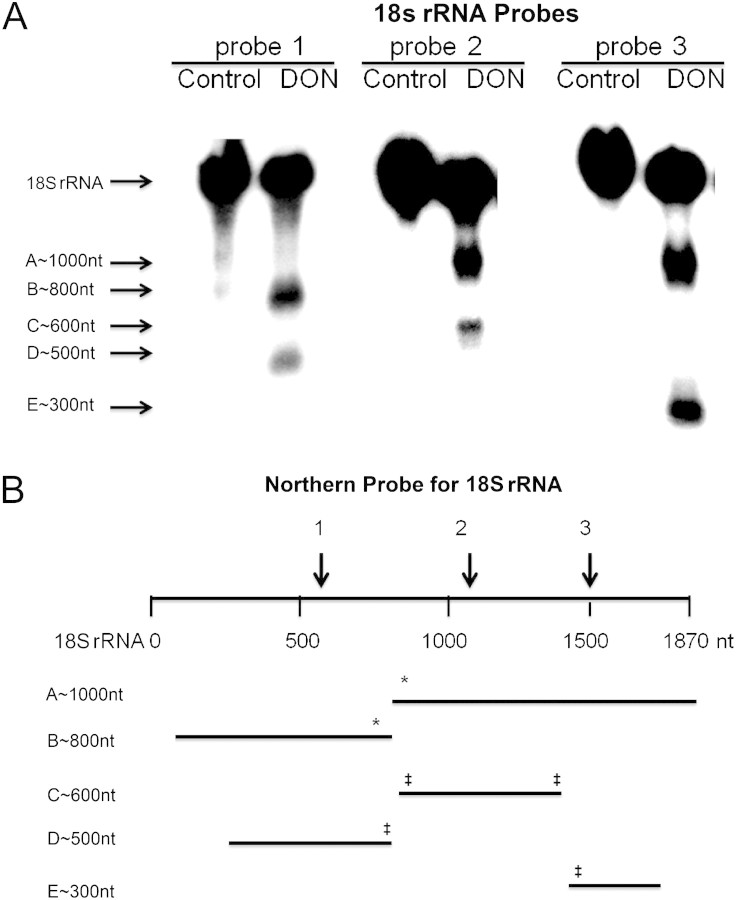
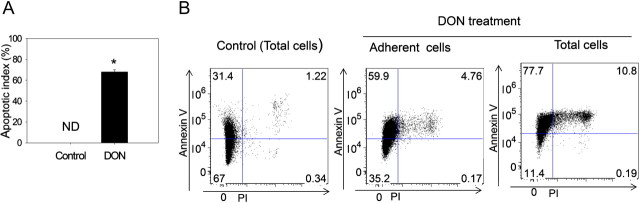
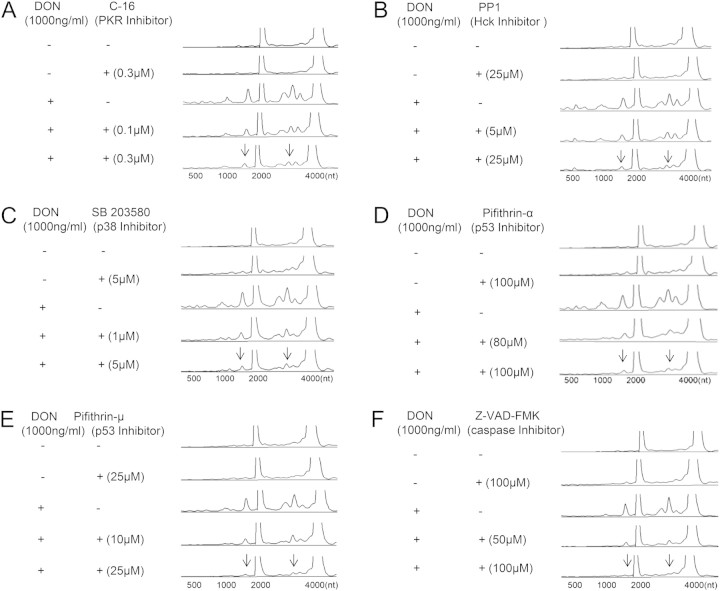
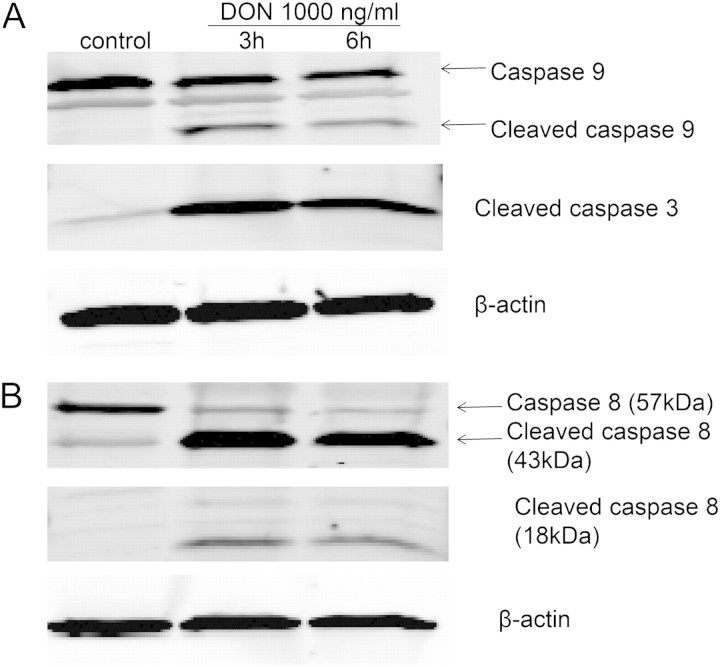
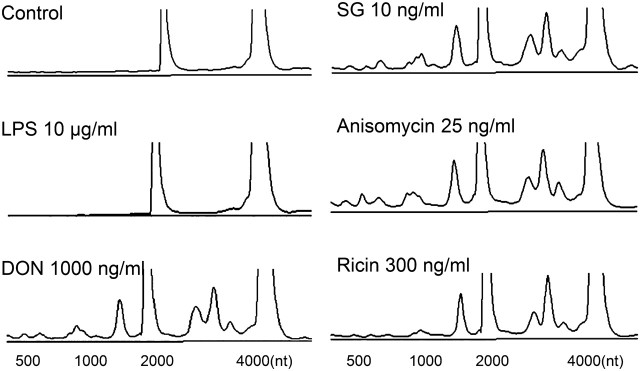
The trichothecene mycotoxin deoxynivalenol (DON), a known translational inhibitor, induces ribosomal RNA (rRNA) cleavage. Here, we characterized this process relative to (1) specific 18S and 28S ribosomal RNA cleavage sites and (2) identity of specific upstream signaling elements in this pathway. Capillary electrophoresis indicated that DON at concentrations as low as 200 ng/ml evoked selective rRNA cleavage after 6 h and that 1000 ng/ml caused cleavage within 2 h. Northern blot analysis revealed that DON exposure induced six rRNA cleavage fragments from 28S rRNA and five fragments from 18S rRNA. When selective kinase inhibitors were used to identify potential upstream signals, RNA-activated protein kinase (PKR), hematopoietic cell kinase (Hck), and p38 were found to be required for rRNA cleavage, whereas c-Jun N-terminal kinase and extracellular signal-regulated kinase were not. Furthermore, rRNA fragmentation was suppressed by the p53 inhibitors pifithrin-α and pifithrin-μ as well as the pan caspase inhibitor Z-VAD-FMK. Concurrent apoptosis was confirmed by acridine orange/ethidium bromide staining and flow cytometry. DON activated caspases 3, 8, and 9, thus suggesting the possible coinvolvement of both extrinsic and intrinsic apoptotic pathways in rRNA cleavage. Satratoxin G (SG), anisomycin, and ricin also induced specific rRNA cleavage profiles identical to those of DON, suggesting that ribotoxins might share a conserved rRNA cleavage mechanism. Taken together, DON-induced rRNA cleavage is likely to be closely linked to apoptosis activation and appears to involve the sequential activation of PKR/Hck →p38→p53→caspase 8/9→caspase 3.
脱氧雪腐镰刀菌烯醇(DON)是一种已知的翻译抑制剂,可诱导核糖体 RNA(rRNA)切割。在这里,我们对这一过程进行了描述,(1)具体的 18S 和 28S 核糖体 RNA 切割位点,以及(2)该途径中特定上游信号元件的身份。毛细管电泳表明,DON 在低至 200ng/ml 的浓度下即可在 6 小时后引发选择性 rRNA 切割,而 1000ng/ml 则在 2 小时内引发切割。Northern blot 分析显示,DON 暴露后可诱导 28S rRNA 产生 6 个 rRNA 切割片段,18S rRNA 产生 5 个片段。当使用选择性激酶抑制剂来鉴定潜在的上游信号时,发现 RNA 激活蛋白激酶(PKR)、造血细胞激酶(Hck)和 p38 对于 rRNA 切割是必需的,而 c-Jun N-末端激酶和细胞外信号调节激酶则不是。此外,p53 抑制剂 pifithrin-α 和 pifithrin-μ 以及泛半胱天冬酶抑制剂 Z-VAD-FMK 可抑制 rRNA 片段化。吖啶橙/溴化乙锭染色和流式细胞术证实了同时发生的细胞凋亡。DON 激活了 caspase-3、8 和 9,因此暗示了外源性和内源性凋亡途径可能都参与了 rRNA 切割。SAT 毒素 G(SG)、anisomycin 和蓖麻毒素也诱导了与 DON 相同的特异性 rRNA 切割谱,这表明核糖体毒素可能具有保守的 rRNA 切割机制。总之,DON 诱导的 rRNA 切割可能与凋亡激活密切相关,并且似乎涉及 PKR/Hck→p38→p53→caspase 8/9→caspase 3 的顺序激活。