Laboratoire de Biologie Moléculaire Eucaryote, UPS, Université de Toulouse, Toulouse, France.
Nucleic Acids Res. 2012 Aug;40(14):6800-7. doi: 10.1093/nar/gks321. Epub 2012 Apr 11.
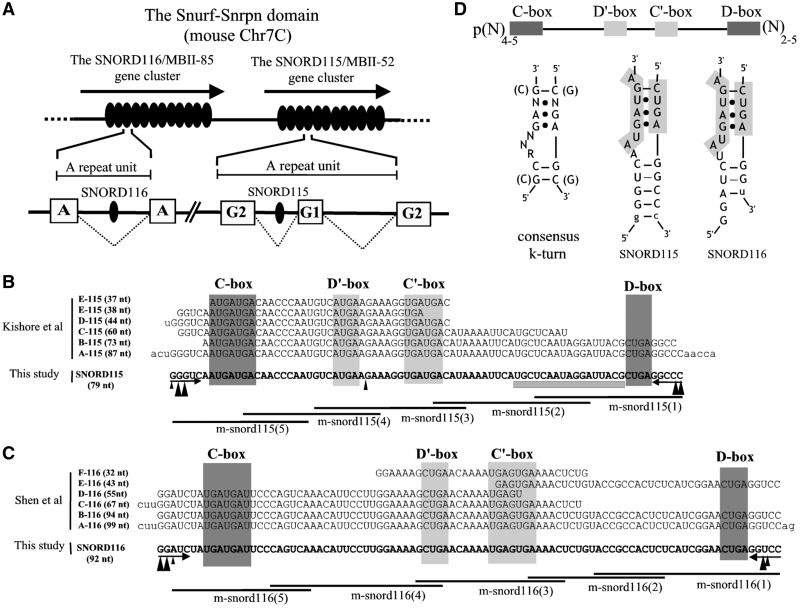
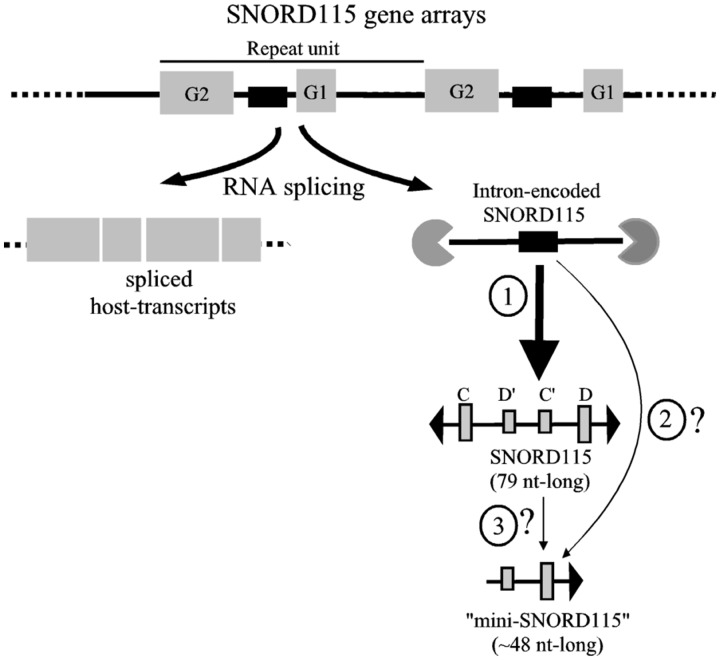
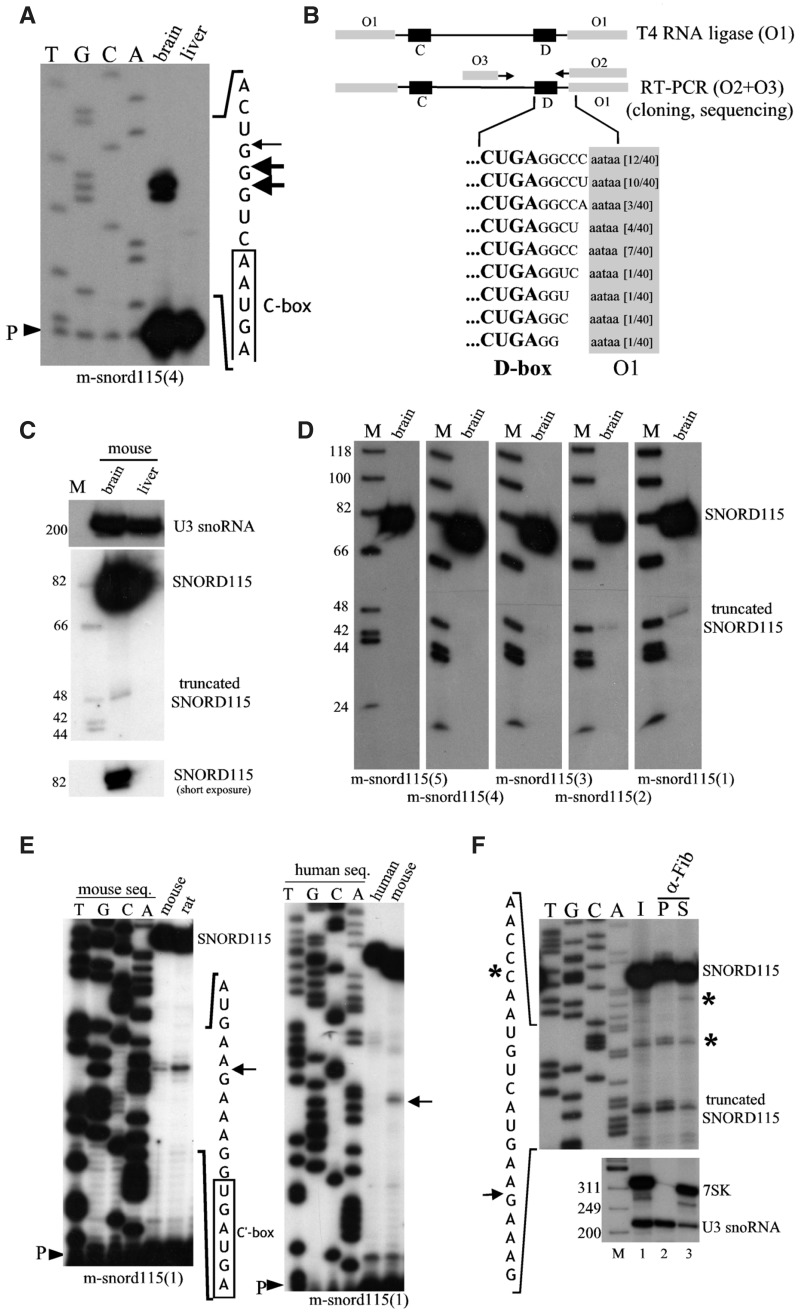
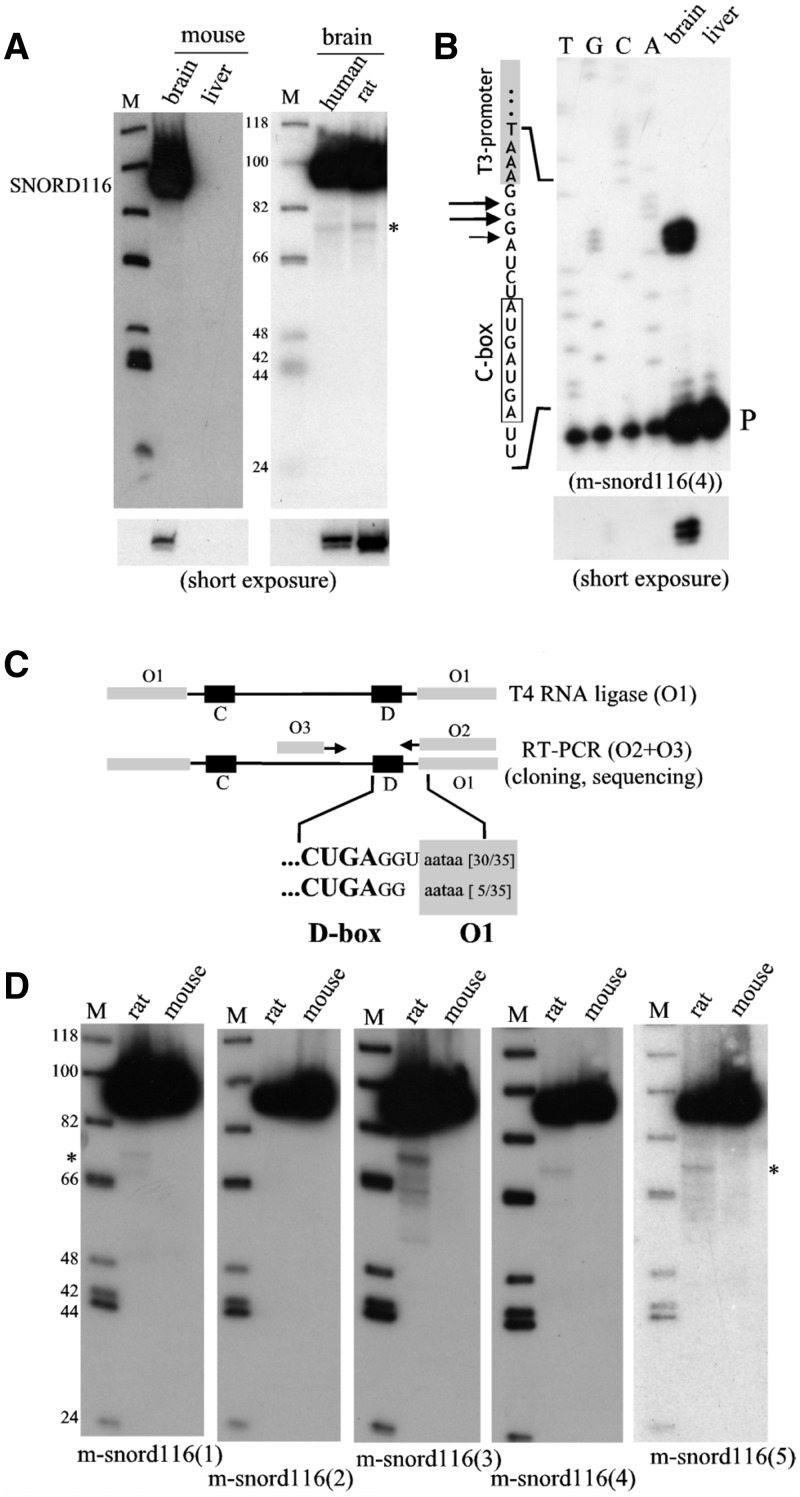
The imprinted Snurf-Snrpn chromosomal domain contains two large arrays of tandemly repeated, paternally expressed box C/D small-nucleolar RNA (snoRNA) genes: the SNORD115 (H/MBII-52) and SNORD116 (H/MBII-85) gene clusters believed to play key roles in the fine-tuning of serotonin receptor (5-HT2C) pre-mRNA processing and in the etiology of the Prader-Willi Syndrome (PWS), respectively. SNORD115 and SNORD116 were recently proposed to undergo significant conversion into shorter RNA species, the so-called psnoRNAs. Here, we provide evidence that argues against the existence of abundant psnoRNAs in human or mouse brain. Instead, we characterize a previously unsuspected low-abundance, fibrillarin-associated SNORD115-derived smaller RNA species. Based on these findings, we strongly recommend that PWS-encoded SNORD115 and SNORD116 be considered as bona fide box C/D snoRNAs.
印记的 Snurf-Snrpn 染色体结构域包含两个大型串联重复、父系表达的框 C/D 小核仁 RNA (snoRNA) 基因簇:SNORD115(H/MBII-52)和 SNORD116(H/MBII-85)基因簇,分别被认为在血清素受体(5-HT2C)前体 mRNA 加工的微调以及 Prader-Willi 综合征(PWS)的病因学中发挥关键作用。最近提出 SNORD115 和 SNORD116 会显著转化为较短的 RNA 物种,即所谓的 psnoRNAs。在这里,我们提供的证据表明人类或鼠脑中不存在大量的 psnoRNAs。相反,我们描述了一种以前未被怀疑的低丰度、纤维蛋白关联的 SNORD115 衍生的较小 RNA 物种。基于这些发现,我们强烈建议将 PWS 编码的 SNORD115 和 SNORD116 视为真正的框 C/D snoRNAs。