Faculty of Science, Charles University, Prague, Czech Republic.
PLoS Pathog. 2012;8(4):e1002580. doi: 10.1371/journal.ppat.1002580. Epub 2012 Apr 5.
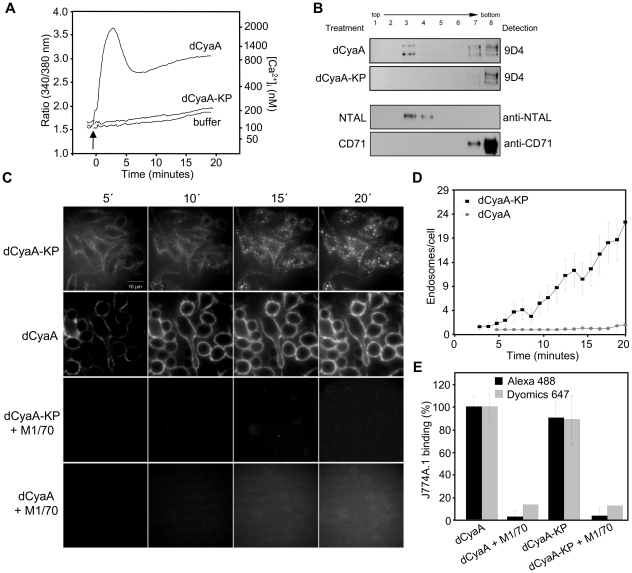
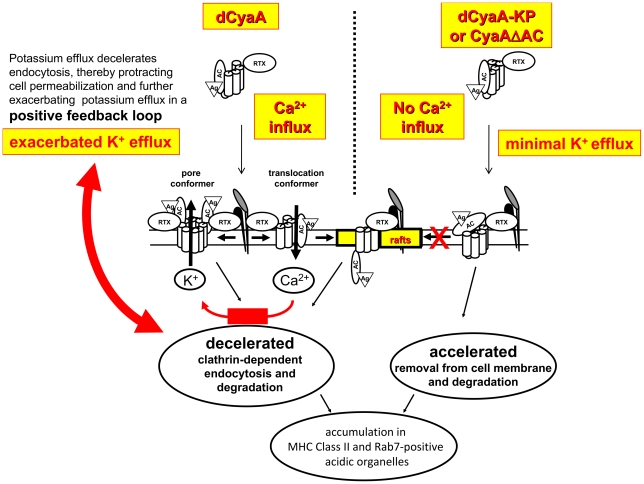
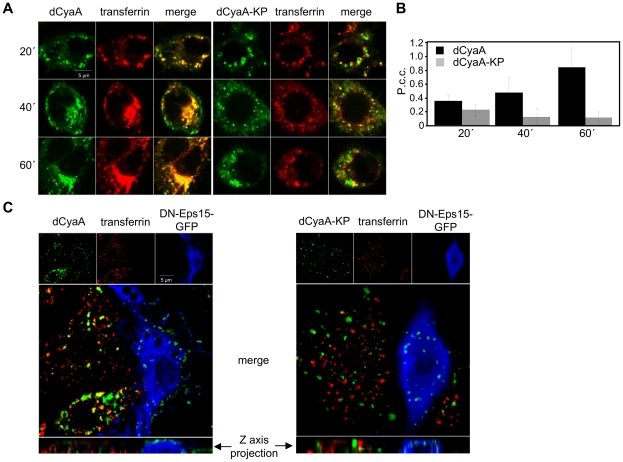
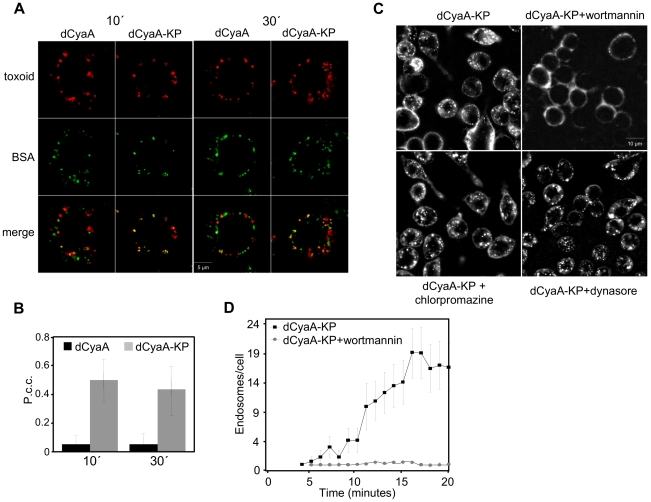
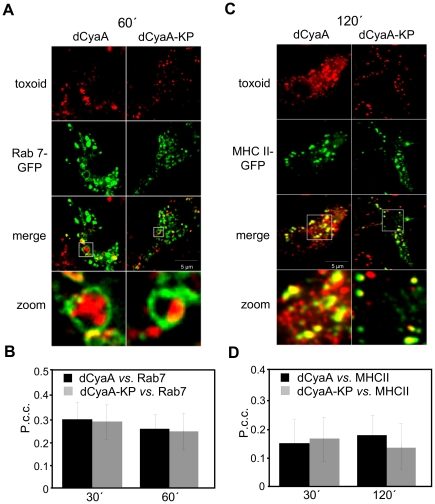
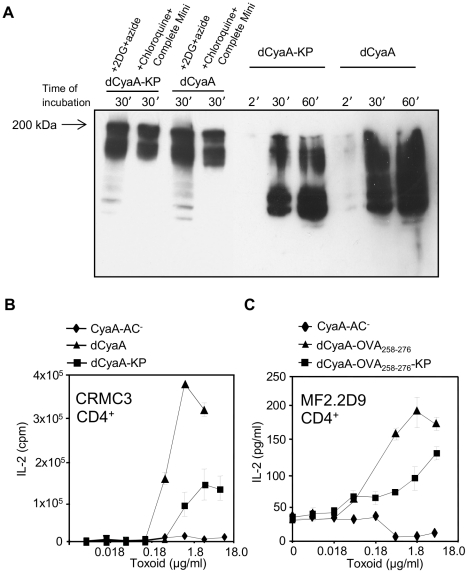
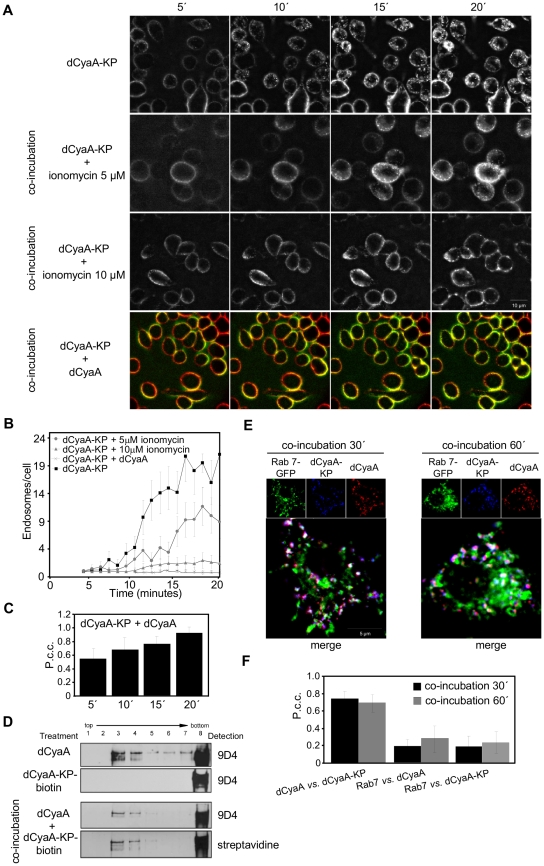
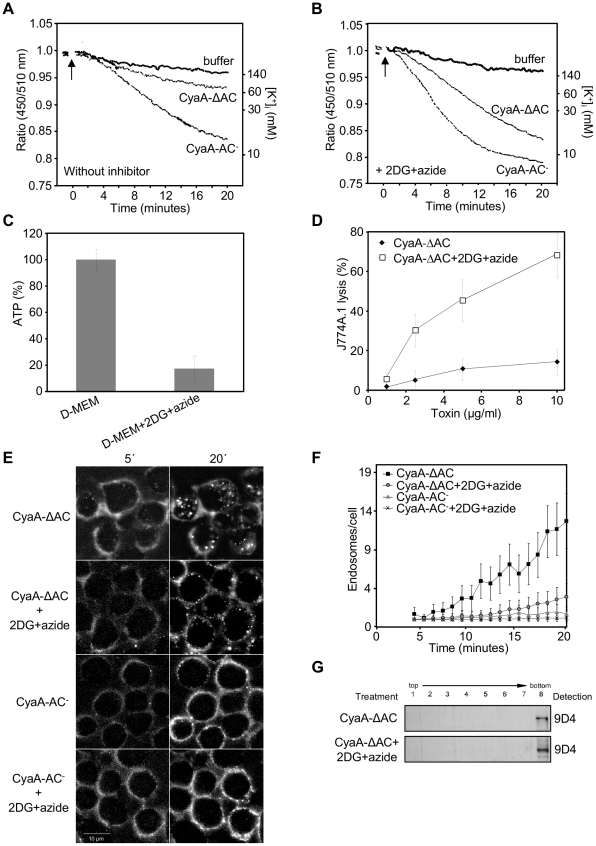
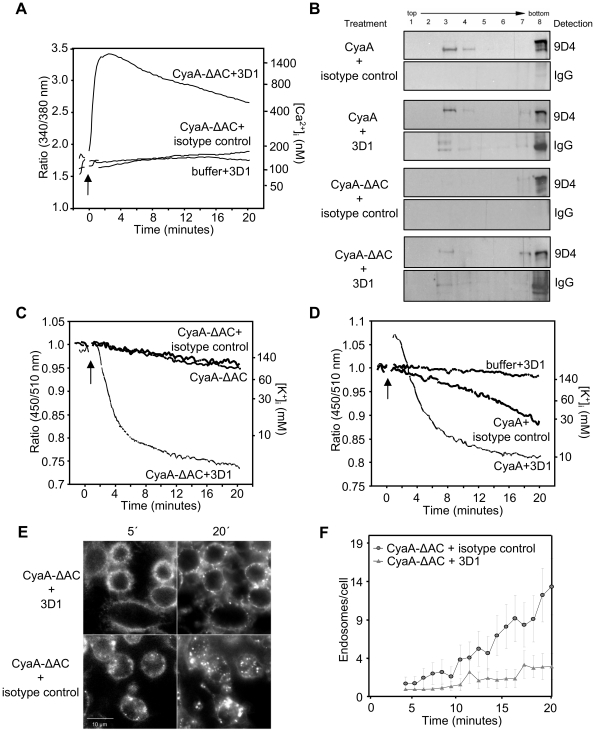
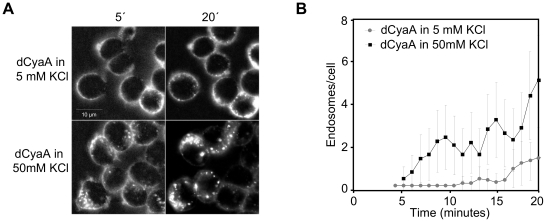
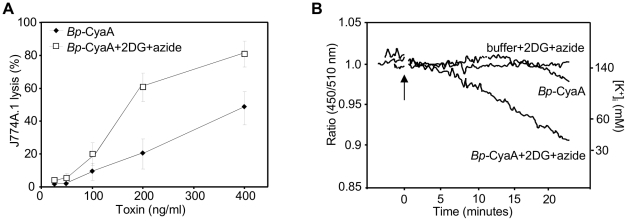
Bordetella adenylate cyclase toxin-hemolysin (CyaA) penetrates the cytoplasmic membrane of phagocytes and employs two distinct conformers to exert its multiple activities. One conformer forms cation-selective pores that permeabilize phagocyte membrane for efflux of cytosolic potassium. The other conformer conducts extracellular calcium ions across cytoplasmic membrane of cells, relocates into lipid rafts, translocates the adenylate cyclase enzyme (AC) domain into cells and converts cytosolic ATP to cAMP. We show that the calcium-conducting activity of CyaA controls the path and kinetics of endocytic removal of toxin pores from phagocyte membrane. The enzymatically inactive but calcium-conducting CyaA-AC⁻ toxoid was endocytosed via a clathrin-dependent pathway. In contrast, a doubly mutated (E570K+E581P) toxoid, unable to conduct Ca²⁺ into cells, was rapidly internalized by membrane macropinocytosis, unless rescued by Ca²⁺ influx promoted in trans by ionomycin or intact toxoid. Moreover, a fully pore-forming CyaA-ΔAC hemolysin failed to permeabilize phagocytes, unless endocytic removal of its pores from cell membrane was decelerated through Ca²⁺ influx promoted by molecules locked in a Ca²⁺-conducting conformation by the 3D1 antibody. Inhibition of endocytosis also enabled the native B. pertussis-produced CyaA to induce lysis of J774A.1 macrophages at concentrations starting from 100 ng/ml. Hence, by mediating calcium influx into cells, the translocating conformer of CyaA controls the removal of bystander toxin pores from phagocyte membrane. This triggers a positive feedback loop of exacerbated cell permeabilization, where the efflux of cellular potassium yields further decreased toxin pore removal from cell membrane and this further enhances cell permeabilization and potassium efflux.
百日咳博德特氏菌腺苷酸环化酶毒素-溶血素 (CyaA) 穿透吞噬细胞的细胞质膜,并采用两种不同构象发挥其多种活性。一种构象形成阳离子选择性孔,使吞噬细胞膜对细胞溶质钾的流出具有渗透性。另一种构象使细胞溶质钙离子穿过细胞质膜,重新定位到脂筏中,将腺苷酸环化酶 (AC) 结构域转移到细胞中,并将细胞溶质 ATP 转化为 cAMP。我们表明,CyaA 的钙传导活性控制了毒素孔从吞噬细胞膜去除的途径和动力学。虽然无酶活性但具有钙传导活性的 CyaA-AC⁻类毒素通过网格蛋白依赖性途径被内吞。相比之下,不能将 Ca²⁺导入细胞的双突变体 (E570K+E581P) 类毒素通过膜大胞饮作用迅速内化,除非通过离子霉素或完整类毒素促进的反式 Ca²⁺内流来挽救。此外,完全形成孔的 CyaA-ΔAC 溶血素不能使吞噬细胞渗透,除非通过由 3D1 抗体锁定在钙传导构象中的分子促进的 Ca²⁺内流来减缓其从细胞膜去除。内吞作用的抑制也使天然产生的百日咳博德特氏菌 CyaA 能够以 100ng/ml 起始浓度诱导 J774A.1 巨噬细胞溶解。因此,通过介导细胞内钙流入,转运构象的 CyaA 控制旁观者毒素孔从吞噬细胞膜的去除。这触发了细胞渗透性加剧的正反馈循环,其中细胞溶质钾的流出导致从细胞膜进一步减少毒素孔的去除,这进一步增强了细胞渗透性和钾的流出。