CNRS, UMR6265 Centre des Sciences du Goût et de l'Alimentation, Dijon, France.
PLoS One. 2012;7(4):e35102. doi: 10.1371/journal.pone.0035102. Epub 2012 Apr 9.
The assessment of blood lipids is very frequent in clinical research as it is assumed to reflect the lipid composition of peripheral tissues. Even well accepted such relationships have never been clearly established. This is particularly true in ophthalmology where the use of blood lipids has become very common following recent data linking lipid intake to ocular health and disease. In the present study, we wanted to determine in humans whether a lipidomic approach based on red blood cells could reveal associations between circulating and tissue lipid profiles. To check if the analytical sensitivity may be of importance in such analyses, we have used a double approach for lipidomics.
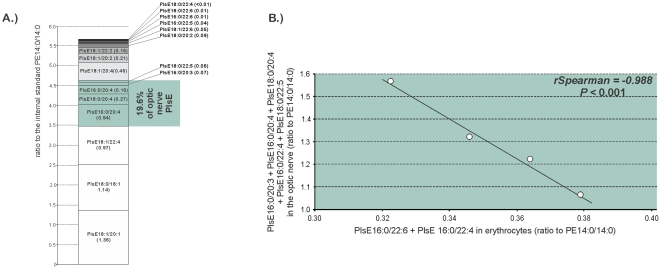
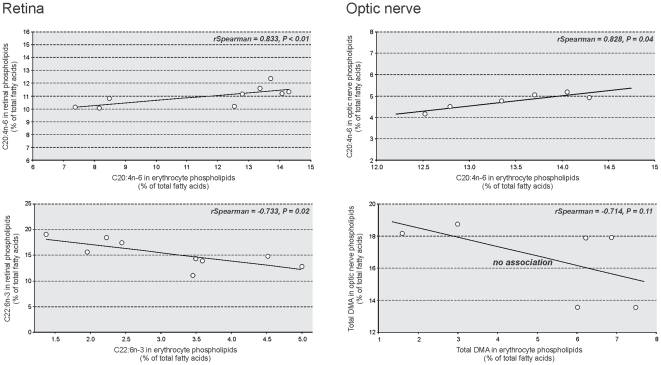
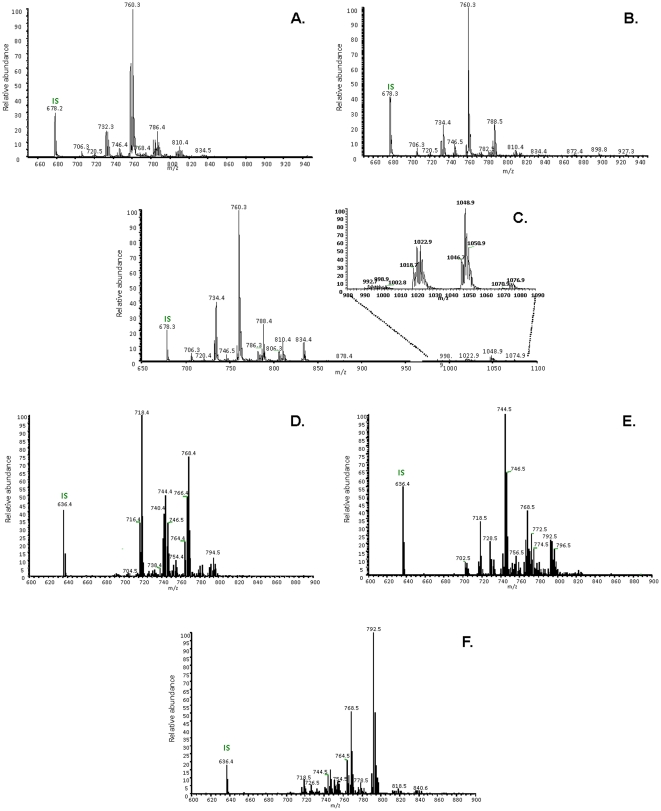
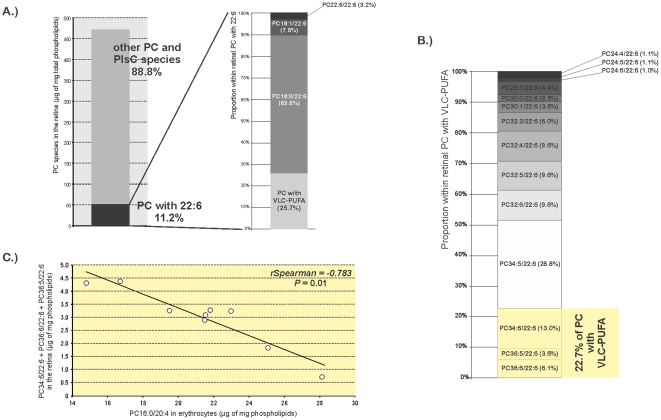
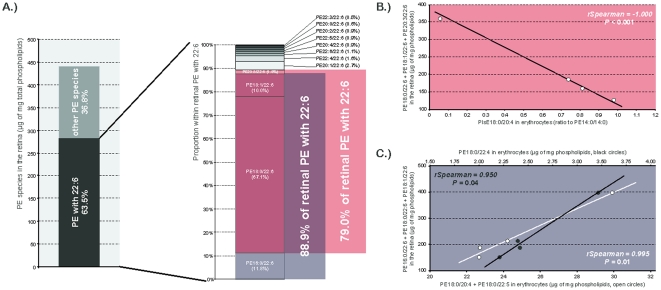
Red blood cells, retinas and optic nerves were collected from 9 human donors. The lipidomic analyses on tissues consisted in gas chromatography and liquid chromatography coupled to an electrospray ionization source-mass spectrometer (LC-ESI-MS). Gas chromatography did not reveal any relevant association between circulating and ocular fatty acids except for arachidonic acid whose circulating amounts were positively associated with its levels in the retina and in the optic nerve. In contrast, several significant associations emerged from LC-ESI-MS analyses. Particularly, lipid entities in red blood cells were positively or negatively associated with representative pools of retinal docosahexaenoic acid (DHA), retinal very-long chain polyunsaturated fatty acids (VLC-PUFA) or optic nerve plasmalogens.
LC-ESI-MS is more appropriate than gas chromatography for lipidomics on red blood cells, and further extrapolation to ocular lipids. The several individual lipid species we have identified are good candidates to represent circulating biomarkers of ocular lipids. However, further investigation is needed before considering them as indexes of disease risk and before using them in clinical studies on optic nerve neuropathies or retinal diseases displaying photoreceptors degeneration.
在临床研究中,血脂评估非常频繁,因为它被认为反映了外周组织的脂质组成。即使是被广泛接受的关系也从未被明确建立。这在眼科尤其如此,最近的数据表明脂质摄入与眼部健康和疾病有关,因此血液脂质的使用变得非常普遍。在本研究中,我们希望在人类中确定基于红细胞的脂质组学方法是否可以揭示循环和组织脂质谱之间的关联。为了检查分析灵敏度在这种分析中是否重要,我们使用了双重脂质组学方法。
从 9 名人类供体中收集了红细胞、视网膜和视神经。组织的脂质组学分析包括气相色谱法和液相色谱法与电喷雾源质谱联用(LC-ESI-MS)。气相色谱法除了发现花生四烯酸外,没有揭示出循环和眼部脂肪酸之间的任何相关关系,花生四烯酸的循环量与其在视网膜和视神经中的水平呈正相关。相比之下,LC-ESI-MS 分析显示出了几个显著的关联。特别是,红细胞中的脂质实体与视网膜二十二碳六烯酸 (DHA)、视网膜超长链多不饱和脂肪酸 (VLC-PUFA) 或视神经脑苷脂的代表性池呈正相关或负相关。
LC-ESI-MS 比气相色谱法更适合于红细胞的脂质组学,并且可以进一步推断到眼部脂质。我们鉴定的几个单个脂质种类是代表循环眼部脂质生物标志物的良好候选物。然而,在考虑将它们作为眼部疾病风险的指标,以及在视神经神经病或显示感光细胞退化的视网膜疾病的临床研究中使用之前,还需要进一步的研究。