Abir Tanvir, Rahman Bayzidur, D'Este Catherine, Farooq A, Milton Abul Hasnat
Centre for Clinical Epidemiology and Biostatistics (CCEB), The School of Medicine and Public Health, Faculty of Health, The University of Newcastle, Newcastle, NSW 2008, Australia.
J Toxicol. 2012;2012:198793. doi: 10.1155/2012/198793. Epub 2012 Mar 8.
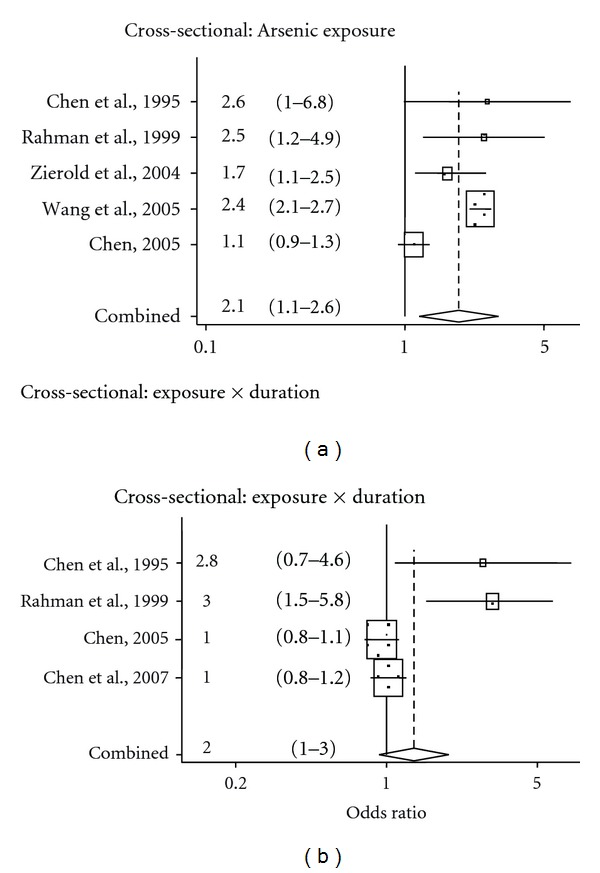
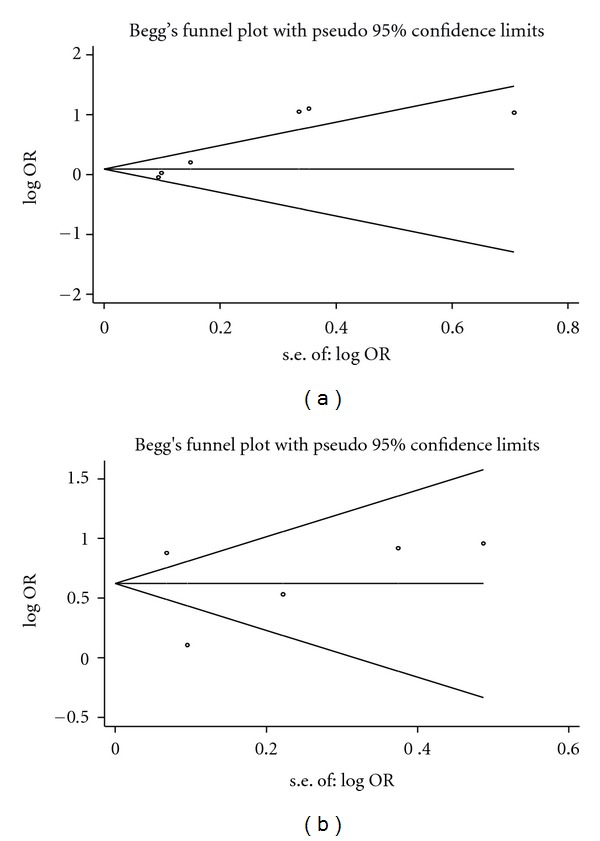
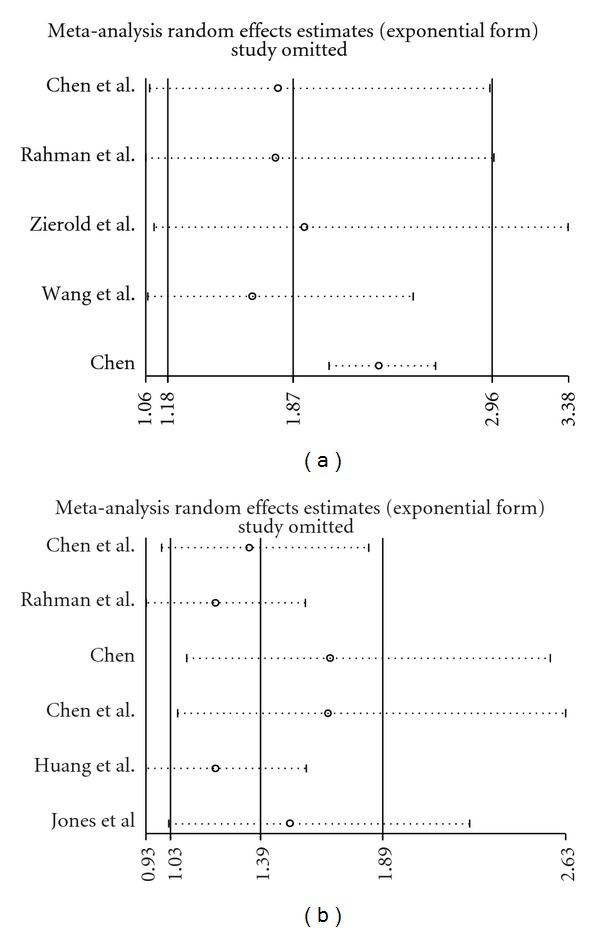
Background. There is inconclusive evidence from cross-sectional and cohort studies that arsenic exposure is a risk factor involved in the development of hypertension. Methods. A database search, using several keywords, was conducted to identify relevant studies. Separate odds ratio estimates for arsenic exposure with concentration only and arsenic exposure with duration, including biomarker, were extracted from studies that met all inclusion criteria. The extracted odds ratios (OR) comparing the highest exposure categories with the lowest in each study were pooled using the random effects methods of meta-analysis. Heterogeneity of odds ratios in the included studies were analyzed using I(2) statistics. Results. Eight studies were analyzed. Using the exposure as arsenic concentration in the drinking water, the OR estimate was 1.9 (95% CI: 1.2-3.0), with the I(2) = 92%, while using the exposure as concentration and duration, the OR estimate was 1.4 (95% CI: 0.95-2.0) with the I(2) = 80%. Meta-regression was done and the quality of exposure measurement was found to be significantly associated with the effect measure. For a one unit increase in the score from exposure assessment, the odds ratio decreased by 6%. No publication bias was evident. The only major weaknesses of this study were heterogeneity across studies and small sample size. Conclusions. The study findings provide limited evidence for a relationship between arsenic and hypertension. In summary, the relationship between arsenic exposure and hypertension is still inconclusive and needs further validation through prospective cohort studies.
背景。横断面研究和队列研究提供的证据尚无定论,表明砷暴露是高血压发病的一个风险因素。方法。通过使用多个关键词进行数据库检索,以识别相关研究。从符合所有纳入标准的研究中提取仅按浓度和按持续时间(包括生物标志物)的砷暴露的单独比值比估计值。使用荟萃分析的随机效应方法汇总各研究中最高暴露类别与最低暴露类别相比的提取比值比(OR)。使用I(2)统计量分析纳入研究中比值比的异质性。结果。分析了八项研究。将暴露定义为饮用水中的砷浓度时,OR估计值为1.9(95%CI:1.2 - 3.0),I(2)=92%;而将暴露定义为浓度和持续时间时,OR估计值为1.4(95%CI:0.95 - 2.0),I(2)=80%。进行了荟萃回归分析,发现暴露测量质量与效应测量显著相关。暴露评估得分每增加一个单位,比值比下降6%。未发现明显的发表偏倚。本研究的唯一主要缺点是各研究之间存在异质性且样本量较小。结论。研究结果为砷与高血压之间的关系提供了有限的证据。总之,砷暴露与高血压之间的关系仍无定论,需要通过前瞻性队列研究进一步验证。