Mustafa Kemal University, Medical Faculty, Department of Microbiology & Clinical Microbiology, Hatay, Turkey.
Indian J Med Res. 2012 Mar;135(3):389-96.
BACKGROUND & OBJECTIVES: This study was carried out to evaluate the association between the antibiotic susceptibility patterns and the antibiotic resistance genes in staphylococcal isolates obtained from various clinical samples of patients attending a teaching hospital in Hatay, Turkey.
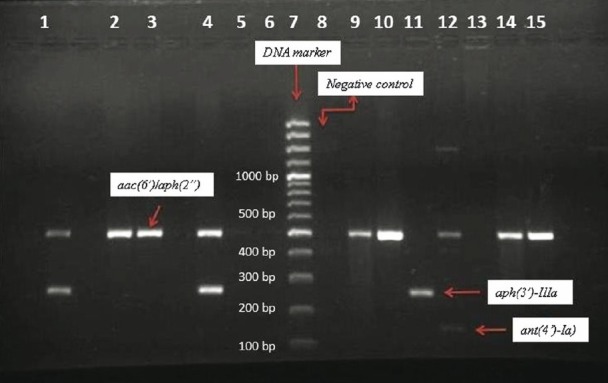
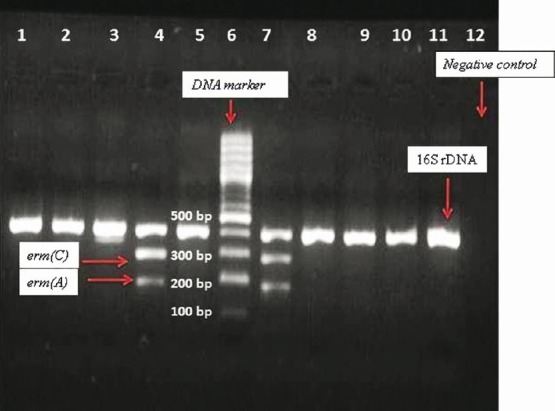
A total of 298 staphylococci clinical isolates were subjected to antimicrobial susceptibility testing. The genes implicated in resistance to oxacillin (mecA), gentamicin (aac(6')/aph(2''), aph(3')-IIIa, ant(4')-Ia), erythromycin (ermA, ermB, ermC, and msrA), tetracyclin (tetK, tetM), and penicillin (blaZ) were amplified using multiplex PCR method.
Methicillin resistance rate among 139 Staphlococcus aureus isolates was 16.5 and 25.9 per cent of S. aureus carried mecA gene. Of the 159 CoNS isolates, methicillin resistance rate was 18.9 and 29.6 per cent carried mecA gene. Ninety four isolates identified as gentamicin resistant phenotypically, contained at least one of the gentamicin resistance genes [aac(6')/aph(2''), aph(3')-IIIa, ant(4')-Ia], 17 gentamicin-susceptible isolates were found as positive in terms of one or more resistance genes [aac(6')/aph(2''), aph(3')-IIIa, ant(4')-Ia] by multiplex PCR. A total of 165 isolates were resistant to erythromycin, and contained at least one of the erythromycin resistance genes (ermA, ermB, ermC and msrA). Phenotypically, 106 staphylococcal isolates were resistant to tetracycline, 121 isolates carried either tetK or tetM or both resistance genes. The majority of staphylococci tested possessed the blaZ gene (89.9%).
INTERPRETATION & CONCLUSIONS: The present results showed that the phenotypic antibiotic susceptibility patterns were not similar to those obtained by genotyping done by multiplex PCR. Rapid and reliable methods for antibiotic susceptibility are important to determine the appropriate therapy decisions. Multiplex PCR can be used for confirmation of the results obtained by conventional phenotypic methods, when needed.
本研究旨在评估从土耳其哈塔伊一家教学医院的各种临床样本中分离的葡萄球菌属分离株的抗生素药敏模式与抗生素耐药基因之间的关联。
对 298 株临床分离的葡萄球菌进行了抗生素药敏试验。采用多重 PCR 法扩增耐甲氧西林(mecA)、庆大霉素(aac(6')/aph(2''), aph(3')-IIIa, ant(4')-Ia)、红霉素(ermA、ermB、ermC 和 msrA)、四环素(tetK、tetM)和青霉素(blaZ)的耐药基因。
139 株金黄色葡萄球菌分离株中,耐甲氧西林的比例为 16.5%,25.9%的金黄色葡萄球菌携带 mecA 基因。159 株凝固酶阴性葡萄球菌分离株中,耐甲氧西林的比例为 18.9%,29.6%的凝固酶阴性葡萄球菌携带 mecA 基因。94 株表型上被鉴定为庆大霉素耐药的分离株至少携带一种庆大霉素耐药基因[aac(6')/aph(2''), aph(3')-IIIa, ant(4')-Ia],17 株庆大霉素敏感的分离株通过多重 PCR 试验发现携带一种或多种耐药基因[aac(6')/aph(2''), aph(3')-IIIa, ant(4')-Ia]。165 株分离株对红霉素耐药,至少携带一种红霉素耐药基因(ermA、ermB、ermC 和 msrA)。表型上,106 株葡萄球菌分离株对四环素耐药,121 株分离株携带 tetK 或 tetM 或两者耐药基因。所检测的葡萄球菌大多数携带 blaZ 基因(89.9%)。
本研究结果表明,表型抗生素药敏模式与多重 PCR 基因分型获得的结果不一致。快速可靠的抗生素药敏方法对于确定适当的治疗决策很重要。当需要时,多重 PCR 可用于确认常规表型方法获得的结果。