Department of Comparative Biomedicine and Food Science, University of Padova, Padova, Italy.
Cell Calcium. 2012 Jul;52(1):73-85. doi: 10.1016/j.ceca.2012.04.015. Epub 2012 May 18.
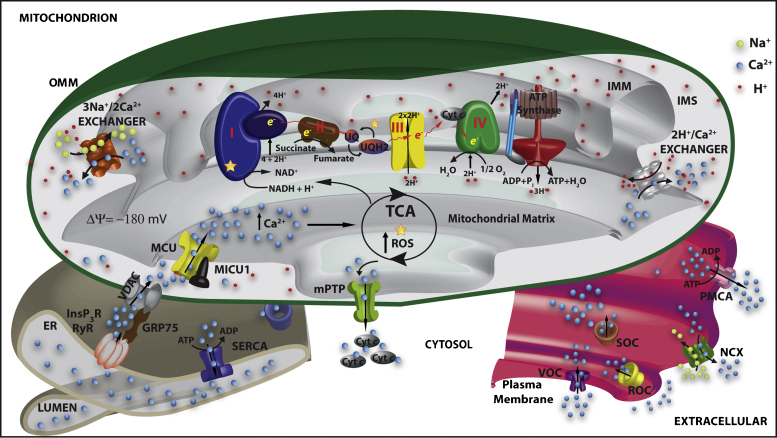
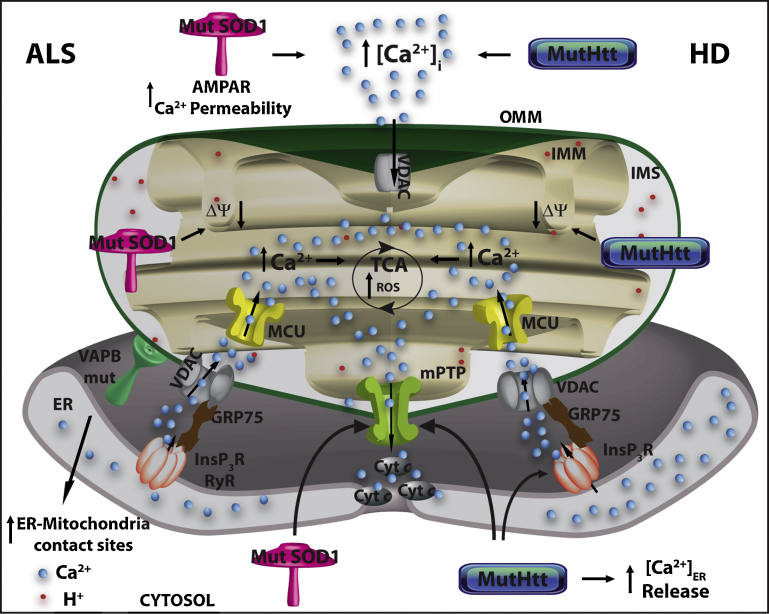
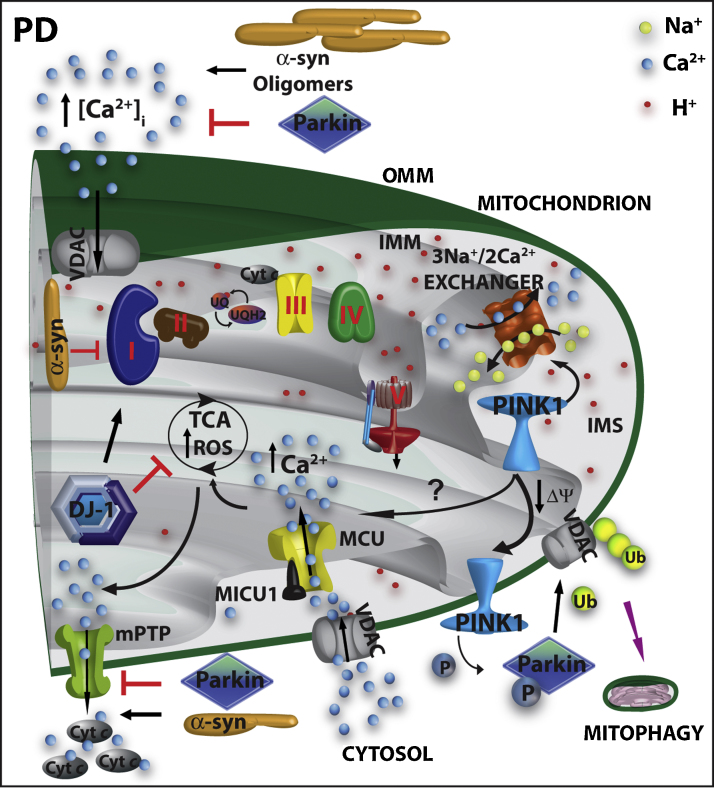
Mitochondria are essential for ensuring numerous fundamental physiological processes such as cellular energy, redox balance, modulation of Ca(2+) signaling and important biosynthetic pathways. They also govern the cell fate by participating in the apoptosis pathway. The mitochondrial shape, volume, number and distribution within the cells are strictly controlled. The regulation of these parameters has an impact on mitochondrial function, especially in the central nervous system, where trafficking of mitochondria is critical to their strategic intracellular distribution, presumably according to local energy demands. Thus, the maintenance of a healthy mitochondrial population is essential to avoid the impairment of the processes they regulate: for this purpose, cells have developed mechanisms involving a complex system of quality control to remove damaged mitochondria, or to renew them. Defects of these processes impair mitochondrial function and lead to disordered cell function, i.e., to a disease condition. Given the standard role of mitochondria in all cells, it might be expected that their dysfunction would give rise to similar defects in all tissues. However, damaged mitochondrial function has pleiotropic effects in multicellular organisms, resulting in diverse pathological conditions, ranging from cardiac and brain ischemia, to skeletal muscle myopathies to neurodegenerative diseases. In this review, we will focus on the relationship between mitochondrial (and cellular) derangements and Ca(2+) dysregulation in neurodegenerative diseases, emphasizing the evidence obtained in genetic models. Common patterns, that recognize the derangement of Ca(2+) and energy control as a causative factor, have been identified: advances in the understanding of the molecular regulation of Ca(2+) homeostasis, and on the ways in which it could become perturbed in neurological disorders, may lead to the development of therapeutic strategies that modulate neuronal Ca(2+) signaling.
线粒体对于确保许多基本的生理过程至关重要,如细胞能量、氧化还原平衡、钙(Ca2+)信号的调节以及重要的生物合成途径。它们还通过参与细胞凋亡途径来控制细胞命运。线粒体的形状、体积、数量和在细胞内的分布受到严格控制。这些参数的调节会影响线粒体的功能,特别是在中枢神经系统中,线粒体的运输对于它们在细胞内的战略分布至关重要,可能是根据局部能量需求而定。因此,维持健康的线粒体群体对于避免它们调节的过程受损至关重要:为此,细胞已经开发出涉及复杂质量控制机制的机制,以去除受损的线粒体,或更新它们。这些过程的缺陷会损害线粒体的功能,并导致细胞功能紊乱,即出现疾病状态。鉴于线粒体在所有细胞中的标准作用,可以预期它们的功能障碍会在所有组织中引起类似的缺陷。然而,受损的线粒体功能在多细胞生物中有多种影响,导致多种病理状况,从心脏和大脑缺血到骨骼肌肌病再到神经退行性疾病。在这篇综述中,我们将重点关注线粒体(和细胞)紊乱与神经退行性疾病中钙(Ca2+)失调之间的关系,强调在遗传模型中获得的证据。已经确定了共同的模式,即承认 Ca2+和能量控制的紊乱是一个致病因素:对 Ca2+稳态的分子调节以及它在神经紊乱中如何失调的理解的进展,可能导致开发出调节神经元 Ca2+信号的治疗策略。