Academic Neurosurgery Unit, St George's, University of London, London, UK.
Lancet Neurol. 2012 Jun;11(6):535-44. doi: 10.1016/S1474-4422(12)70133-3. Epub 2012 May 16.
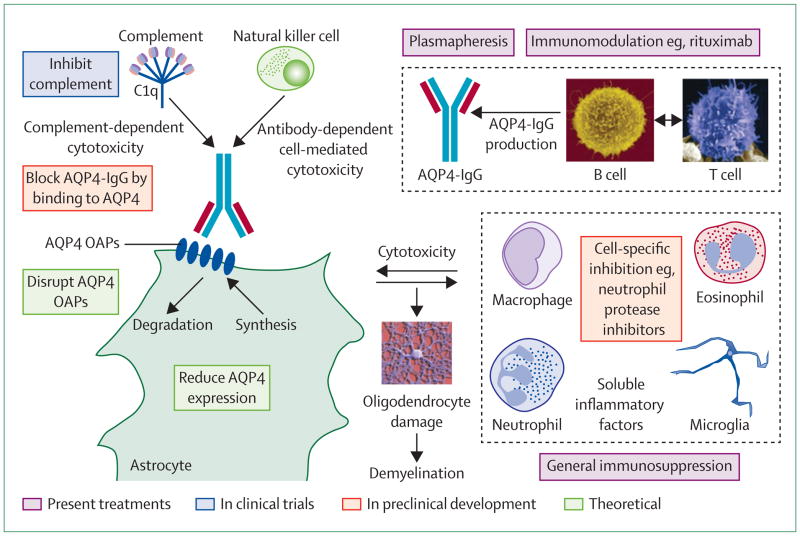
Neuromyelitis optica is an inflammatory demyelinating disorder of the CNS. The discovery of circulating IgG1 antibodies against the astrocyte water channel protein aquaporin 4 (AQP4) and the evidence that AQP4-IgG is involved in the development of neuromyelitis optica revolutionised our understanding of the disease. However, important unanswered questions remain--for example, we do not know the cause of AQP4-IgG-negative disease, how astrocyte damage causes demyelination, the role of T cells, why peripheral AQP4-expressing organs are undamaged, and how circulating AQP4-IgG enters neuromyelitis optica lesions. New drug candidates have emerged, such as aquaporumab (non-pathogenic antibody blocker of AQP4-IgG binding), sivelestat (neutrophil elastase inhibitor), and eculizumab (complement inhibitor). Despite rapid progress, randomised clinical trials to test new drugs will be challenging because of the small number of individuals with the disorder.
视神经脊髓炎是一种中枢神经系统的炎症性脱髓鞘疾病。循环 IgG1 抗体针对星形胶质细胞水通道蛋白 aquaporin 4(AQP4)的发现,以及 AQP4-IgG 参与视神经脊髓炎发病的证据,彻底改变了我们对这种疾病的认识。然而,仍有一些重要的未解决问题,例如,我们不知道 AQP4-IgG 阴性疾病的原因、星形胶质细胞损伤如何导致脱髓鞘、T 细胞的作用、为什么外周表达 AQP4 的器官未受损,以及循环 AQP4-IgG 如何进入视神经脊髓炎病变。新的药物候选物已经出现,例如 aquaporumab(非致病性抗体阻断 AQP4-IgG 结合)、西维来司他(中性粒细胞弹性蛋白酶抑制剂)和依库珠单抗(补体抑制剂)。尽管进展迅速,但由于该疾病患者数量较少,测试新药的随机临床试验将具有挑战性。