Kumar Manoj, Nagpal Ravinder, Kumar Rajesh, Hemalatha R, Verma Vinod, Kumar Ashok, Chakraborty Chaitali, Singh Birbal, Marotta Francesco, Jain Shalini, Yadav Hariom
Department of Microbiology & Immunology, National Institute of Nutrition, Hyderabad 50007, India.
Exp Diabetes Res. 2012;2012:902917. doi: 10.1155/2012/902917. Epub 2012 May 3.
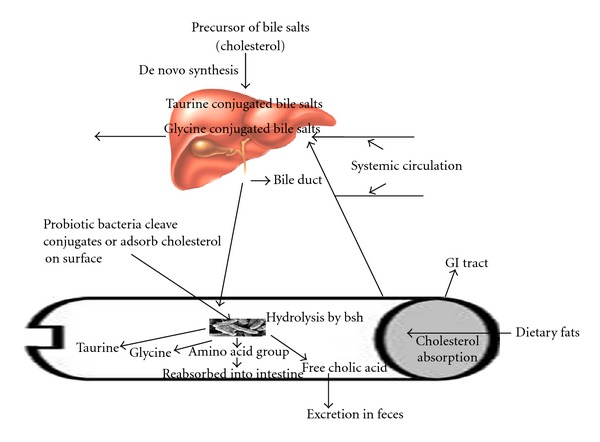
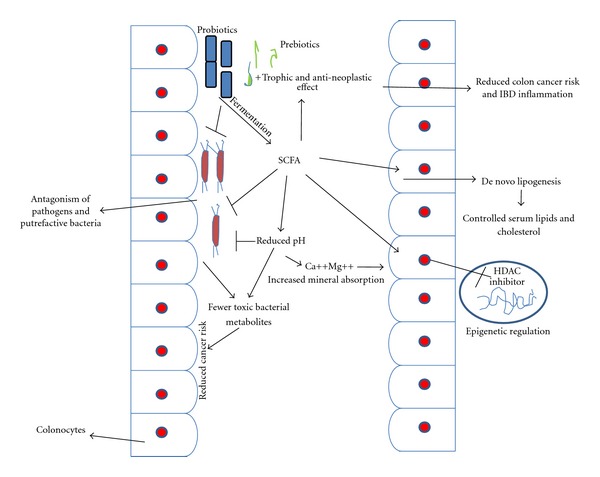
Cardiovascular diseases are one of the major causes of deaths in adults in the western world. Elevated levels of certain blood lipids have been reported to be the principal cause of cardiovascular disease and other disabilities in developed countries. Several animal and clinical trials have shown a positive association between cholesterol levels and the risks of coronary heart disease. Current dietary strategies for the prevention of cardiovascular disease advocate adherence to low-fat/low-saturated-fat diets. Although there is no doubt that, in experimental conditions, low-fat diets offer an effective means of reducing blood cholesterol concentrations on a population basis, these appear to be less effective, largely due to poor compliance, attributed to low palatability and acceptability of these diets to the consumers. Due to the low consumer compliance, attempts have been made to identify other dietary components that can reduce blood cholesterol levels. Supplementation of diet with fermented dairy products or lactic acid bacteria containing dairy products has shown the potential to reduce serum cholesterol levels. Various approaches have been used to alleviate this issue, including the use of probiotics, especially Bifidobacterium spp. and Lactobacillus spp.. Probiotics, the living microorganisms that confer health benefits on the host when administered in adequate amounts, have received much attention on their proclaimed health benefits which include improvement in lactose intolerance, increase in natural resistance to infectious disease in gastrointestinal tract, suppression of cancer, antidiabetic, reduction in serum cholesterol level, and improved digestion. In addition, there are numerous reports on cholesterol removal ability of probiotics and their hypocholesterolemic effects. Several possible mechanisms for cholesterol removal by probiotics are assimilation of cholesterol by growing cells, binding of cholesterol to cellular surface, incorporation of cholesterol into the cellular membrane, deconjugation of bile via bile salt hydrolase, coprecipitation of cholesterol with deconjugated bile, binding action of bile by fibre, and production of short-chain fatty acids by oligosaccharides. The present paper reviews the mechanisms of action of anti-cholesterolemic potential of probiotic microorganisms and probiotic food products, with the aim of lowering the risks of cardiovascular and coronary heart diseases.
心血管疾病是西方世界成年人主要死因之一。据报道,某些血脂水平升高是发达国家心血管疾病和其他残疾的主要原因。多项动物试验和临床试验表明,胆固醇水平与冠心病风险之间存在正相关。目前预防心血管疾病的饮食策略提倡坚持低脂/低饱和脂肪饮食。虽然毫无疑问,在实验条件下,低脂饮食从总体人群角度提供了一种有效降低血液胆固醇浓度的方法,但这些方法似乎效果较差,主要原因是依从性差,这归因于这些饮食对消费者来说适口性和可接受性低。由于消费者依从性低,人们试图确定其他可降低血液胆固醇水平的饮食成分。用发酵乳制品或含乳酸菌的乳制品补充饮食已显示出降低血清胆固醇水平的潜力。人们已采用各种方法来缓解这一问题,包括使用益生菌,特别是双歧杆菌属和乳杆菌属。益生菌是适量摄入时能给宿主带来健康益处的活微生物,因其宣称的健康益处而备受关注,这些益处包括改善乳糖不耐受、增强胃肠道对传染病的天然抵抗力、抑制癌症、抗糖尿病、降低血清胆固醇水平以及改善消化。此外,有大量关于益生菌胆固醇清除能力及其降胆固醇作用的报道。益生菌清除胆固醇的几种可能机制包括生长细胞对胆固醇的同化、胆固醇与细胞表面的结合、胆固醇掺入细胞膜、通过胆汁盐水解酶使胆汁去结合、胆固醇与去结合胆汁的共沉淀、纤维对胆汁的结合作用以及寡糖产生短链脂肪酸。本文综述了益生菌微生物和益生菌食品抗胆固醇潜力的作用机制,旨在降低心血管疾病和冠心病的风险。