Program in Cell Cycle and Cancer Biology, Oklahoma Medical Research Foundation, Oklahoma City, Oklahoma, United States of America.
PLoS Genet. 2012;8(5):e1002730. doi: 10.1371/journal.pgen.1002730. Epub 2012 May 24.
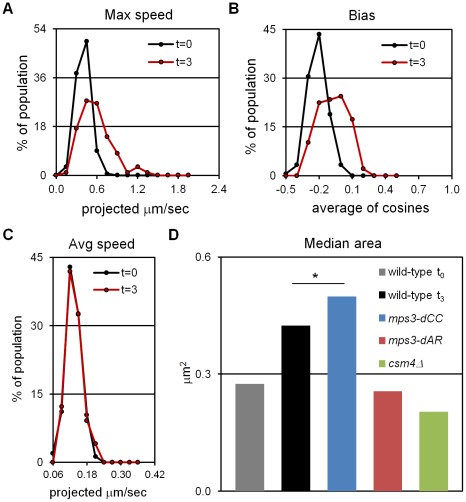
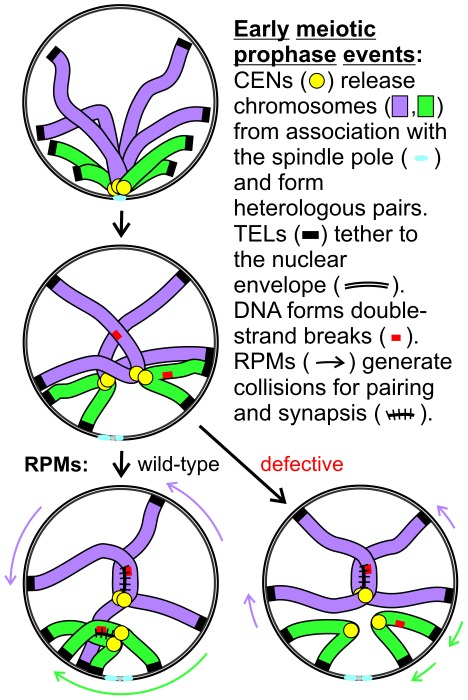
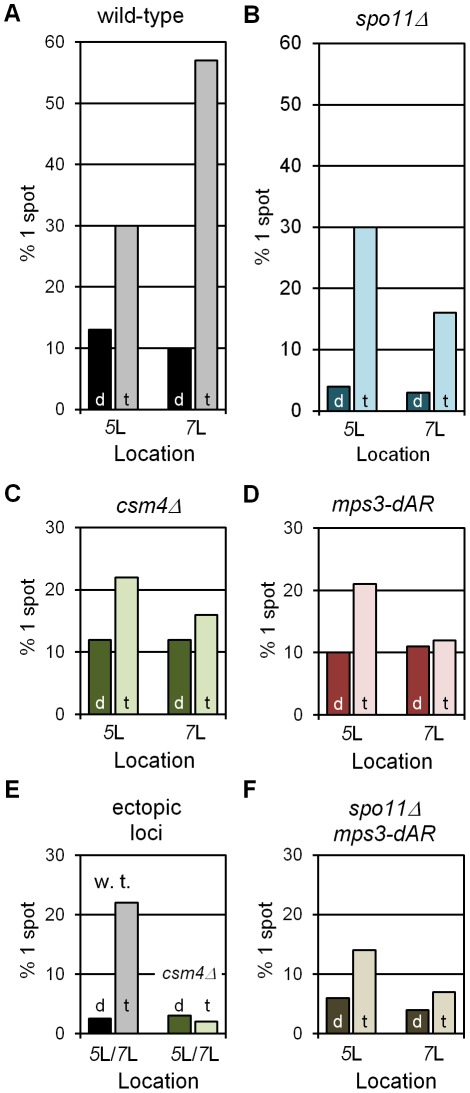
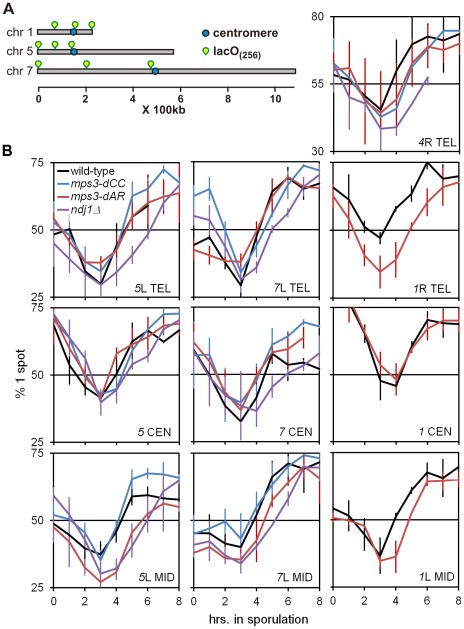
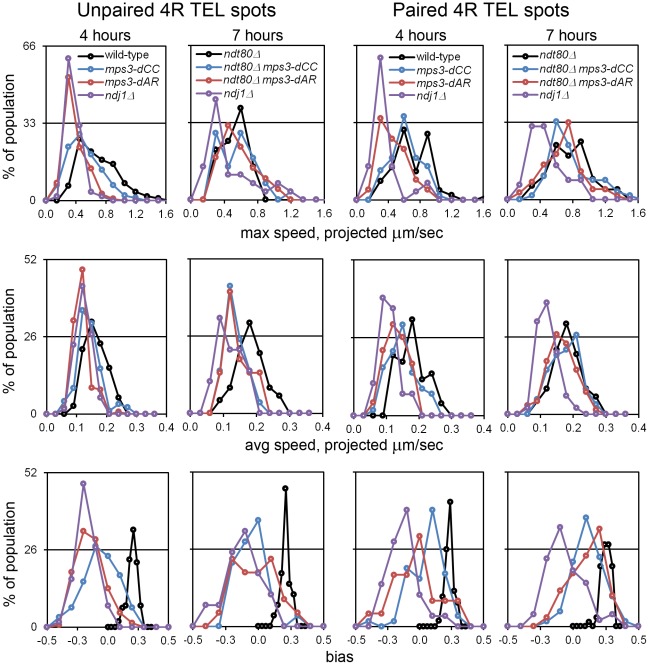
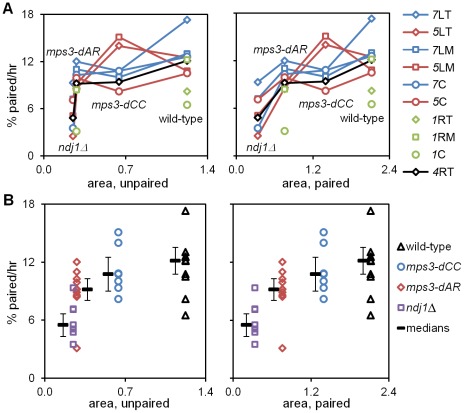
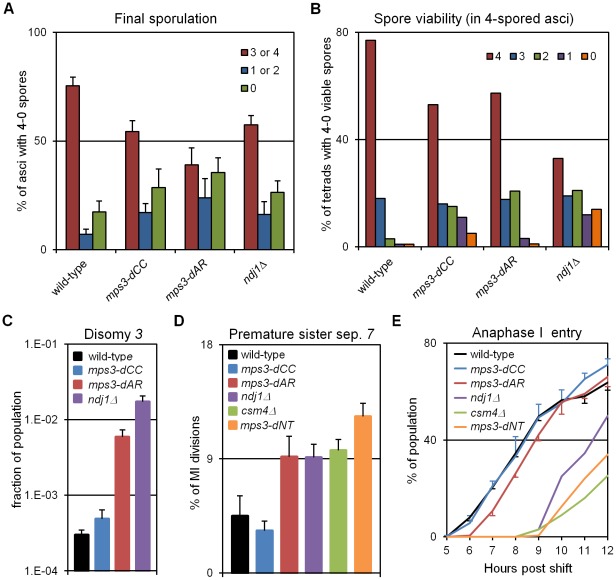
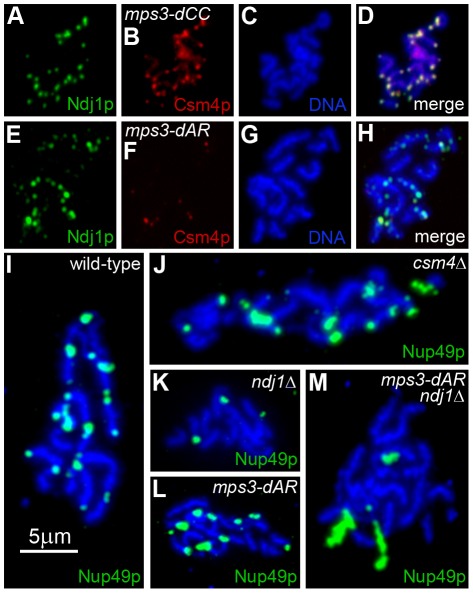
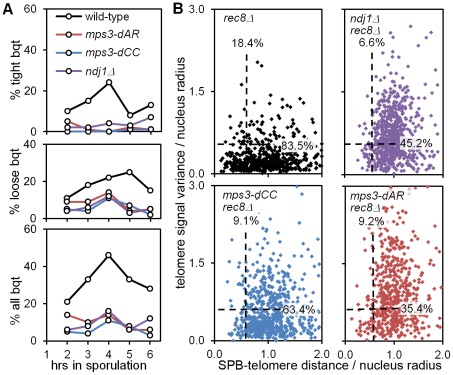
Chromosome pairing in meiotic prophase is a prerequisite for the high fidelity of chromosome segregation that haploidizes the genome prior to gamete formation. In the budding yeast Saccharomyces cerevisiae, as in most multicellular eukaryotes, homologous pairing at the cytological level reflects the contemporaneous search for homology at the molecular level, where DNA double-strand broken ends find and interact with templates for repair on homologous chromosomes. Synapsis (synaptonemal complex formation) stabilizes pairing and supports DNA repair. The bouquet stage, where telomeres have formed a transient single cluster early in meiotic prophase, and telomere-promoted rapid meiotic prophase chromosome movements (RPMs) are prominent temporal correlates of pairing and synapsis. The bouquet has long been thought to contribute to the kinetics of pairing, but the individual roles of bouquet and RPMs are difficult to assess because of common dependencies. For example, in budding yeast RPMs and bouquet both require the broadly conserved SUN protein Mps3 as well as Ndj1 and Csm4, which link telomeres to the cytoskeleton through the intact nuclear envelope. We find that mutants in these genes provide a graded series of RPM activity: wild-type>mps3-dCC>mps3-dAR>ndj1Δ>mps3-dNT = csm4Δ. Pairing rates are directly correlated with RPM activity even though only wild-type forms a bouquet, suggesting that RPMs promote homologous pairing directly while the bouquet plays at most a minor role in Saccharomyces cerevisiae. A new collision trap assay demonstrates that RPMs generate homologous and heterologous chromosome collisions in or before the earliest stages of prophase, suggesting that RPMs contribute to pairing by stirring the nuclear contents to aid the recombination-mediated homology search.
在减数分裂前期,染色体配对是染色体分离高保真度的前提,它在配子形成之前使基因组单倍化。在芽殖酵母酿酒酵母中,与大多数多细胞真核生物一样,细胞学水平上的同源配对反映了分子水平上同源性的同时搜索,其中 DNA 双链断裂末端找到并与同源染色体上的修复模板相互作用。联会(联会复合体形成)稳定配对并支持 DNA 修复。在 bouquet 阶段,端粒在减数分裂前期早期形成一个短暂的单一簇,并且端粒促进快速减数分裂前期染色体运动(RPMs)是配对和联会的突出时间相关物。 bouquet 长期以来一直被认为有助于配对的动力学,但由于共同的依赖性,bouquet 和 RPMs 的个别作用很难评估。例如,在芽殖酵母中,RPMs 和 bouquet 都需要广泛保守的 SUN 蛋白 Mps3 以及 Ndj1 和 Csm4,它们通过完整的核膜将端粒与细胞骨架连接起来。我们发现,这些基因的突变体提供了一系列 RPM 活性:野生型>mps3-dCC>mps3-dAR>ndj1Δ>mps3-dNT=csm4Δ。配对率与 RPM 活性直接相关,即使只有野生型形成 bouquet,这表明 RPMs 直接促进同源配对,而 bouquet 在酿酒酵母中最多只起次要作用。一个新的碰撞陷阱测定表明,RPMs 在前期的最早阶段或之前产生同源和异源染色体碰撞,这表明 RPMs 通过搅拌核内容物来辅助重组介导的同源搜索,从而有助于配对。