Caballero Adriana, Tseng Kuei Y
Department of Cellular and Molecular Pharmacology, RFUMS/The Chicago Medical School North Chicago, IL, USA.
Front Pharmacol. 2012 May 28;3:101. doi: 10.3389/fphar.2012.00101. eCollection 2012.
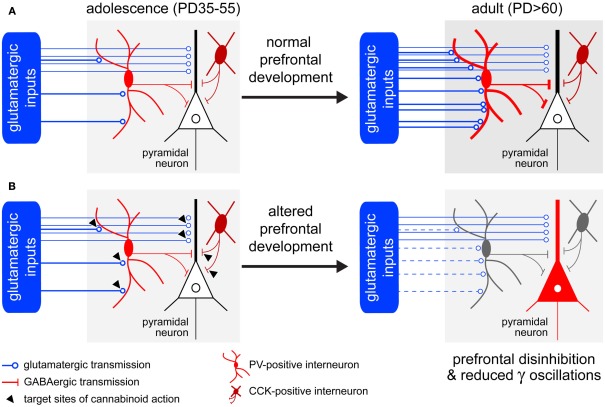
The cannabinoid receptor 1 (CB1R) is the G-protein coupled receptor responsible for the majority of the endocannabinoid signaling in the human brain. It is widely distributed in the limbic system, basal ganglia, and cerebellum, which are areas responsible for cognition, memory, and motor control. Because of this widespread distribution, it is not surprising that drugs that activate CB1R have expected behavioral outcomes consistent with dysregulated signaling from these areas (e.g., memory loss, cognitive deficits, etc). In the context of this review, we present evidence for the role of CB1R signaling in the prefrontal cortex (PFC), an area involved in executive functions, with emphasis on the developmental regulation of CB1R signaling in the acquisition of mature PFC function. We further hypothesize how alterations in CB1R signaling specifically during adolescent maturation might confer liability to psychiatric disorders.
大麻素受体1(CB1R)是一种G蛋白偶联受体,负责大脑中大部分内源性大麻素信号传导。它广泛分布于边缘系统、基底神经节和小脑,这些区域负责认知、记忆和运动控制。由于这种广泛分布,激活CB1R的药物产生与这些区域信号传导失调一致的预期行为结果(如记忆丧失、认知缺陷等)也就不足为奇了。在本综述的背景下,我们提供了CB1R信号在前额叶皮质(PFC)中作用的证据,PFC是一个参与执行功能的区域,重点是CB1R信号在成熟PFC功能获得中的发育调节。我们进一步假设,在青少年成熟过程中CB1R信号的改变如何可能导致精神疾病易感性。