Department of Automatic Control and Systems Engineering, University of Sheffield, Sheffield, S1 3EJ, UK.
J Math Neurosci. 2012 Jan 6;2(1):1. doi: 10.1186/2190-8567-2-1.
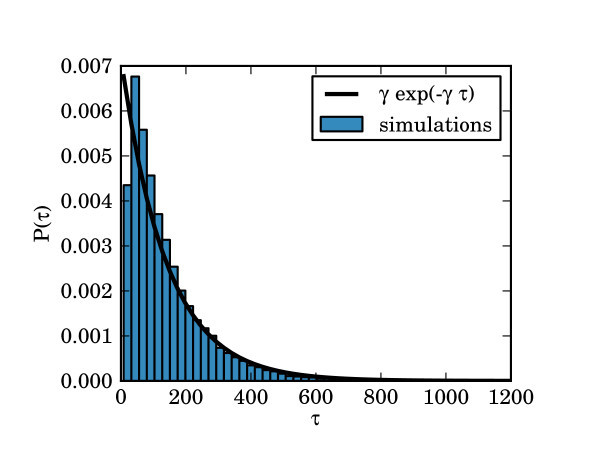
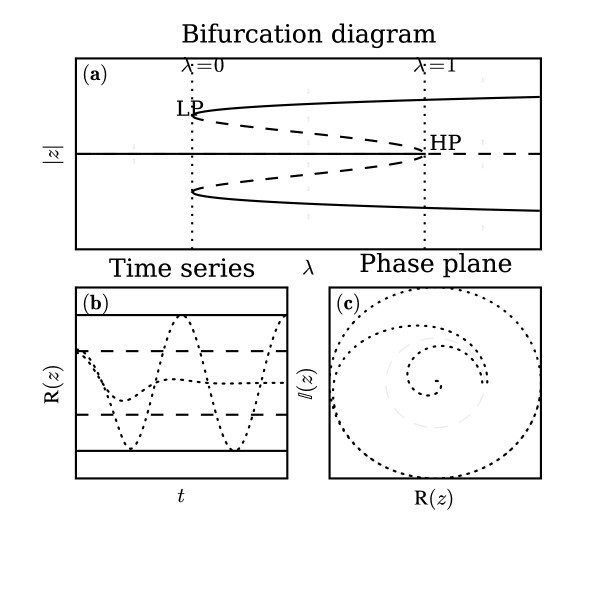
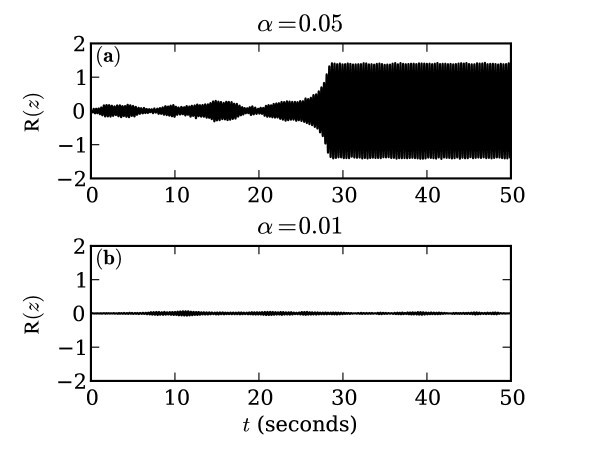
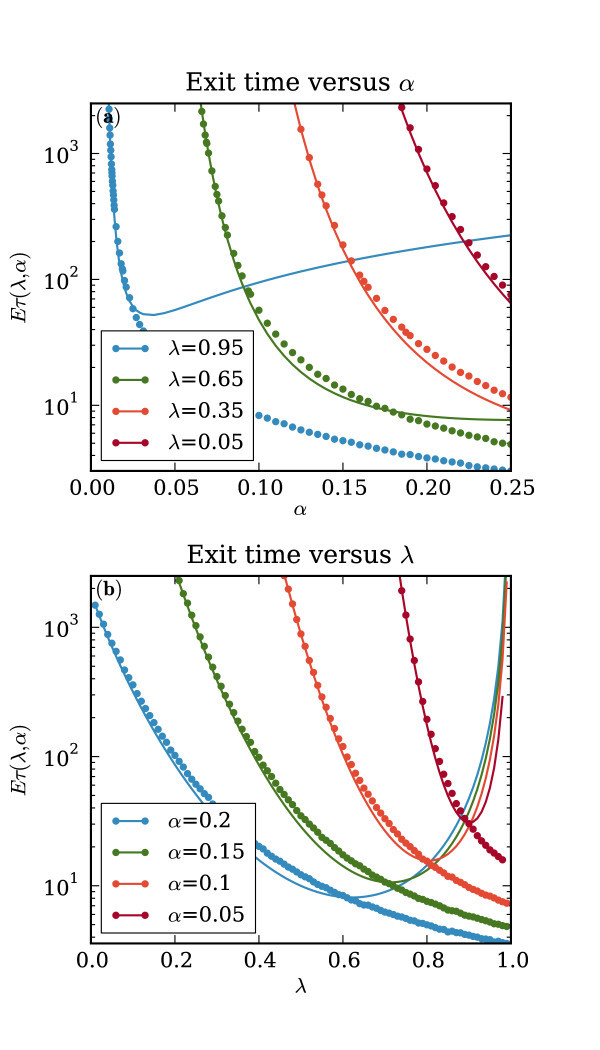
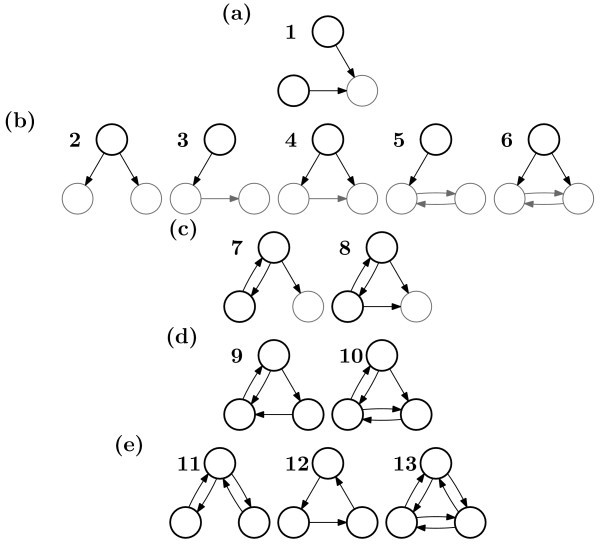
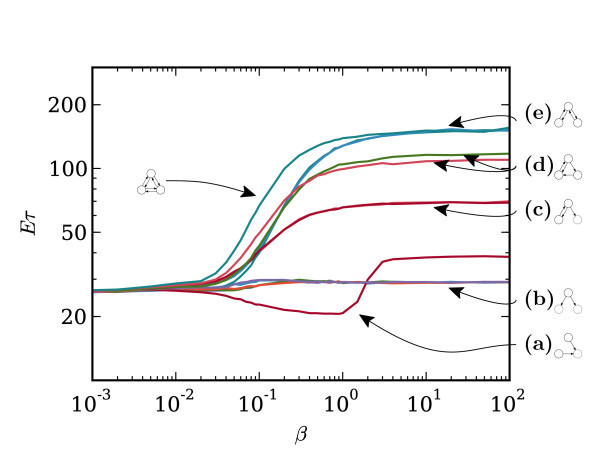
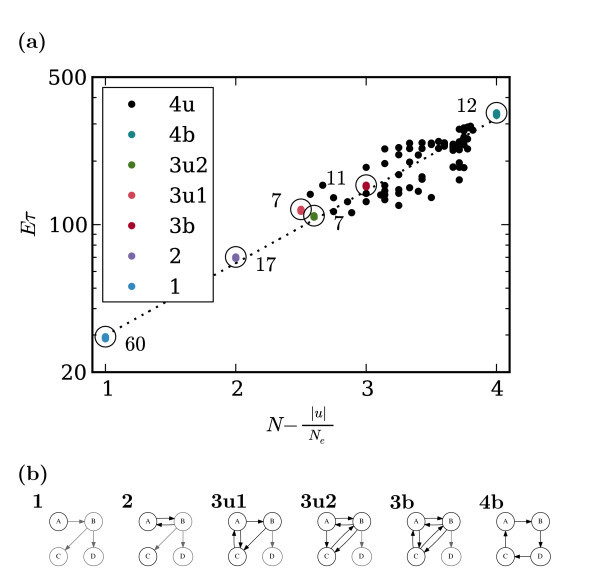
We describe a phenomenological model of seizure initiation, consisting of a bistable switch between stable fixed point and stable limit-cycle attractors. We determine a quasi-analytic formula for the exit time problem for our model in the presence of noise. This formula--which we equate to seizure frequency--is then validated numerically, before we extend our study to explore the combined effects of noise and network structure on escape times. Here, we observe that weakly connected networks of 2, 3 and 4 nodes with equivalent first transitive components all have the same asymptotic escape times. We finally extend this work to larger networks, inferred from electroencephalographic recordings from 35 patients with idiopathic generalised epilepsies and 40 controls. Here, we find that network structure in patients correlates with smaller escape times relative to network structures from controls. These initial findings are suggestive that network structure may play an important role in seizure initiation and seizure frequency.
我们描述了一种癫痫发作起始的现象学模型,该模型由稳定的平衡点和稳定的极限环吸引子之间的双稳态开关组成。我们在存在噪声的情况下为我们的模型确定了一个准解析的退出时间问题公式。然后,我们通过数值验证了这个公式,即我们将其等同于癫痫发作频率,然后我们扩展了我们的研究,以探索噪声和网络结构对逃逸时间的综合影响。在这里,我们观察到具有等效第一传递分量的 2、3 和 4 个节点的弱连接网络都具有相同的渐近逃逸时间。我们最后将这项工作扩展到更大的网络,这些网络是从 35 名特发性全身性癫痫患者和 40 名对照的脑电图记录中推断出来的。在这里,我们发现与对照组的网络结构相比,患者的网络结构与更小的逃逸时间相关。这些初步发现表明,网络结构可能在癫痫发作起始和癫痫发作频率中发挥重要作用。