Science & Knowledge Division, Conservation International, Arlington, Virginia, United States of America.
PLoS One. 2012;7(5):e36971. doi: 10.1371/journal.pone.0036971. Epub 2012 May 30.
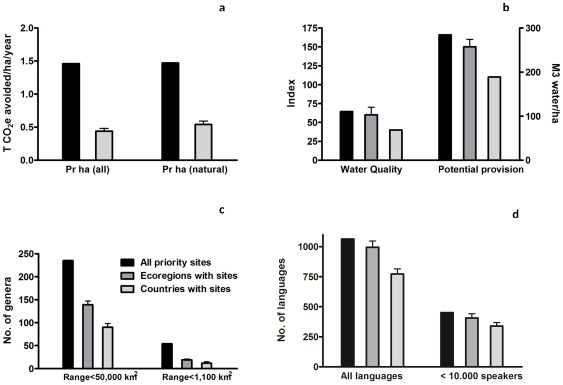
Protecting natural habitats in priority areas is essential to halt the loss of biodiversity. Yet whether these benefits for biodiversity also yield benefits for human well-being remains controversial. Here we assess the potential human well-being benefits of safeguarding a global network of sites identified as top priorities for the conservation of threatened species. Conserving these sites would yield benefits--in terms of a) climate change mitigation through avoidance of CO(2) emissions from deforestation; b) freshwater services to downstream human populations; c) retention of option value; and d) benefits to maintenance of human cultural diversity--significantly exceeding those anticipated from randomly selected sites within the same countries and ecoregions. Results suggest that safeguarding sites important for biodiversity conservation provides substantial benefits to human well-being.
保护优先地区的自然栖息地对于阻止生物多样性的丧失至关重要。然而,这些生物多样性的益处是否也能给人类带来福祉,这仍然存在争议。在这里,我们评估了保护一个被确定为保护受威胁物种的首要重点的全球地点网络的潜在人类福祉收益。保护这些地点将带来以下收益:a)通过避免森林砍伐产生的二氧化碳排放来缓解气候变化;b)为下游人口提供淡水服务;c)保留选择权价值;以及 d)维护人类文化多样性的收益——这些收益大大超过了在同一国家和生态区域内随机选择的地点所预期的收益。研究结果表明,保护对生物多样性保护重要的地点可以为人类福祉带来巨大的收益。