Chan Kai M A, Shaw M Rebecca, Cameron David R, Underwood Emma C, Daily Gretchen C
Center for Conservation Biology, Department of Biological Sciences, Stanford University, Stanford, California, USA.
PLoS Biol. 2006 Oct;4(11):e379. doi: 10.1371/journal.pbio.0040379.
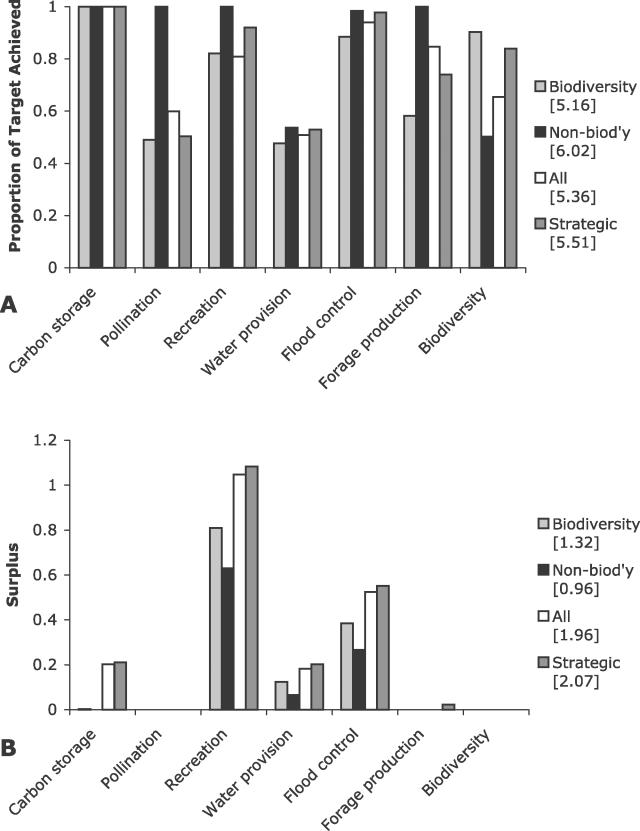
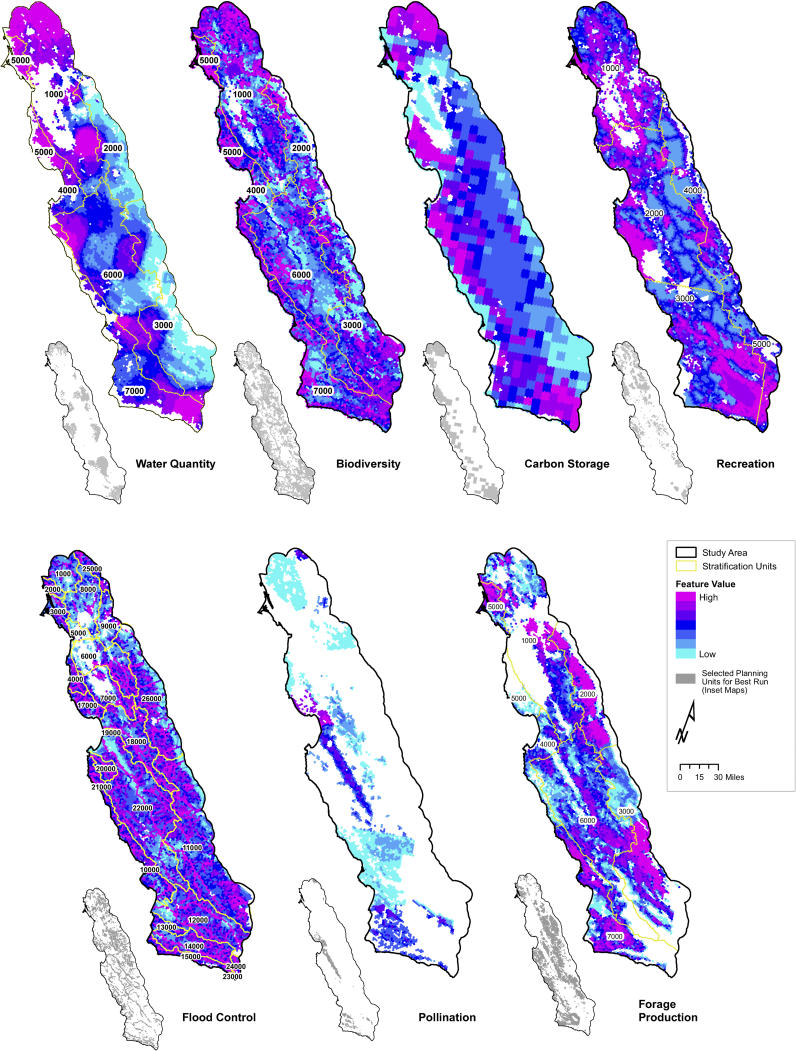
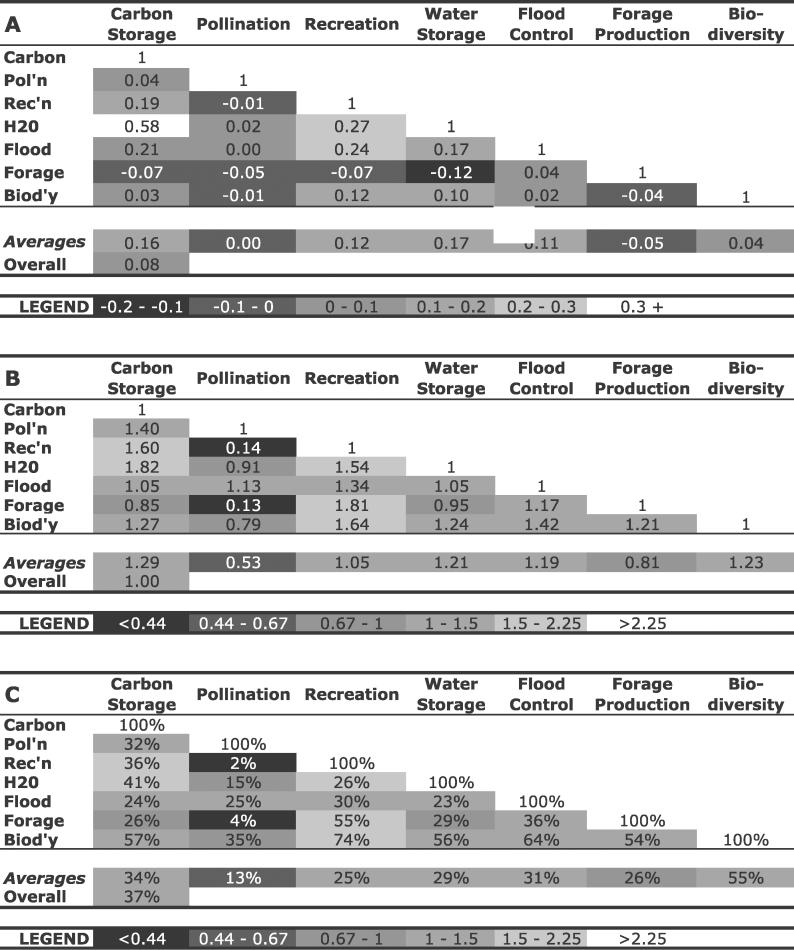
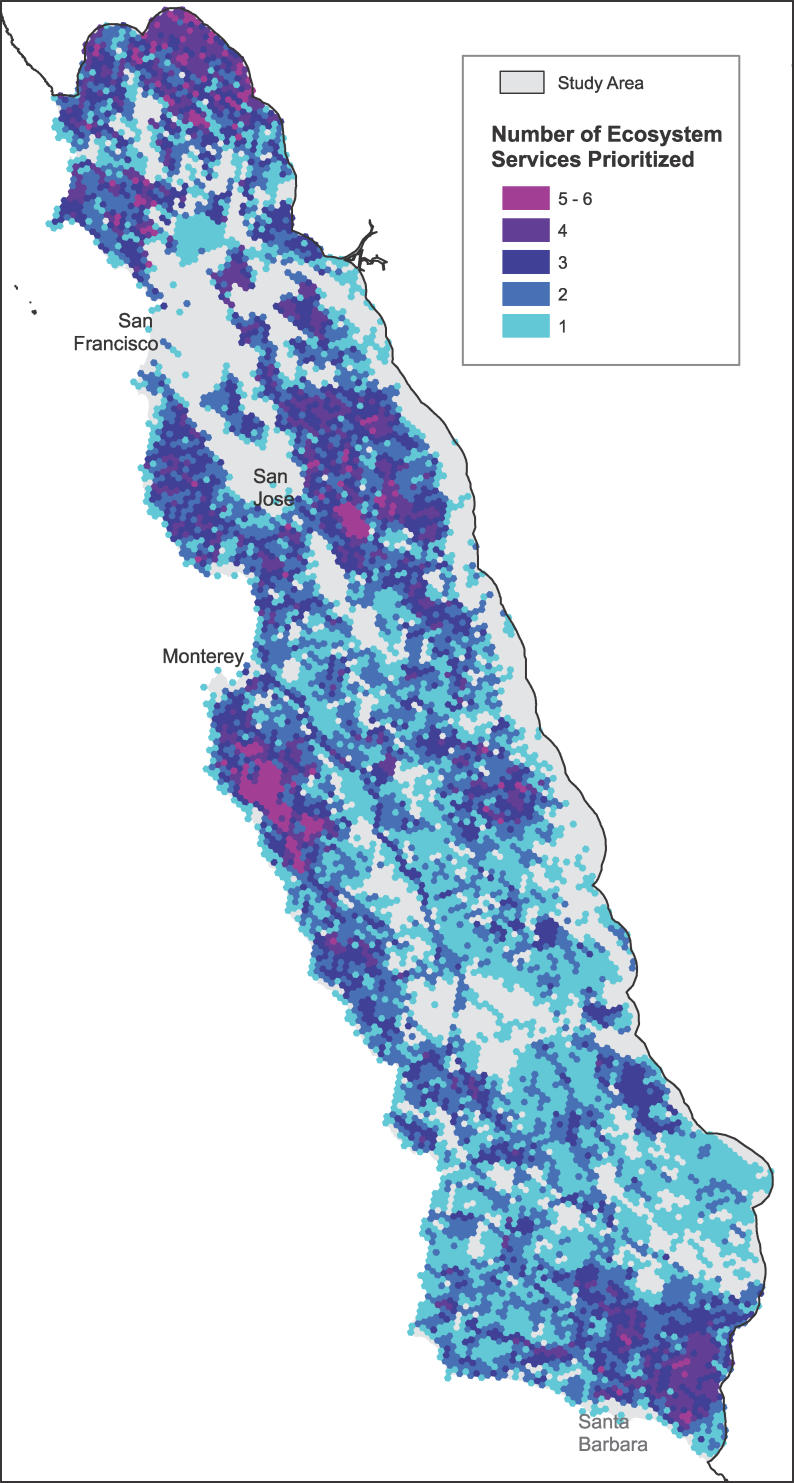
Despite increasing attention to the human dimension of conservation projects, a rigorous, systematic methodology for planning for ecosystem services has not been developed. This is in part because flows of ecosystem services remain poorly characterized at local-to-regional scales, and their protection has not generally been made a priority. We used a spatially explicit conservation planning framework to explore the trade-offs and opportunities for aligning conservation goals for biodiversity with six ecosystem services (carbon storage, flood control, forage production, outdoor recreation, crop pollination, and water provision) in the Central Coast ecoregion of California, United States. We found weak positive and some weak negative associations between the priority areas for biodiversity conservation and the flows of the six ecosystem services across the ecoregion. Excluding the two agriculture-focused services-crop pollination and forage production-eliminates all negative correlations. We compared the degree to which four contrasting conservation network designs protect biodiversity and the flow of the six services. We found that biodiversity conservation protects substantial collateral flows of services. Targeting ecosystem services directly can meet the multiple ecosystem services and biodiversity goals more efficiently but cannot substitute for targeted biodiversity protection (biodiversity losses of 44% relative to targeting biodiversity alone). Strategically targeting only biodiversity plus the four positively associated services offers much promise (relative biodiversity losses of 7%). Here we present an initial analytical framework for integrating biodiversity and ecosystem services in conservation planning and illustrate its application. We found that although there are important potential trade-offs between conservation for biodiversity and for ecosystem services, a systematic planning framework offers scope for identifying valuable synergies.
尽管对保护项目中的人文因素日益关注,但尚未形成一套严谨、系统的生态系统服务规划方法。部分原因在于,生态系统服务在地方到区域尺度上的流动特征仍不明确,而且其保护通常未被列为优先事项。我们使用了一个空间明确的保护规划框架,来探讨美国加利福尼亚州中部海岸生态区将生物多样性保护目标与六种生态系统服务(碳储存、防洪、草料生产、户外休闲、作物授粉和供水)相协调的权衡与机遇。我们发现,生物多样性保护的优先区域与整个生态区六种生态系统服务的流动之间存在微弱的正相关和一些微弱的负相关。排除以农业为重点的两种服务——作物授粉和草料生产——可消除所有负相关。我们比较了四种不同的保护网络设计在保护生物多样性和六种服务流动方面的程度。我们发现,生物多样性保护能保护大量附带的服务流动。直接针对生态系统服务可以更有效地实现多种生态系统服务和生物多样性目标,但无法替代有针对性的生物多样性保护(相对于仅针对生物多样性而言,生物多样性损失达44%)。仅从战略上针对生物多样性以及四种正相关服务具有很大潜力(相对于生物多样性损失为7%)。在此,我们提出一个将生物多样性和生态系统服务纳入保护规划的初步分析框架,并说明其应用。我们发现,尽管在生物多样性保护和生态系统服务保护之间存在重要的潜在权衡,但一个系统的规划框架为识别有价值的协同效应提供了空间。