Institute of Orhopaedics Surgery, Xijing Hospital, Fourth Military Medical University, Xi'an, Shaanxi, P.R. China.
PLoS One. 2012;7(6):e38381. doi: 10.1371/journal.pone.0038381. Epub 2012 Jun 1.
Spinal cord injury (SCI), including immediate mechanical injury and secondary injury, is associated with the inflammatory response, apoptosis and oxidative stress in response to traumatic injury. Tanshinone IIA (TIIA) is one of the major extracts obtained from Salvia miltiorrhiza BUNGE, which has anti-inflammatory and anti-apoptotic effects on many diseases. However, little is known about the effects of TIIA treatment on SCI. Therefore, the aim of the present study is to evaluate the pharmacological action of TIIA on secondary damage and the underlying mechanisms of experimental SCI in rats.
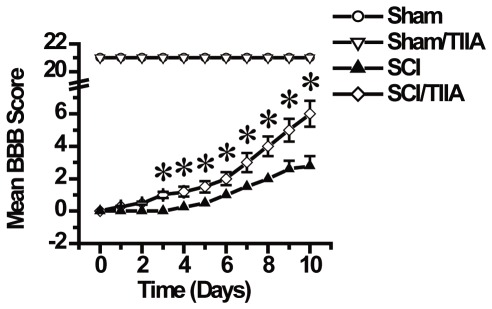
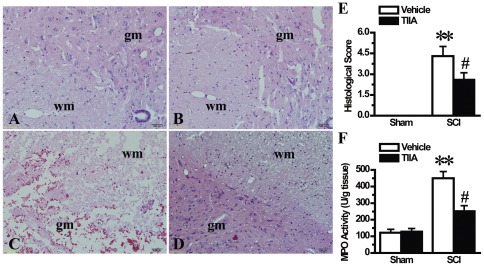
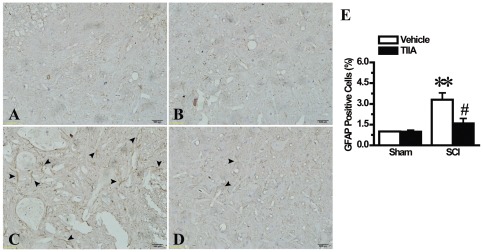
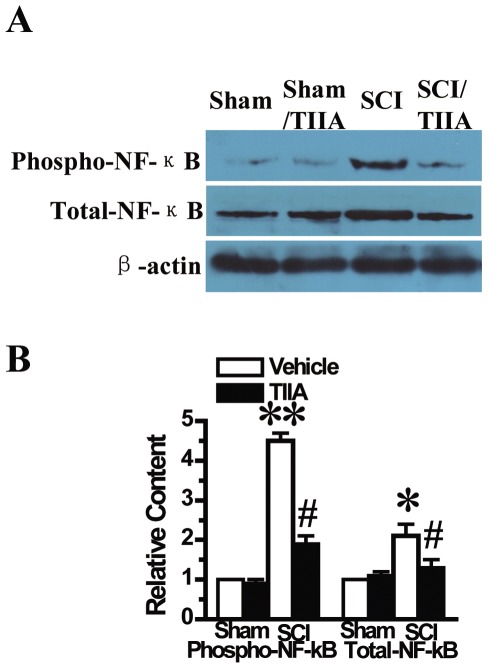
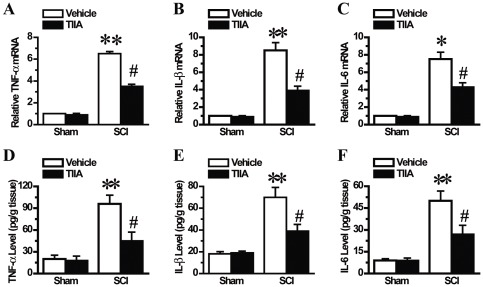
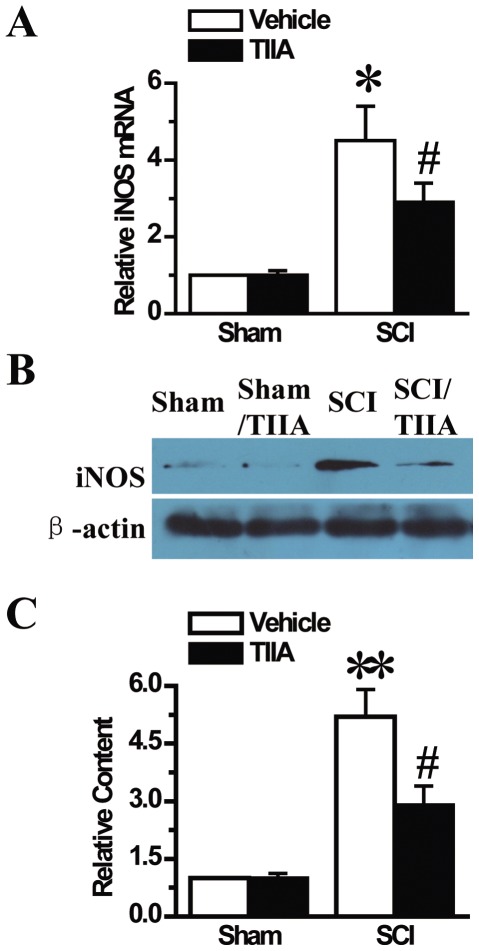
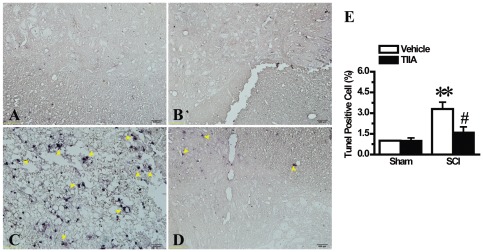
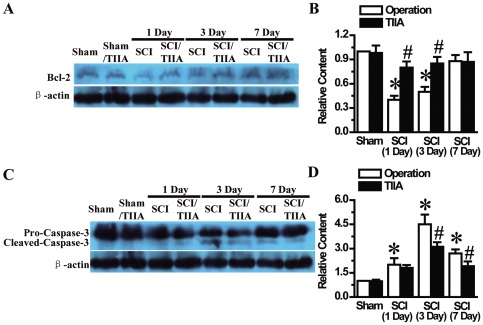
METHODOLOGY/PRINCIPAL FINDINGS: SCI was generated using a weight drop device on the dorsal spinal cord via a two-level T9-T11 laminectomy. SCI in rats resulted in severe trauma, characterized by locomotor disturbance, edema, neutrophil infiltration, the production of astrocytes and inflammatory mediators, apoptosis and oxidative stress. TIIA treatment (20 mg/kg, i.p.) after SCI induced significant effects: (1) improved motor function (Basso, Beattie and Bresnahan scores), (2) reduced the degree of tissue injury (histological score), neutrophil infiltration (myeloperoxidase activity) and the expression of astrocytes, (3) inhibited the activation of SCI-related pathways, such as NF-κB and MAPK signaling pathways, (4) decreased the production of pro-inflammatory cytokines (TNF-α, IL-1β, and IL-6) and iNOS, (5) reduced apoptosis (TUNEL staining, and Bcl-2 and caspase-3 expression) and (6) reversed the redox state imbalance.
CONCLUSIONS/SIGNIFICANCE: The results clearly show that TIIA has a prominent protective effect against SCI through inhibiting the inflammatory response and apoptosis in the spinal cord tissue after SCI.
脊髓损伤(SCI)包括即刻的机械性损伤和继发性损伤,与创伤后炎症反应、细胞凋亡和氧化应激有关。丹参酮 IIA(TIIA)是从丹参中提取的主要成分之一,对许多疾病具有抗炎和抗凋亡作用。然而,关于 TIIA 治疗对 SCI 的影响知之甚少。因此,本研究旨在评估 TIIA 对大鼠实验性 SCI 继发性损伤的药理作用及其潜在机制。
方法/主要发现:通过 T9-T11 椎板切除术在背侧脊髓上使用重物坠落装置产生 SCI。大鼠 SCI 导致严重创伤,表现为运动障碍、水肿、中性粒细胞浸润、星形胶质细胞和炎症介质产生、细胞凋亡和氧化应激。SCI 后 TIIA 治疗(20mg/kg,腹腔注射)可产生显著效果:(1)改善运动功能(Basso、Beattie 和 Bresnahan 评分);(2)降低组织损伤程度(组织学评分)、中性粒细胞浸润(髓过氧化物酶活性)和星形胶质细胞表达;(3)抑制与 SCI 相关的途径激活,如 NF-κB 和 MAPK 信号通路;(4)减少促炎细胞因子(TNF-α、IL-1β 和 IL-6)和 iNOS 的产生;(5)减少细胞凋亡(TUNEL 染色、Bcl-2 和 caspase-3 表达);(6)逆转氧化还原状态失衡。
结论/意义:结果清楚地表明,TIIA 通过抑制 SCI 后脊髓组织中的炎症反应和细胞凋亡,对 SCI 具有显著的保护作用。