Department of Microbiology, Immunology University of Oklahoma Health Sciences Center, Oklahoma City, OK, USA.
Mucosal Immunol. 2013 Jan;6(1):45-55. doi: 10.1038/mi.2012.46. Epub 2012 Jun 13.
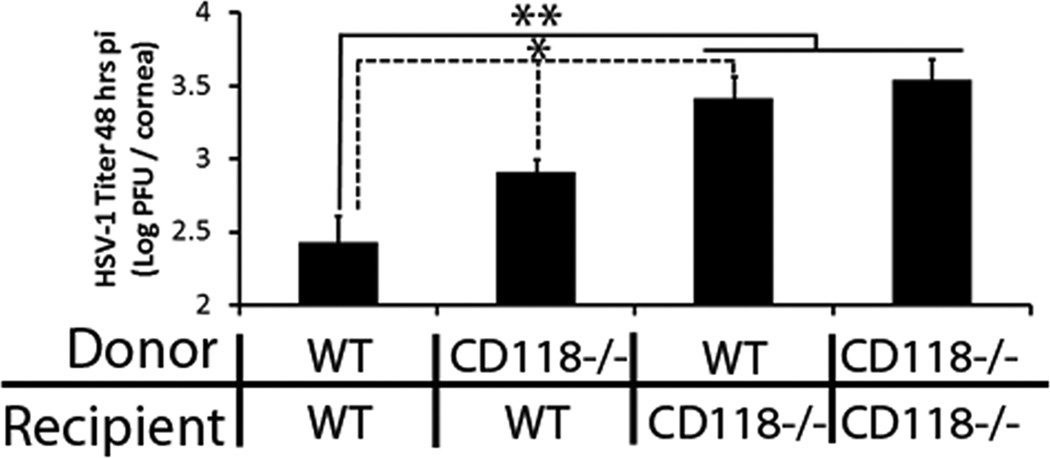
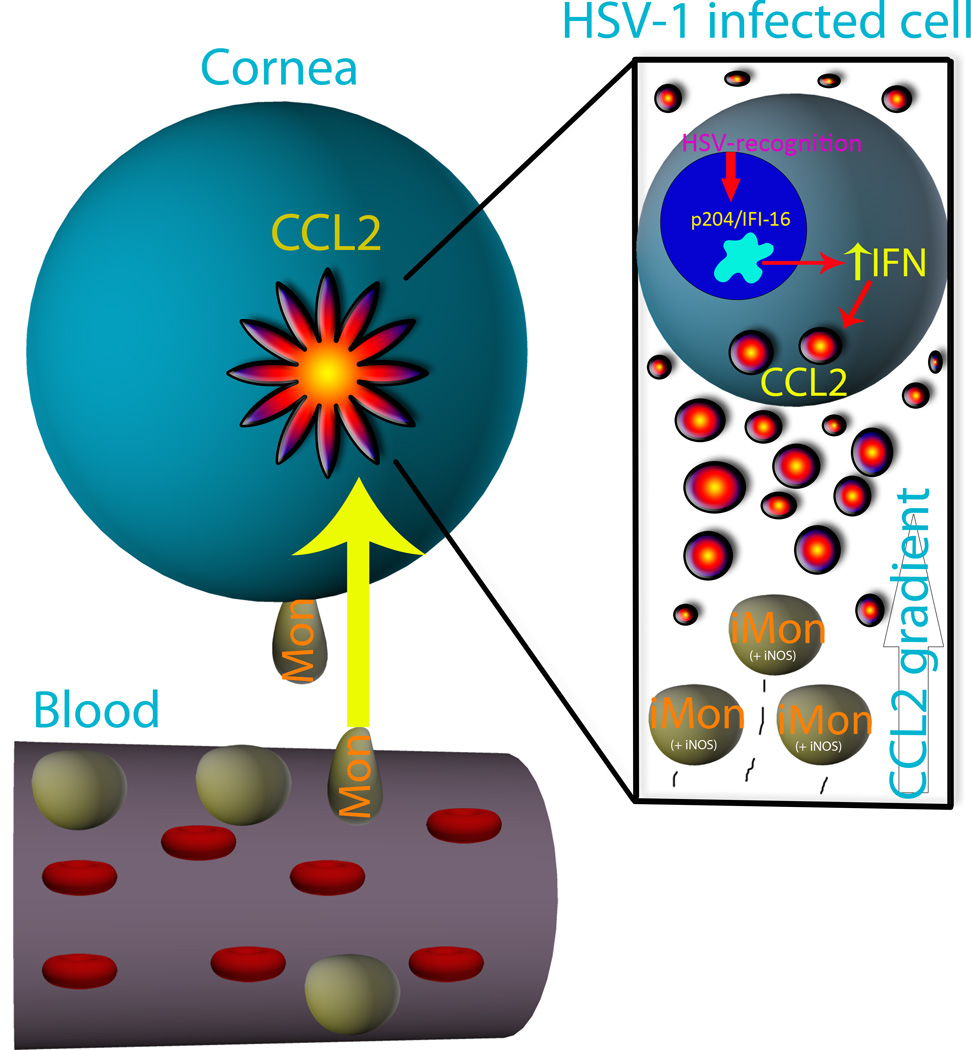
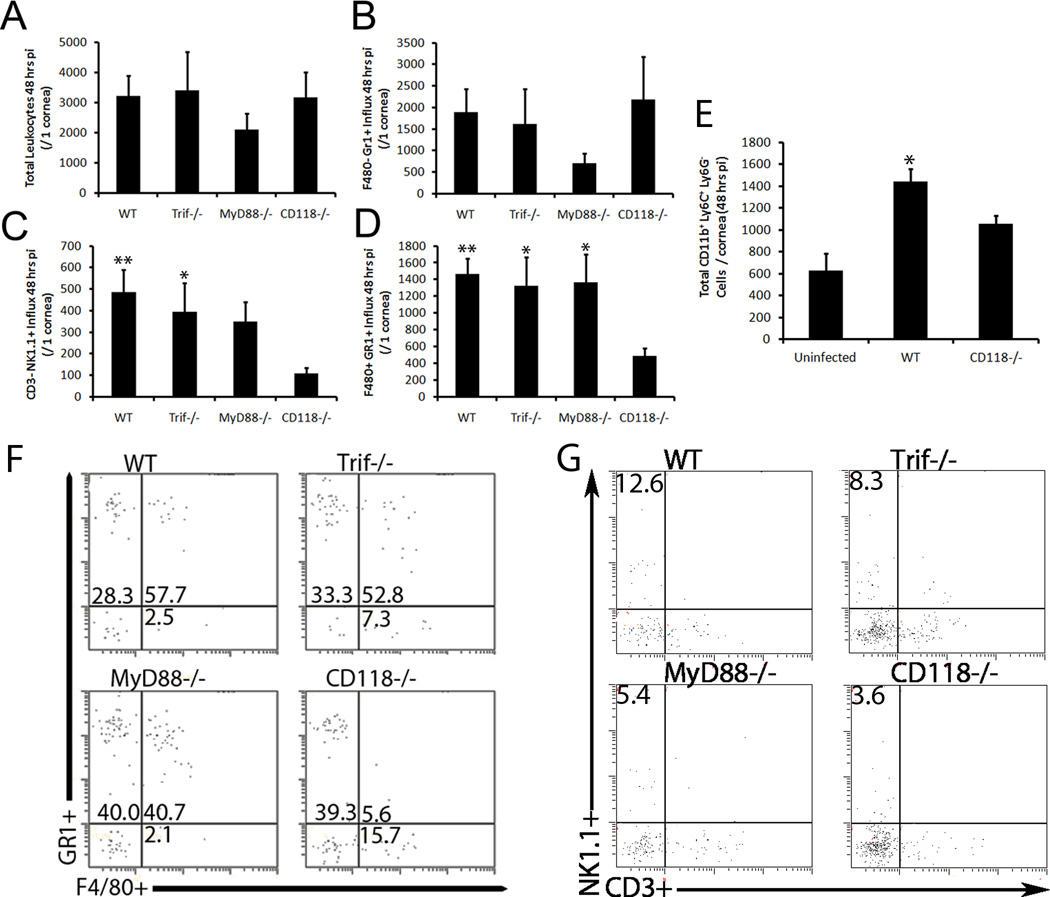
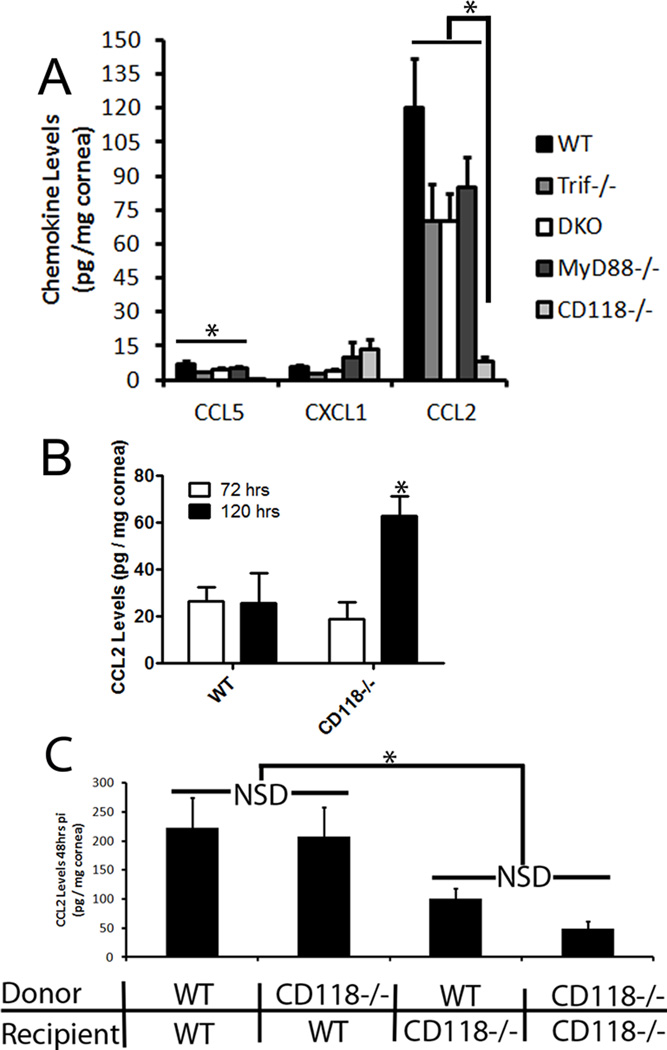
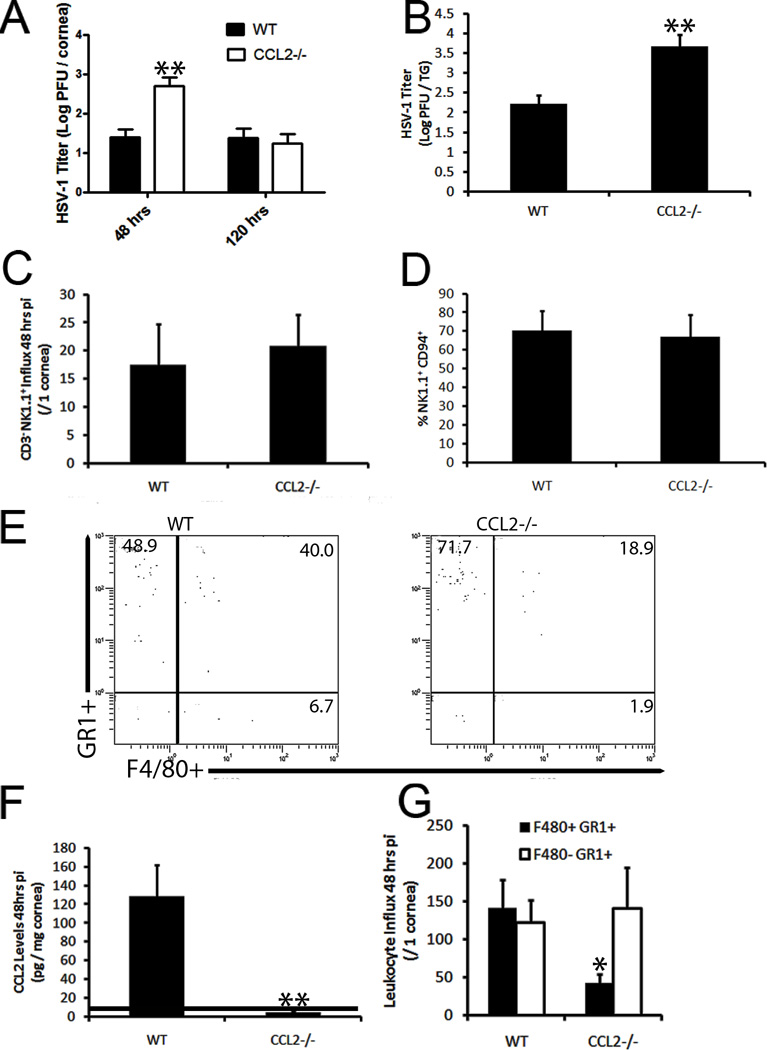
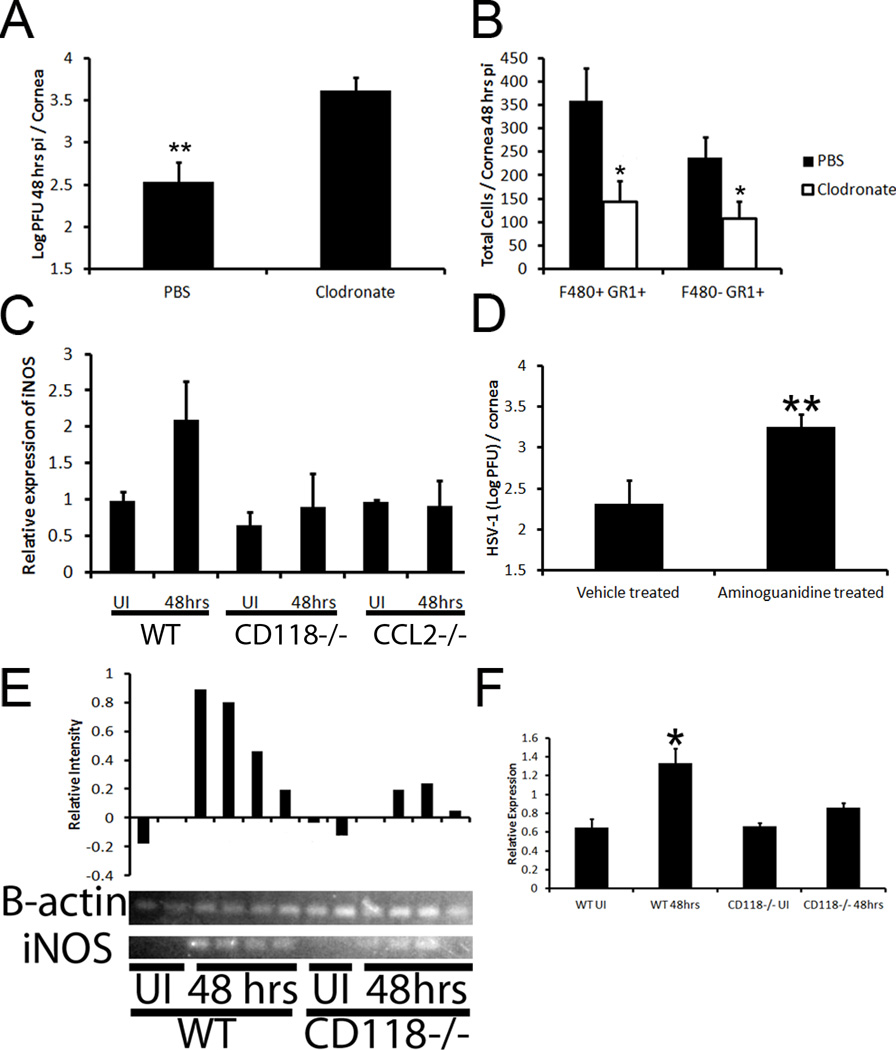
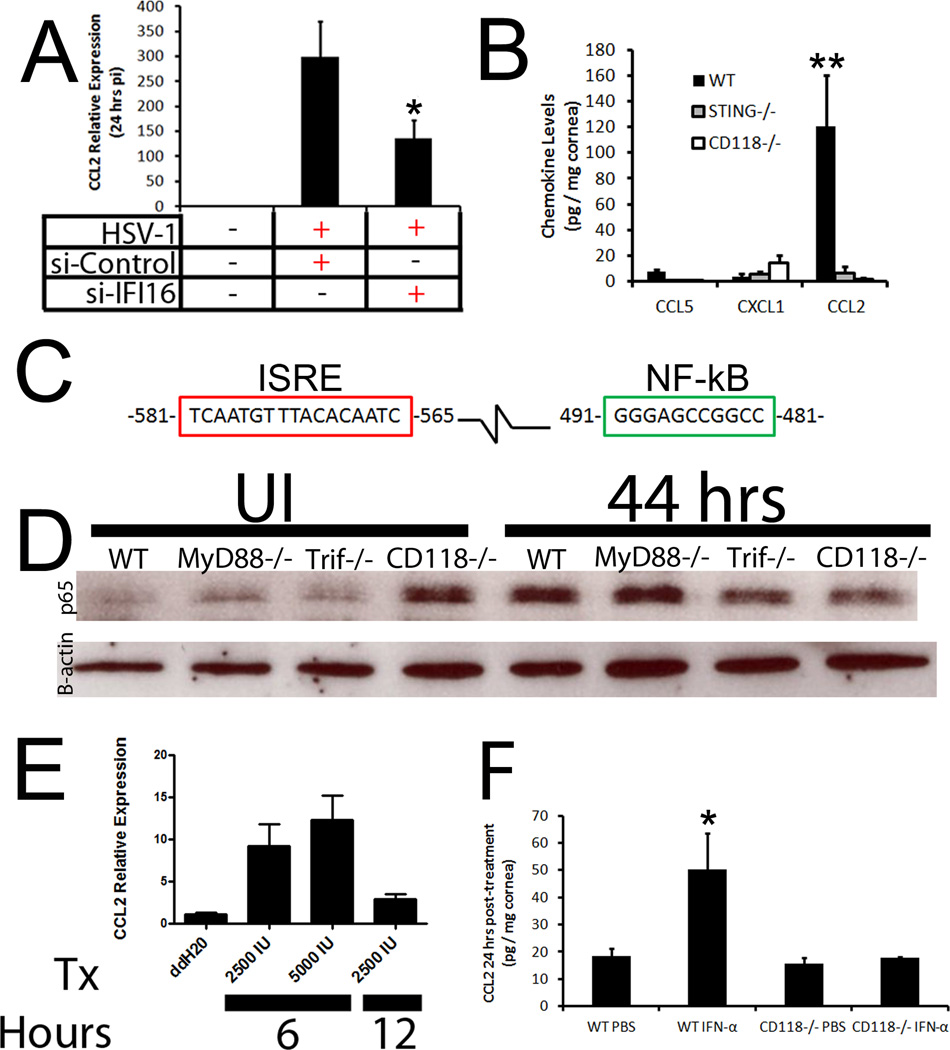
Herpes simplex virus type 1 (HSV-1) is the leading cause of corneal blindness in the developed world due to reactivation of infectious virus and the subsequent immune response. The innate response that facilitates viral control in the cornea is currently unknown. In the present study using a mouse chimera model, we found that a bone marrow component is crucial in inhibiting viral replication and identified inflammatory monocytes (F4/80(+) Gr1(+)) as the responsible cell. CCL2 was critical for recruiting inflammatory monocytes, and a loss of this chemokine in CCL2(-/-) mice resulted in a loss of viral containment and inflammatory monocyte recruitment. To confirm these results, clodronate depletion of inflammatory monocytes resulted in elevated viral titers. Furthermore, siRNA targeting the innate sensor p204/IFI-16 resulted in a loss of CCL2 production. In conclusion, CCL2 expression driven by IFI-16 recognition of HSV-1 facilitates the recruitment of inflammatory monocytes into the cornea proper to control viral replication.
单纯疱疹病毒 1 型(HSV-1)是发达国家角膜失明的主要原因,这是由于感染病毒的重新激活和随后的免疫反应。目前尚不清楚在角膜中促进病毒控制的先天反应。在本研究中,我们使用了一种小鼠嵌合体模型,发现骨髓成分对于抑制病毒复制至关重要,并鉴定出炎性单核细胞(F4/80(+) Gr1(+))是负责的细胞。CCL2 对于招募炎性单核细胞至关重要,在 CCL2(-/-) 小鼠中这种趋化因子的缺失导致病毒控制和炎性单核细胞招募的丧失。为了证实这些结果,用氯膦酸盐耗竭炎性单核细胞导致病毒滴度升高。此外,针对先天传感器 p204/IFI-16 的 siRNA 靶向导致 CCL2 产生的丧失。总之,IFI-16 识别 HSV-1 驱动的 CCL2 表达促进了炎性单核细胞招募到角膜中以控制病毒复制。