Department of Molecular Genetics, The Forsyth Institute, Cambridge, MA 02142, USA.
Genome Biol. 2012 Jun 14;13(6):R42. doi: 10.1186/gb-2012-13-6-r42.
To understand the relationship between our bacterial microbiome and health, it is essential to define the microbiome in the absence of disease. The digestive tract includes diverse habitats and hosts the human body's greatest bacterial density. We describe the bacterial community composition of ten digestive tract sites from more than 200 normal adults enrolled in the Human Microbiome Project, and metagenomically determined metabolic potentials of four representative sites.
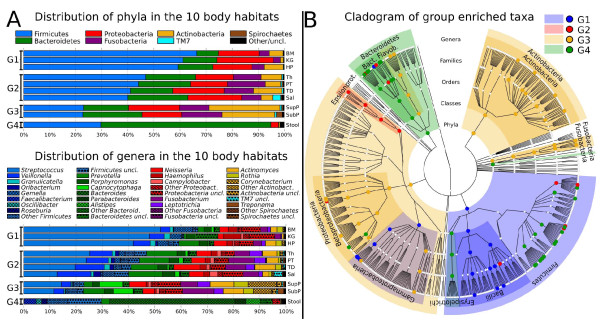
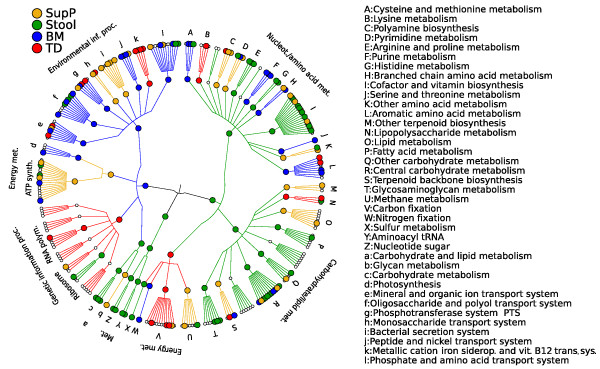
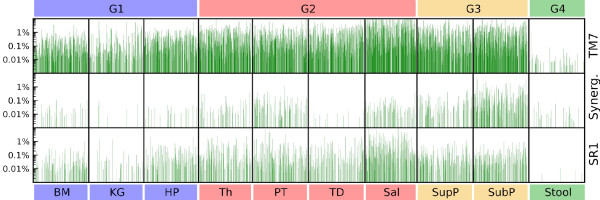
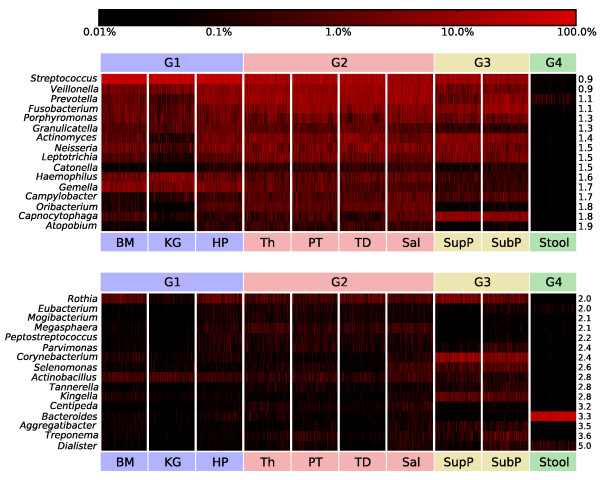
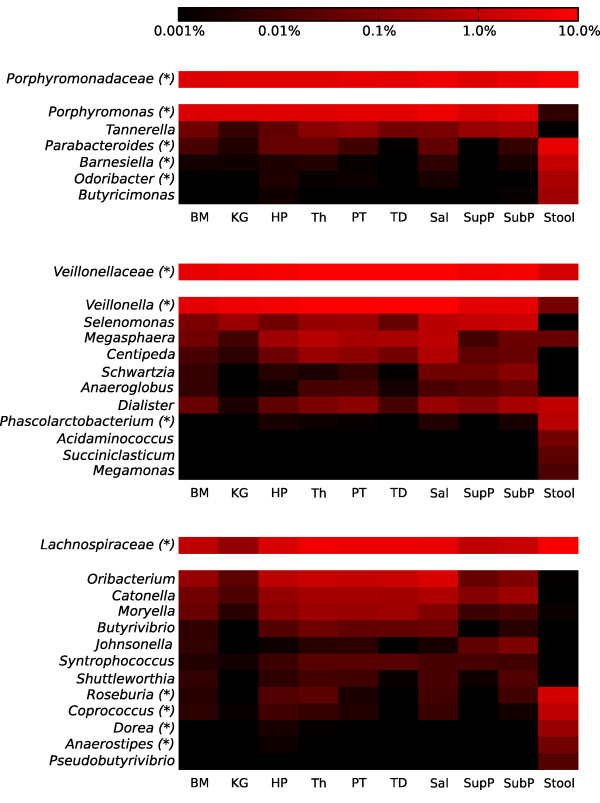
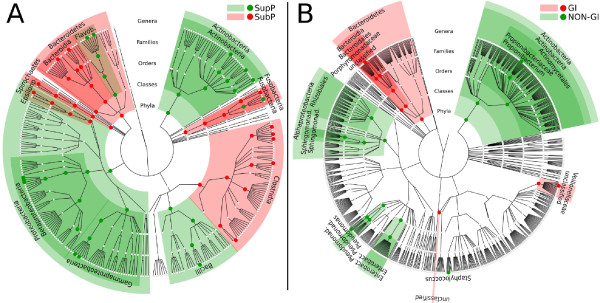
The microbiota of these diverse habitats formed four groups based on similar community compositions: buccal mucosa, keratinized gingiva, hard palate; saliva, tongue, tonsils, throat; sub- and supra-gingival plaques; and stool. Phyla initially identified from environmental samples were detected throughout this population, primarily TM7, SR1, and Synergistetes. Genera with pathogenic members were well-represented among this disease-free cohort. Tooth-associated communities were distinct, but not entirely dissimilar, from other oral surfaces. The Porphyromonadaceae, Veillonellaceae and Lachnospiraceae families were common to all sites, but the distributions of their genera varied significantly. Most metabolic processes were distributed widely throughout the digestive tract microbiota, with variations in metagenomic abundance between body habitats. These included shifts in sugar transporter types between the supragingival plaque, other oral surfaces, and stool; hydrogen and hydrogen sulfide production were also differentially distributed.
The microbiomes of ten digestive tract sites separated into four types based on composition. A core set of metabolic pathways was present across these diverse digestive tract habitats. These data provide a critical baseline for future studies investigating local and systemic diseases affecting human health.
为了了解我们的细菌微生物组与健康之间的关系,必须在没有疾病的情况下定义微生物组。消化道包括多种栖息地,是人体细菌密度最大的地方。我们描述了来自人类微生物组计划中 200 多名正常成年人的十个消化道部位的细菌群落组成,并对四个代表性部位的宏基因组代谢潜力进行了测定。
这些不同栖息地的微生物群根据相似的群落组成分为四组:颊粘膜、角化牙龈、硬腭;唾液、舌头、扁桃体、喉咙;龈下和龈上斑块;和粪便。从环境样本中最初鉴定出的门在整个人群中都有检测到,主要是 TM7、SR1 和共生菌门。在这个无病队列中,具有致病性成员的属也有很好的代表。与牙齿相关的群落与其他口腔表面不同,但并非完全不同。卟啉单胞菌科、韦荣球菌科和lachnospiraceae 家族在所有部位都很常见,但它们的属分布差异很大。大多数代谢过程广泛分布于整个消化道微生物群,不同身体栖息地的宏基因组丰度存在差异。这些差异包括龈上斑块、其他口腔表面和粪便之间糖转运体类型的变化;氢和硫化氢的产生也存在差异分布。
根据组成,十个消化道部位的微生物组分为四种类型。一套核心代谢途径存在于这些不同的消化道栖息地中。这些数据为未来研究影响人类健康的局部和系统性疾病提供了关键的基线。