Institute of Molecular Biology, University of Oregon, Eugene, OR 97403, USA.
Structure. 2012 Jul 3;20(7):1177-88. doi: 10.1016/j.str.2012.04.021. Epub 2012 Jun 14.
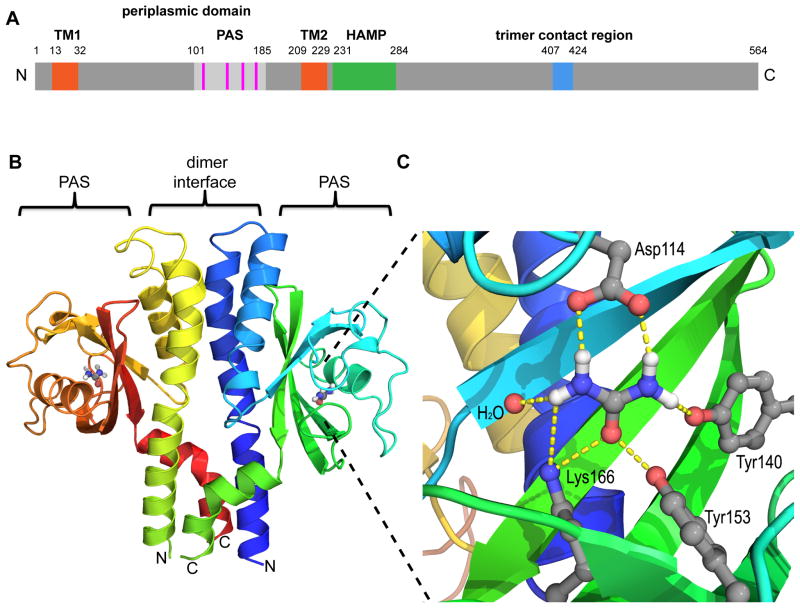
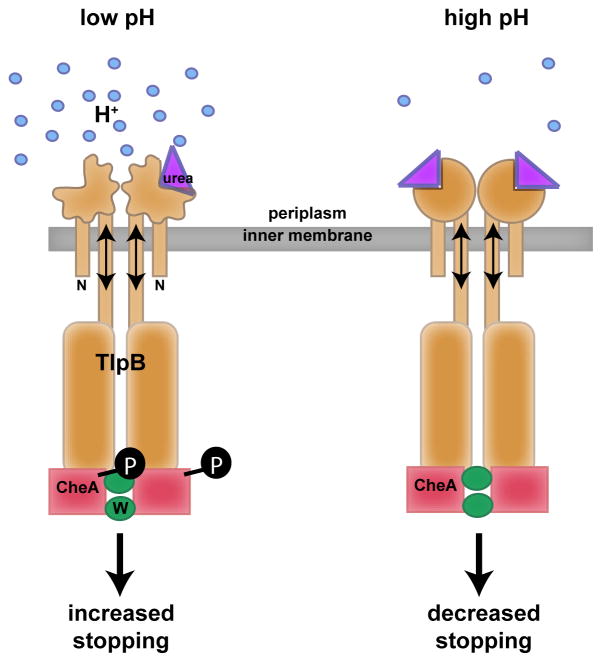
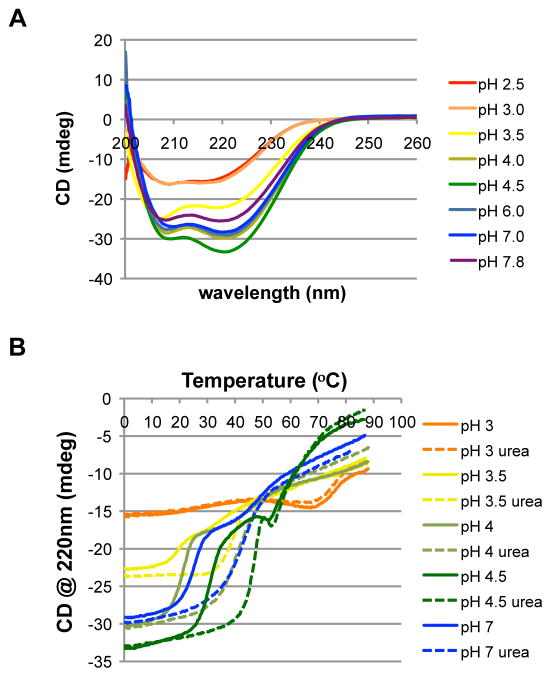
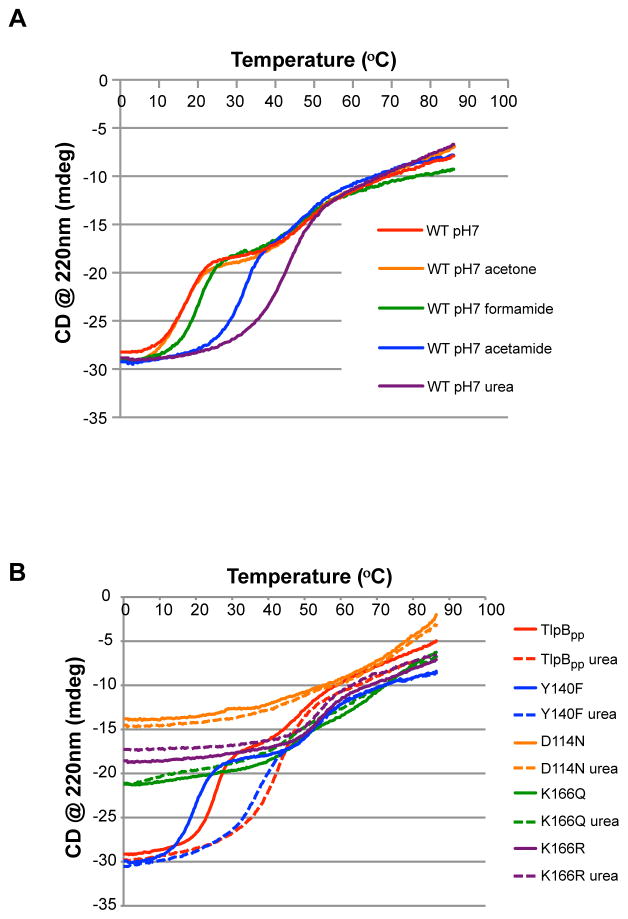
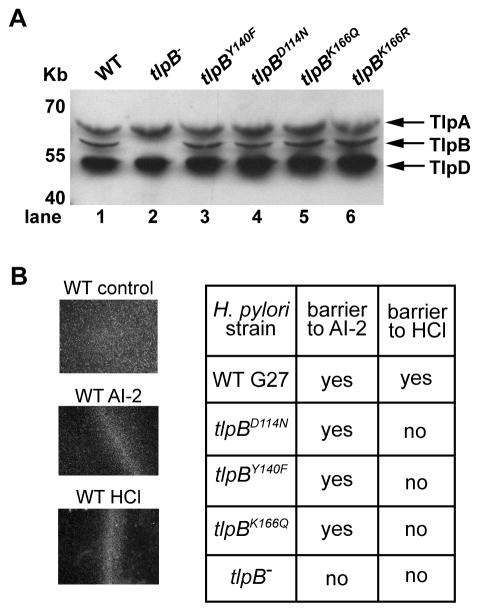
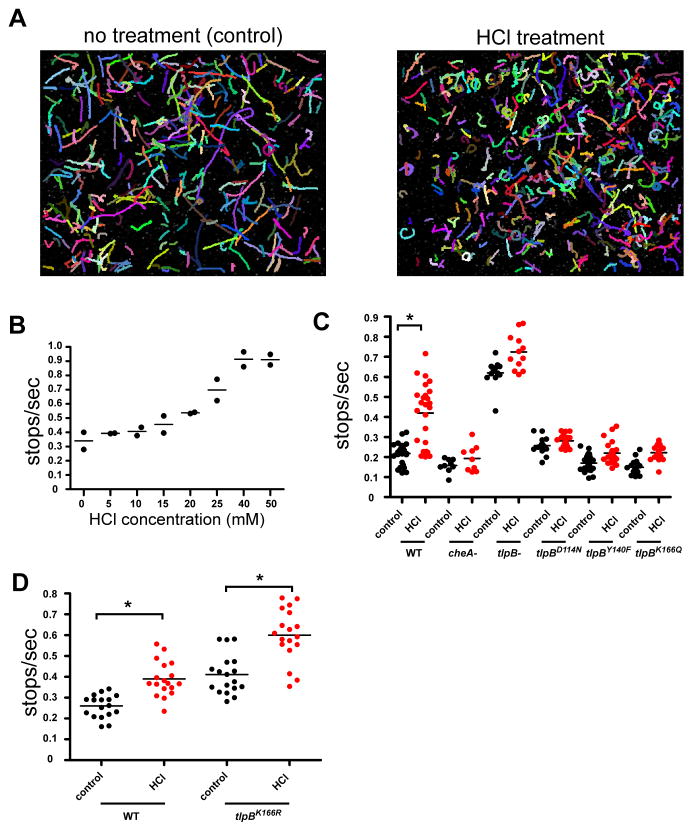
pH sensing is crucial for survival of most organisms, yet the molecular basis of such sensing is poorly understood. Here, we present an atomic resolution structure of the periplasmic portion of the acid-sensing chemoreceptor, TlpB, from the gastric pathogen Helicobacter pylori. The structure reveals a universal signaling fold, a PAS domain, with a molecule of urea bound with high affinity. Through biophysical, biochemical, and in vivo mutagenesis studies, we show that urea and the urea-binding site residues play critical roles in the ability of H. pylori to sense acid. Our signaling model predicts that protonation events at Asp114, affected by changes in pH, dictate the stability of TlpB through urea binding.
pH 感应对于大多数生物的生存至关重要,但这种感应的分子基础还了解甚少。在这里,我们展示了来自胃病原体幽门螺杆菌的酸感应化学感受器 TlpB 的周质部分的原子分辨率结构。该结构揭示了一种普遍的信号折叠,即 PAS 结构域,与高亲和力结合的尿素分子。通过生物物理、生化和体内诱变研究,我们表明尿素和尿素结合位点残基在幽门螺杆菌感应酸的能力中起着关键作用。我们的信号模型预测,pH 变化影响 Asp114 的质子化事件,通过尿素结合来决定 TlpB 的稳定性。