Department of Global Health and Development, London School of Hygiene and Tropical Medicine, London, United Kingdom.
J Int AIDS Soc. 2012 Jun 14;15 Suppl 1(Suppl 1):1-10. doi: 10.7448/IAS.15.3.17367.
The fact that HIV prevention often deals with politicised sexual and drug taking behaviour is well known, but structural HIV prevention interventions in particular can involve alteration of social arrangements over which there may be further contested values at stake. As such, normative frameworks are required to inform HIV prevention decisions and avoid conflicts between social goals.
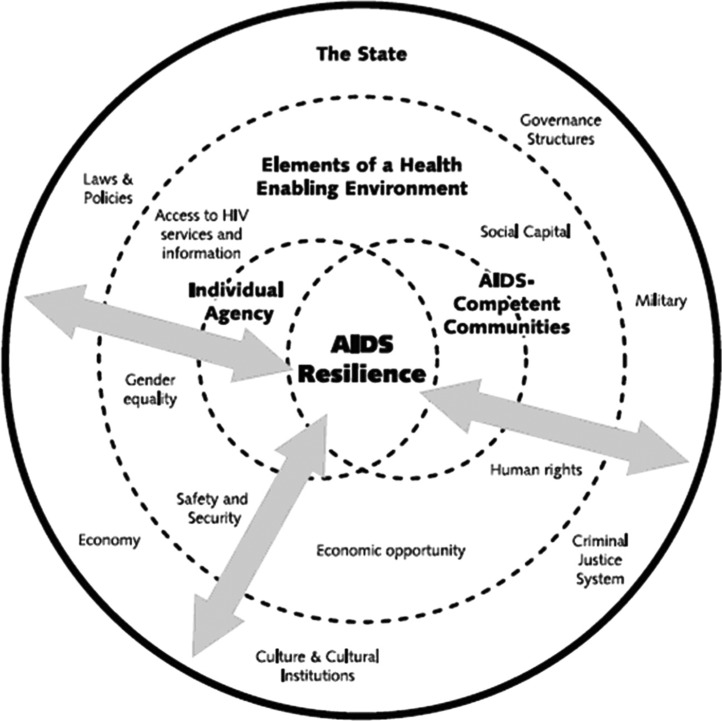
This paper provides a conceptual review and discussion of the normative issues surrounding structural HIV prevention strategies. It applies political and ethical concepts to explore the contested nature of HIV planning and suggests conceptual frameworks to inform future structural HIV responses.
HIV prevention is an activity that cannot be pursued without making value judgements; it is inherently political. Appeals to health outcomes alone are insufficient when intervention strategies have broader social impacts, or when incidence reduction can be achieved at the expense of other social values such as freedom, equality, or economic growth. This is illustrated by the widespread unacceptability of forced isolation which may be efficacious in preventing spread of infectious agents, but conflicts with other social values.
While no universal value system exists, the capability approach provides one potential framework to help overcome seeming contradictions or value trade-offs in structural HIV prevention approaches. However, even within the capability approach, valuations must still be made. Making normative values explicit in decision making processes is required to ensure transparency, accountability, and representativeness of the public interest, while ensuring structural HIV prevention efforts align with broader social development goals as well.
艾滋病毒预防工作经常涉及到被政治化的性行为和吸毒行为,这是众所周知的,但结构性艾滋病毒预防干预措施特别涉及到社会安排的改变,而这些社会安排可能存在进一步的争议性价值观。因此,需要规范框架来为艾滋病毒预防决策提供信息,并避免社会目标之间的冲突。
本文对结构性艾滋病毒预防策略所涉及的规范问题进行了概念性的回顾和讨论。它运用政治和伦理概念来探讨艾滋病毒规划的争议性本质,并提出概念框架,为未来的结构性艾滋病毒应对提供信息。
艾滋病毒预防是一项不能在没有做出价值判断的情况下进行的活动;它本质上是政治性的。当干预策略对社会产生更广泛的影响时,或者当减少发病率可以以牺牲其他社会价值观为代价,如自由、平等或经济增长时,仅仅诉诸健康结果是不够的。这一点可以通过广泛的不可接受的强制隔离来说明,这种隔离虽然可以有效地防止传染病的传播,但与其他社会价值观相冲突。
虽然不存在普遍的价值体系,但能力方法提供了一个潜在的框架,可以帮助克服结构性艾滋病毒预防方法中的看似矛盾或价值权衡。然而,即使在能力方法中,也必须进行评估。在决策过程中明确规范价值观,是确保公共利益的透明度、问责制和代表性的必要条件,同时确保结构性艾滋病毒预防工作与更广泛的社会发展目标保持一致。