Institute of Orthopaedics, Xijing Hospital, The Fourth Military Medical University, Xi'an, China.
PLoS One. 2012;7(6):e39526. doi: 10.1371/journal.pone.0039526. Epub 2012 Jun 21.
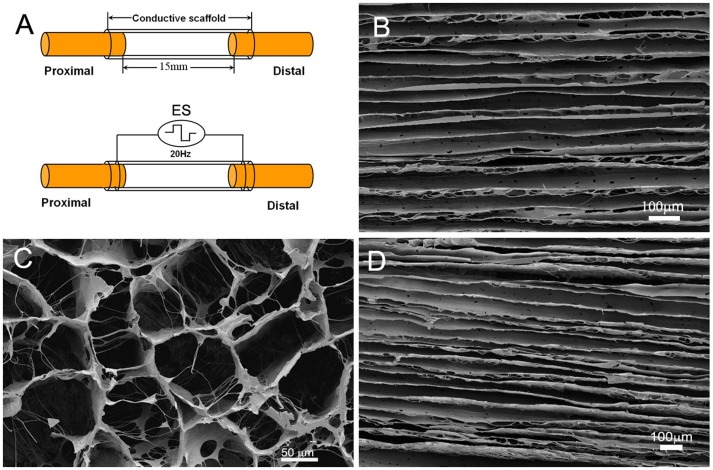
Electrical stimulation (ES) has been shown to promote nerve regeneration when it was applied to the proximal nerve stump. However, the possible beneficial effect of establishing a local electrical environment between a large nerve defect on nerve regeneration has not been reported in previous studies. The present study attempted to establish a local electrical environment between a large nerve defect, and examined its effect on nerve regeneration and functional recovery.
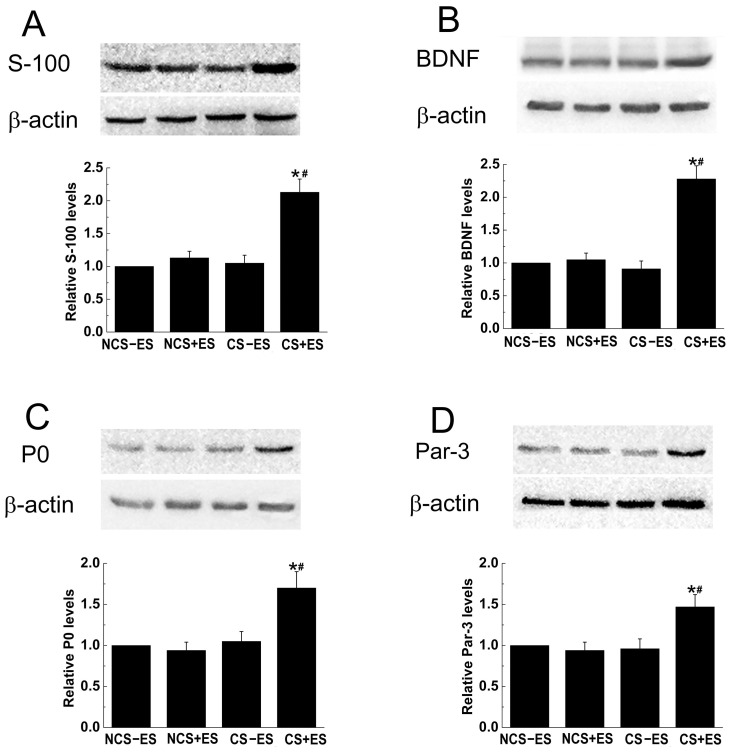
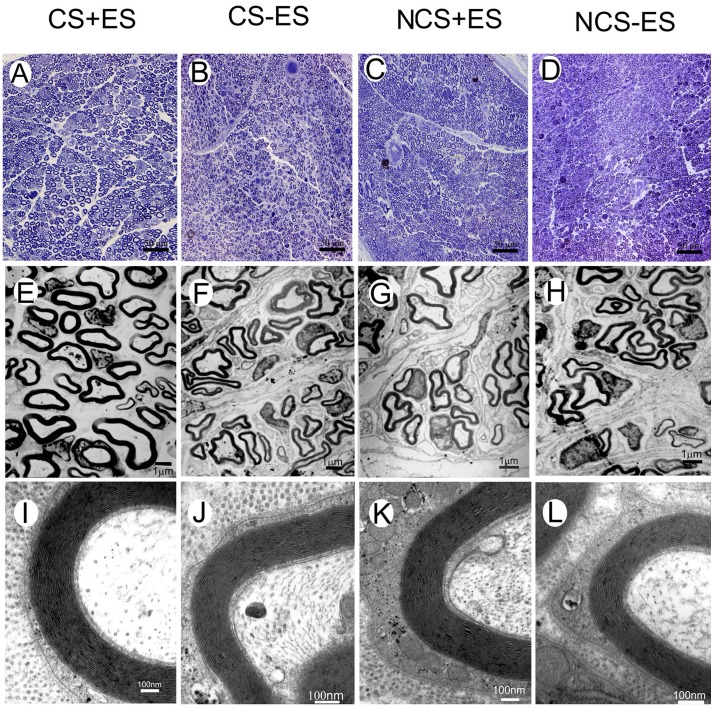
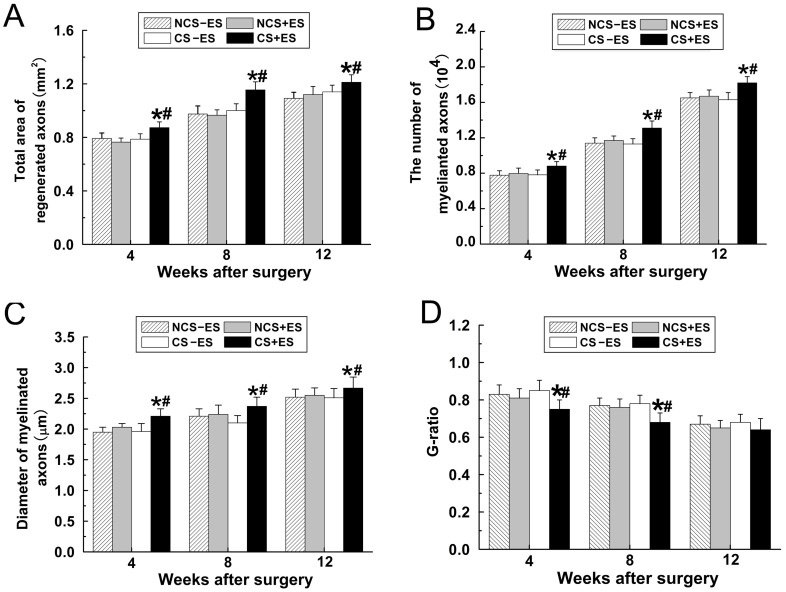
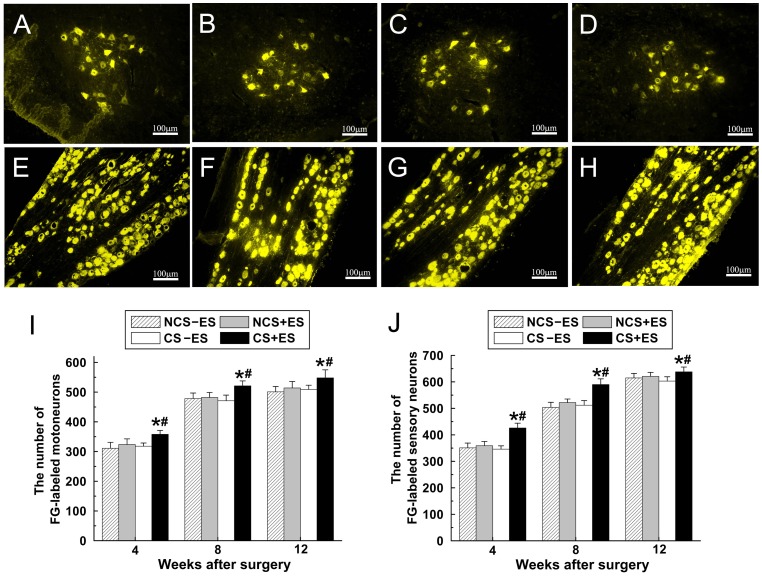
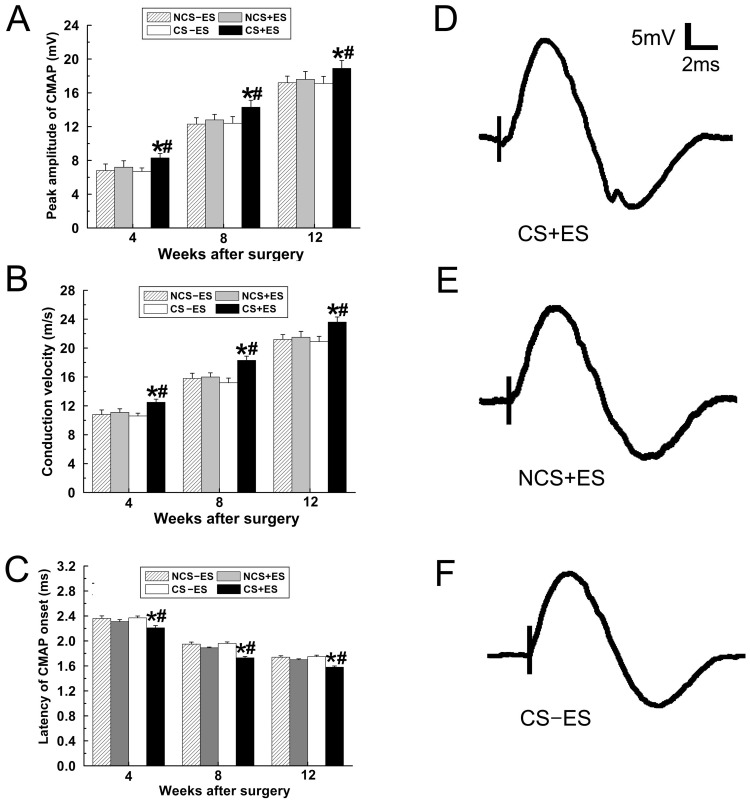
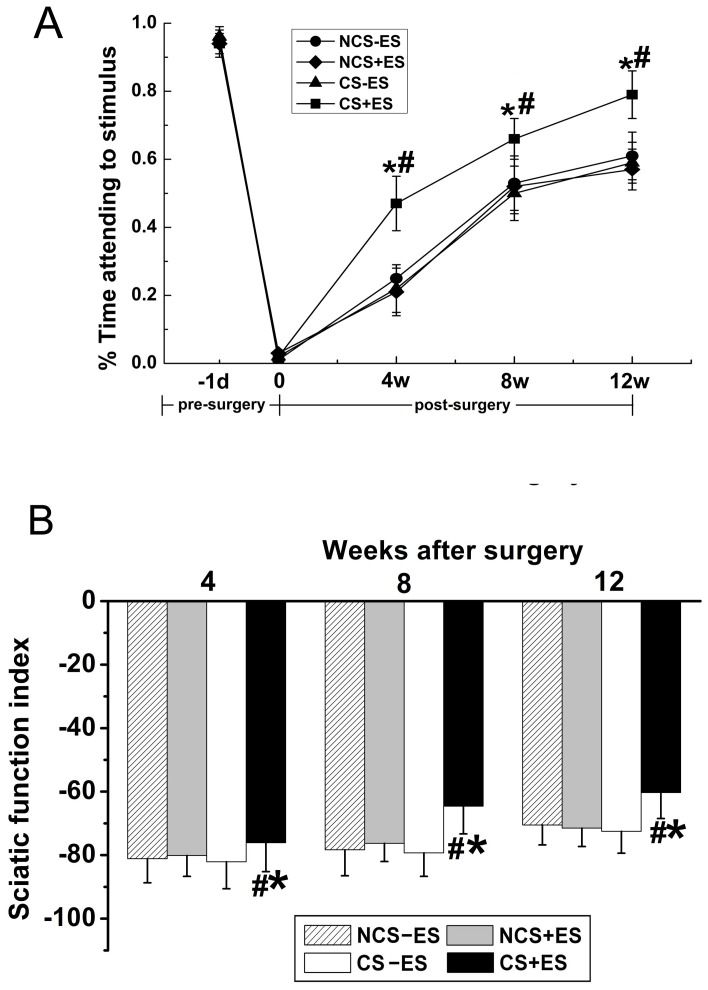
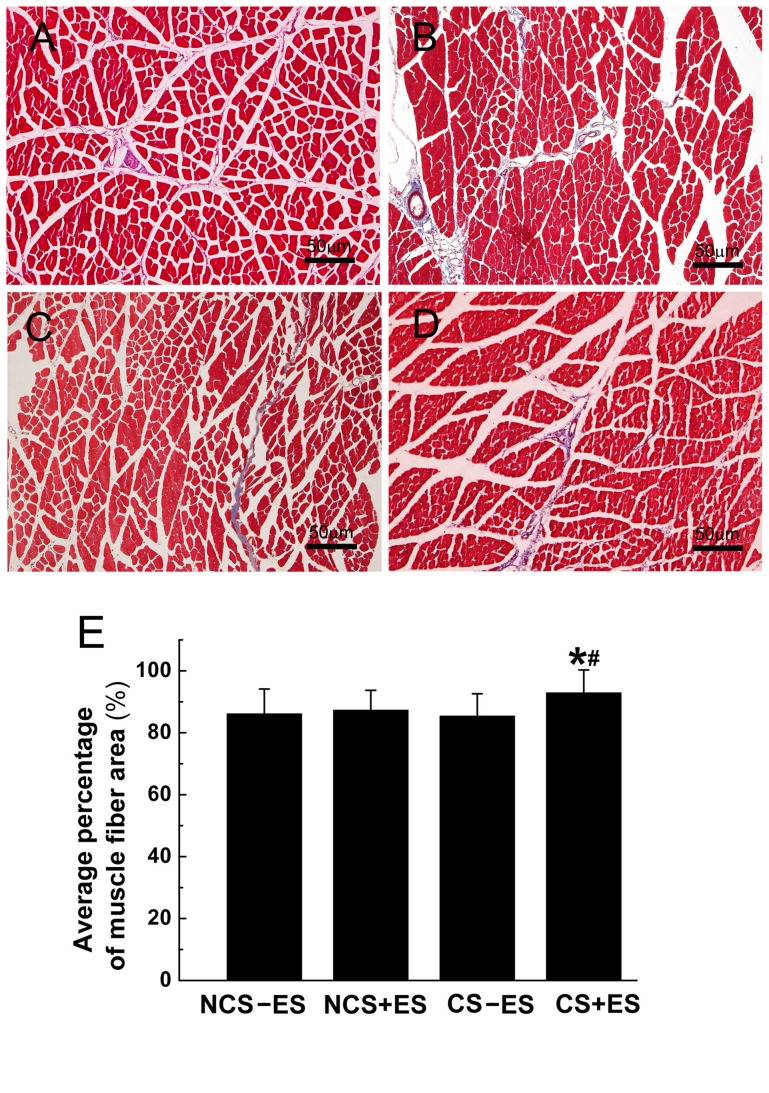
METHODOLOGY/FINDINGS: In the present study, a conductive scaffold was constructed and used to bridge a 15 mm sciatic nerve defect in rats, and intermittent ES (3 V, 20 Hz) was applied to the conductive scaffold to establish an electrical environment at the site of nerve defect. Nerve regeneration and functional recovery were examined after nerve injury repair and ES. We found that axonal regeneration and remyelination of the regenerated axons were significantly enhanced by ES which was applied to conductive scaffold. In addition, both motor and sensory functional recovery was significantly improved and muscle atrophy was partially reversed by ES localized at the conductive scaffold. Further investigations showed that the expression of S-100, BDNF (brain-derived neurotrophic factor), P0 and Par-3 was significantly up-regulated by ES at the conductive scaffold.
CONCLUSIONS/SIGNIFICANCE: Establishing an electrical environment with ES localized at the conductive scaffold is capable of accelerating nerve regeneration and promoting functional recovery in a 15 mm nerve defect in rats. The findings provide new directions for exploring regenerative approaches to achieve better functional recovery in the treatment of large nerve defect.
电刺激(ES)已被证明可促进神经再生,当它被应用于近端神经残端时。然而,在先前的研究中,尚未报道在大神经缺损处建立局部电环境对神经再生的可能有益影响。本研究试图在大神经缺损处建立局部电环境,并研究其对神经再生和功能恢复的影响。
方法/发现:在本研究中,构建了一个导电支架,并将其用于桥接大鼠 15mm 的坐骨神经缺损,对导电支架施加间歇性 ES(3V,20Hz)以在神经缺损部位建立电环境。在神经损伤修复和 ES 后检查神经再生和功能恢复。我们发现,通过施加于导电支架的 ES 显著增强了轴突再生和再生轴突的髓鞘形成。此外,通过将 ES 定位于导电支架,运动和感觉功能的恢复均得到了显著改善,肌肉萎缩得到了部分逆转。进一步的研究表明,在导电支架处的 ES 显著上调了 S-100、BDNF(脑源性神经营养因子)、P0 和 Par-3 的表达。
结论/意义:在导电支架处建立 ES 局部电环境能够加速大鼠 15mm 神经缺损处的神经再生并促进功能恢复。这些发现为探索再生方法以实现大神经缺损治疗中更好的功能恢复提供了新的方向。