Stomatology Center, Taizhou Hospital, Zhejiang Province, Linhai, China.
Med Sci Monit. 2012 Jul;18(7):BR265-72. doi: 10.12659/msm.883204.
Surface chemistry of dental implant plays an important role in osseointegration. Heat treatment might alter surface chemistry and result in different biological response. The aim of this study was to investigate the roles of heat treatment of H2O2/HCl-treated Ti implants in cell attachment, proliferation and osteoblastic differentiation.
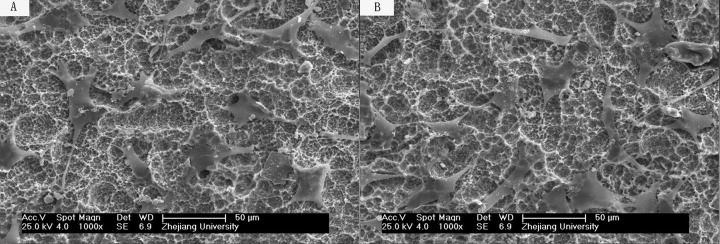
MATERIAL/METHODS: Sandblasted, dual acid-etched and H2O2/HCl heat-treated discs were set as the control group and sandblasted, dual acid-etched H2O2/HCl-treated discs were the test group. Both groups' discs were sent for surface characterization. MC3T3-E1 cells were seeded on these 2 groups' discs for 3 hours to 14 days, and then cell attachment, cell proliferation and cell differentiation were evaluated.
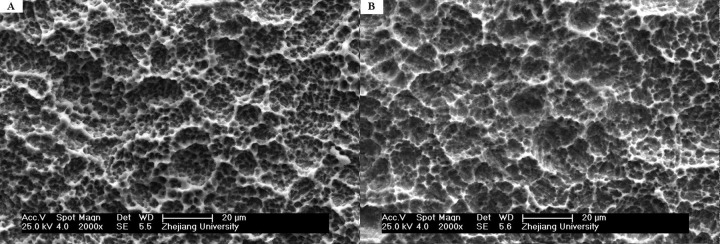
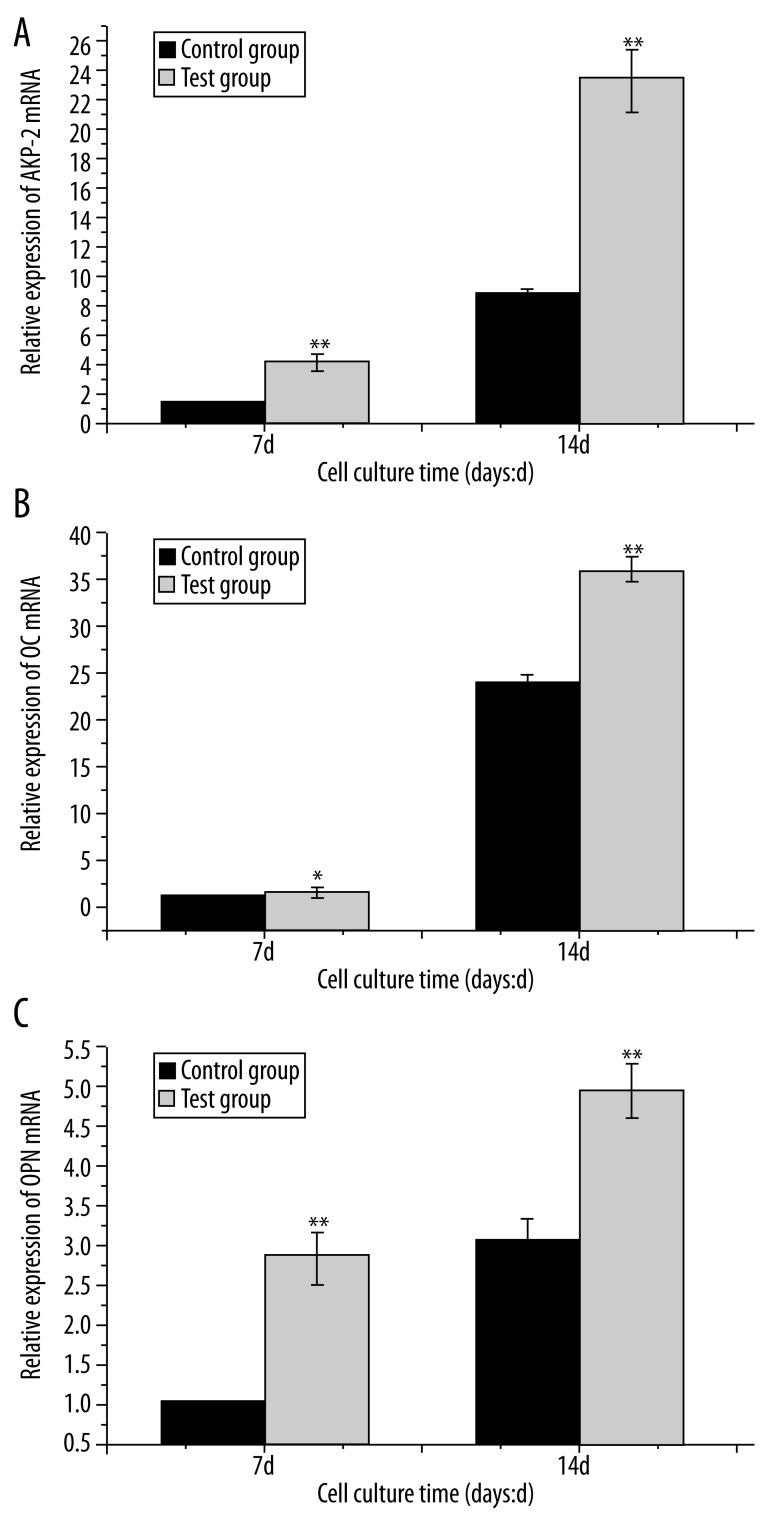
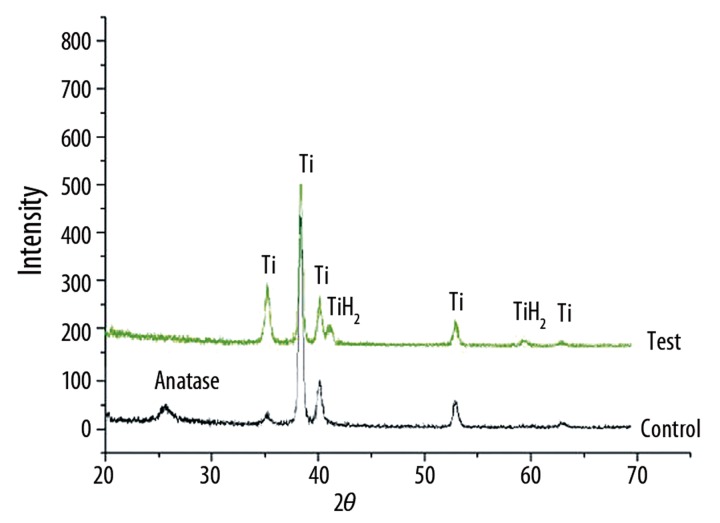
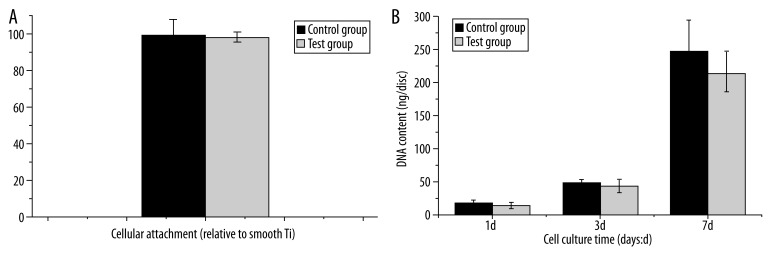
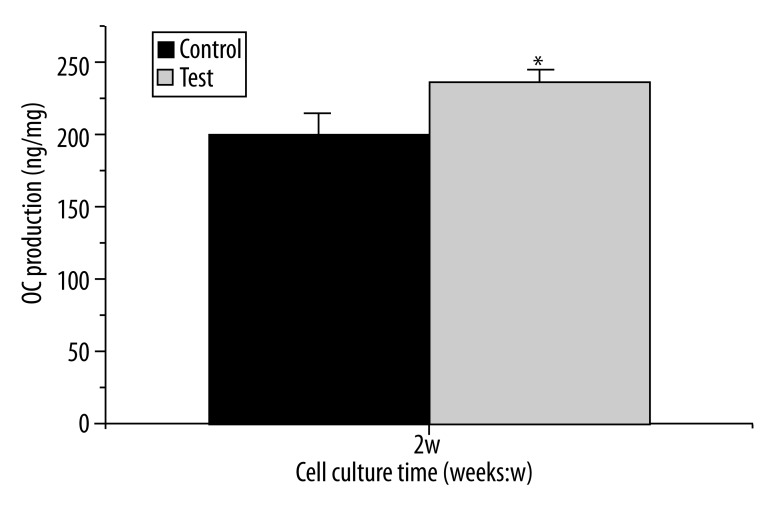
Scanning electron microscope analysis revealed that the titanium discs in the 2 groups shared the same surface topography, while x-ray diffraction examination showed an anatase layer in the control group and titanium hydride diffractions in the test group. The cell attachment of the test group was equivalent to that of the control group. Cell proliferation was slightly stimulated at all time points in the control group, but the alkaline phosphatase (ALP) activity and osteocalcin (OC) production increased significantly in the test group compared with those in the control group at every time point investigated (p<0.05 or p<0.01). Moreover, the osteoblastic differentiation-related genes AKP-2, osteopontin (OPN) and OC were greatly up-regulated in the test group (p<0.05 or p<0.01).
The results implied that surface chemistry played an important role in cell response, and H2O2/HCl etched titanium surface without subsequent heat treatment might improve osseointegration response.
种植体的表面化学性质对骨整合起着重要作用。热处理可能会改变表面化学性质,从而产生不同的生物学反应。本研究旨在探讨 H2O2/HCl 处理钛种植体的热处理在细胞黏附、增殖和成骨细胞分化中的作用。
材料/方法:喷砂酸蚀和 H2O2/HCl 热处理的圆盘作为对照组,喷砂酸蚀和 H2O2/HCl 处理的圆盘作为实验组。对两组的圆盘进行表面特性分析。将 MC3T3-E1 细胞接种到这两组的圆盘上,分别培养 3 小时到 14 天,然后评估细胞黏附、细胞增殖和细胞分化。
扫描电子显微镜分析显示,两组钛盘具有相同的表面形貌,而 X 射线衍射分析显示对照组有锐钛矿层,实验组有钛氢化物衍射。实验组的细胞黏附与对照组相当。对照组各时间点的细胞增殖均略有刺激,但实验组在所有研究时间点的碱性磷酸酶(ALP)活性和骨钙素(OC)产量均显著高于对照组(p<0.05 或 p<0.01)。此外,实验组的成骨细胞分化相关基因 AKP-2、骨桥蛋白(OPN)和 OC 也显著上调(p<0.05 或 p<0.01)。
结果表明表面化学性质对细胞反应起着重要作用,未经后续热处理的 H2O2/HCl 刻蚀钛表面可能会改善骨整合反应。