Kale Satish M, Patil Surendra B, Khare Nishant, Math Mahantesh, Jain Arvind, Jaiswal Sumeet
Department of Plastic Surgery, Government Medical College, Nagpur, Maharashtra, India.
Indian J Plast Surg. 2012 Jan;45(1):22-8. doi: 10.4103/0970-0358.96572.
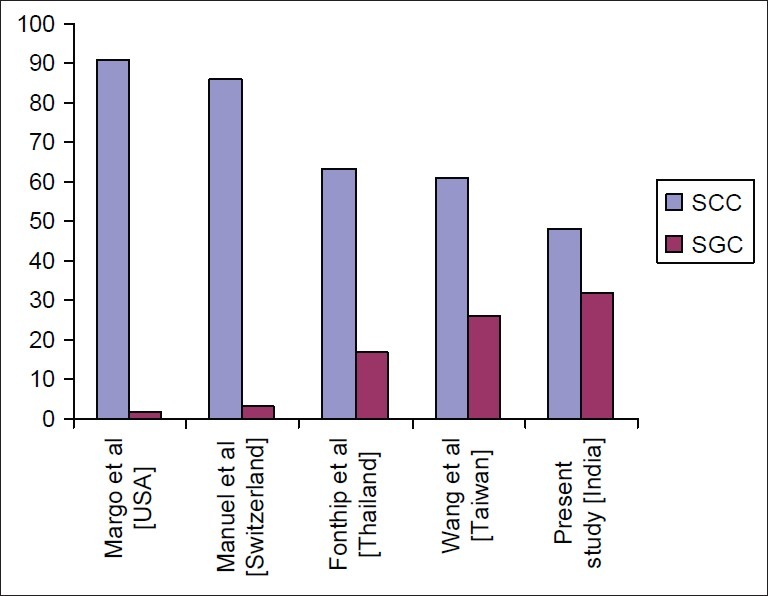
Resection of eyelid malignancies leads to complex reconstructive problems due to the functional and aesthetic importance of an eyelid. Hence, a large number of such cases are referred to plastic surgery facilities. Eyelid malignancies are of varied histological types and the western and Asian data have considerable variations in case distribution and presentation. This study is an attempt to characterise these tumours in the Indian population.
The present study is a retrospective analysis of 85 consecutive cases of eyelid malignancies that reported to a tertiary health care facility in central India over a 15-year period starting from January 1996 up to December 2009. The cases were analysed for their age of presentation, sex distribution, tumour location, delay in seeking treatment, recurrence rate and variations with respect to the pathological subtype.
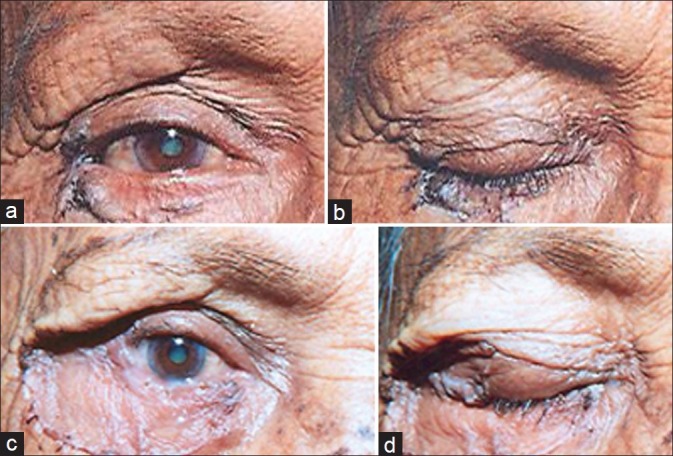
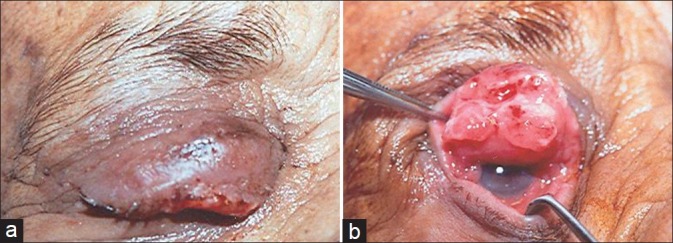
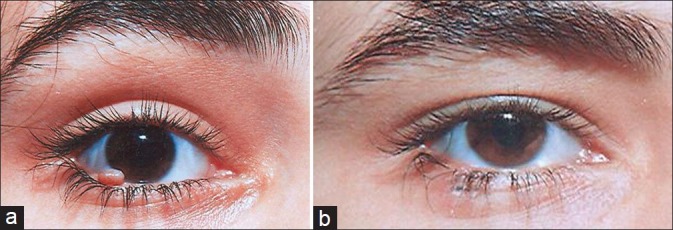
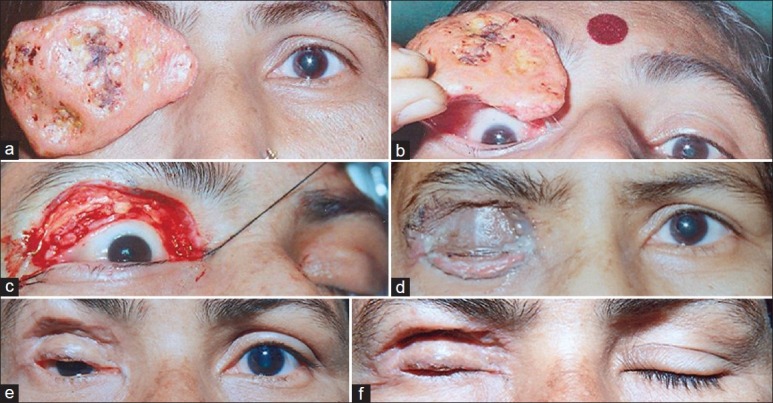
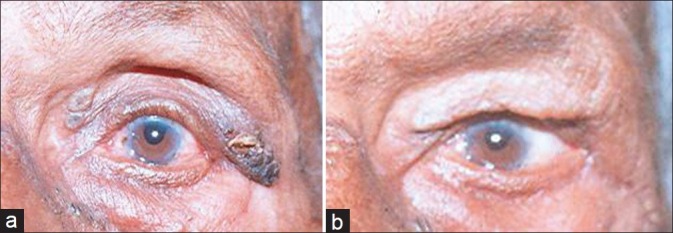
Mean age of presentation for all the malignancies was 59 years. The median age of presentation was 65 years for basal call carcinoma (BCC), 58 years for sebaceous gland carcinoma (SGC), 55 years for squamous cell carcinoma (SCC) and 45 years for malignant melanoma. There was slight female preponderance as 56.28% of the patients were females. The most common location of the tumour was lower lid (58.2%) for all the malignancies. BCC was the most common malignancy (48.2%) followed by SGC (31.2%) and SCC (13.7%). Mean duration of symptoms was 9 months (range 3-21 months). The most common presenting complaint was mass with ulceration across all histological subtypes. Other associated complaints included itching, discharge from eye, pain and ptosis. The mean size of tumour at diagnosis was 2.34 ± 0.4 cm for BCC, 2.19 ± 0.6 cm for SGC and 1.99 ± 0.7 cm for SCC. The mean rate of growth of BCC was 1.39 cm/year. The corresponding values for SGC and SCC were 3.63 and 4.89 cm/year, respectively. The rate of follow-up was 89% at 3 months, 71% at 6 months, 62% at 1 year and 31% at 5 years. Recurrence rate was 1.9% for BCC and 12.7% for SGC. Surgical methods used included wedge excision and primary closure, excision and skin grafting, and tarso-conjunctival flap.
We recommend that the surgeons treating eyelid malignancies in India should have a high index of suspicion for SGC. A wider margin of 10 mm is recommended for SGC excision as opposed to 5 mm for BCC.
由于眼睑在功能和美学方面的重要性,眼睑恶性肿瘤切除会导致复杂的重建问题。因此,大量此类病例会转诊至整形外科机构。眼睑恶性肿瘤有多种组织学类型,西方和亚洲的数据在病例分布和表现上有相当大的差异。本研究旨在描述印度人群中这些肿瘤的特征。
本研究是对1996年1月至2009年12月期间在印度中部一家三级医疗保健机构报告的85例连续眼睑恶性肿瘤病例进行的回顾性分析。分析了这些病例的发病年龄、性别分布、肿瘤位置、就诊延迟、复发率以及病理亚型的差异。
所有恶性肿瘤的平均发病年龄为59岁。基底细胞癌(BCC)的中位发病年龄为65岁,皮脂腺癌(SGC)为58岁,鳞状细胞癌(SCC)为55岁,恶性黑色素瘤为45岁。女性略占优势,56.28%的患者为女性。所有恶性肿瘤最常见的肿瘤位置是下睑(58.2%)。BCC是最常见的恶性肿瘤(48.2%),其次是SGC(31.2%)和SCC(13.7%)。症状的平均持续时间为9个月(范围3 - 21个月)。所有组织学亚型最常见的主诉是伴有溃疡的肿块。其他相关主诉包括瘙痒、眼部分泌物、疼痛和上睑下垂。BCC诊断时肿瘤的平均大小为2.34 ± 0.4 cm,SGC为2.19 ± 0.6 cm,SCC为1.99 ± 0.7 cm。BCC的平均生长速度为1.39 cm/年。SGC和SCC的相应值分别为3.63 cm/年和4.89 cm/年。3个月时的随访率为89%,6个月时为71%,1年时为62%,5年时为31%。BCC的复发率为1.9%,SGC为12.7%。使用的手术方法包括楔形切除及一期缝合、切除及植皮,以及睑板结膜瓣。
我们建议,在印度治疗眼睑恶性肿瘤的外科医生对SGC应保持高度怀疑。建议SGC切除的切缘宽度为10 mm,而BCC为5 mm。