Huang Yi-Na, Zhao Dong-Dong, Gao Bo, Zhong Kai, Zhu Rui-Xue, Zhang Yan, Xie Wang-Jun, Jia Li-Rong, Gao Hong
Department of Public Health, Hua Xi Medicinal Center of Sichuan University, Chengdu 610041, China.
Sichuan Academy of Medical Science & Sichuan Provincial People's Hospital, Chengdu 610072, China.
Int J Mol Sci. 2012;13(5):6320-6333. doi: 10.3390/ijms13056320. Epub 2012 May 22.
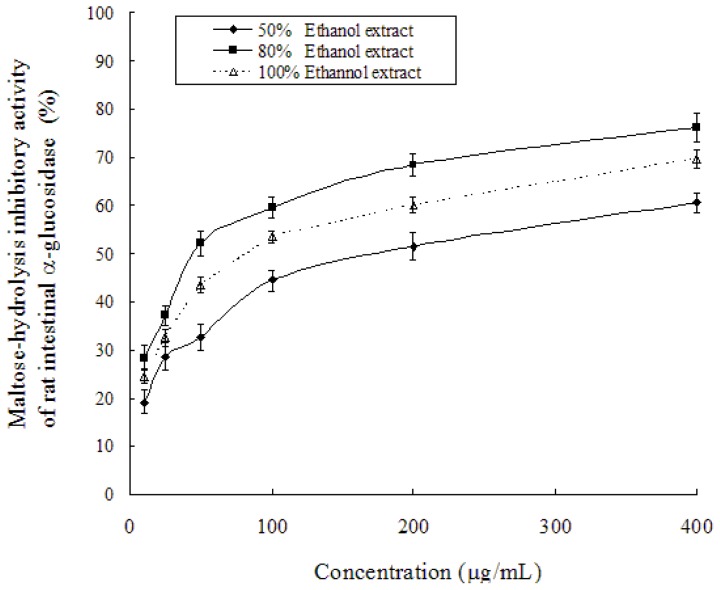
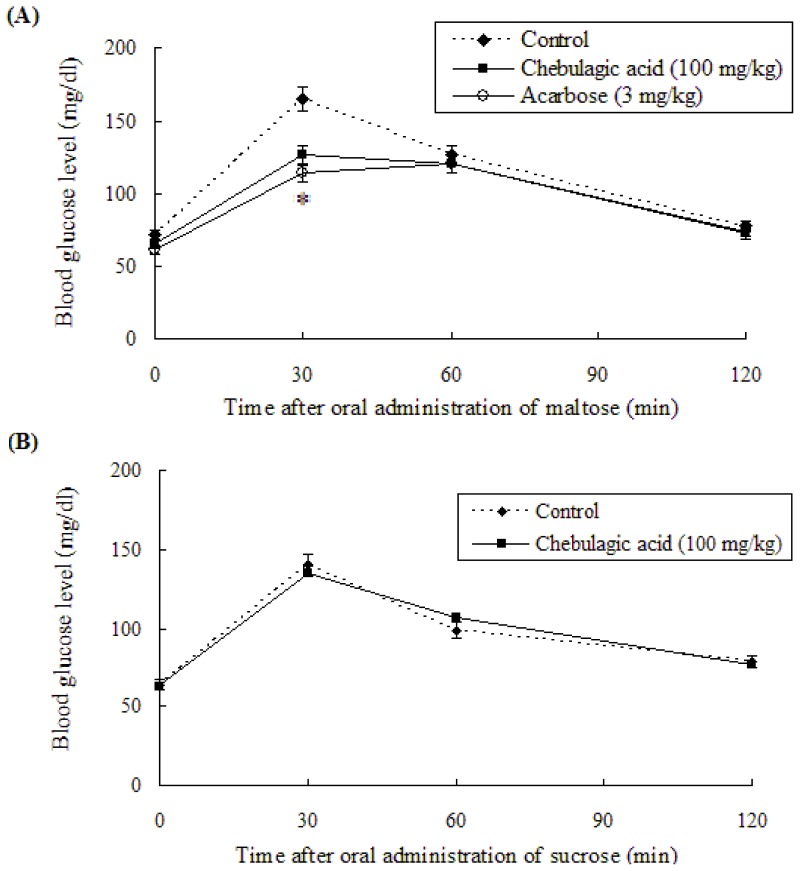
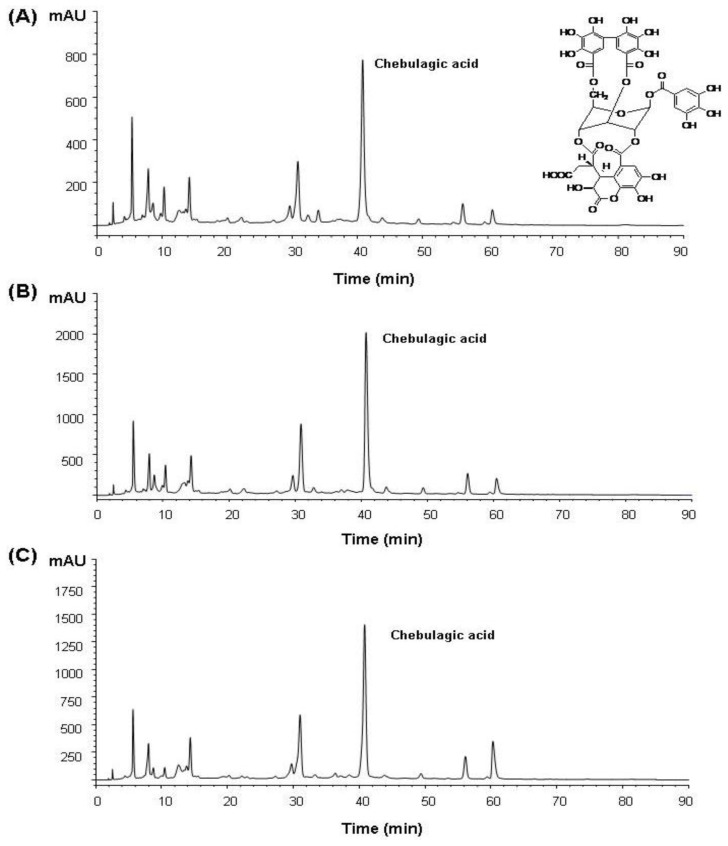
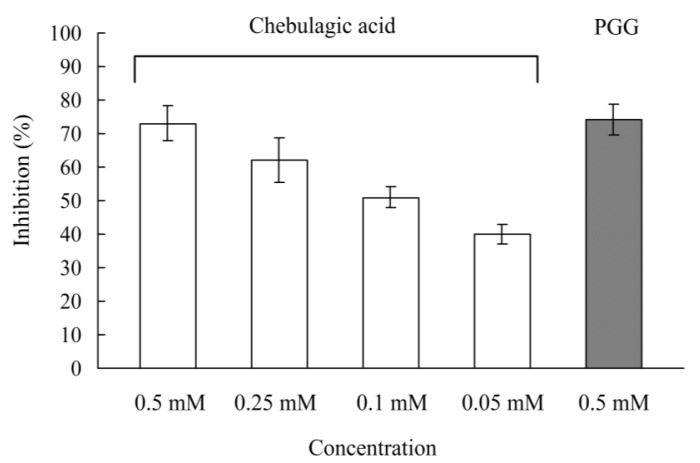
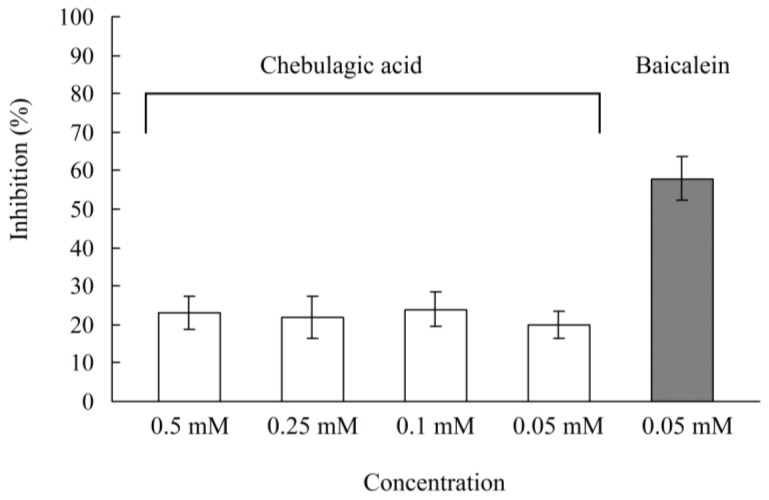
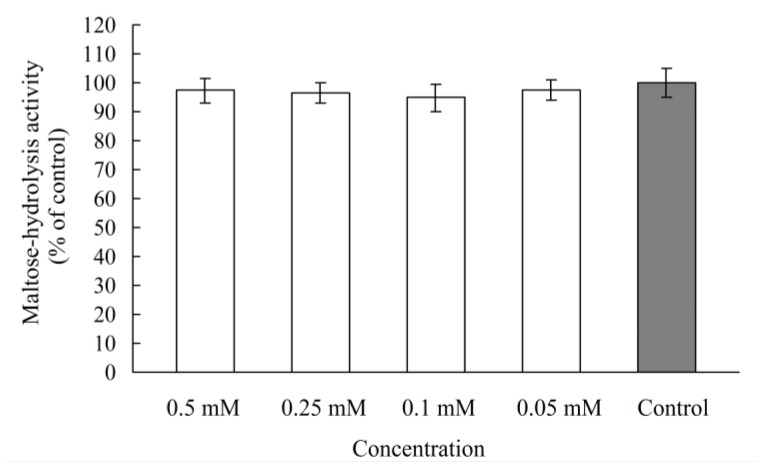
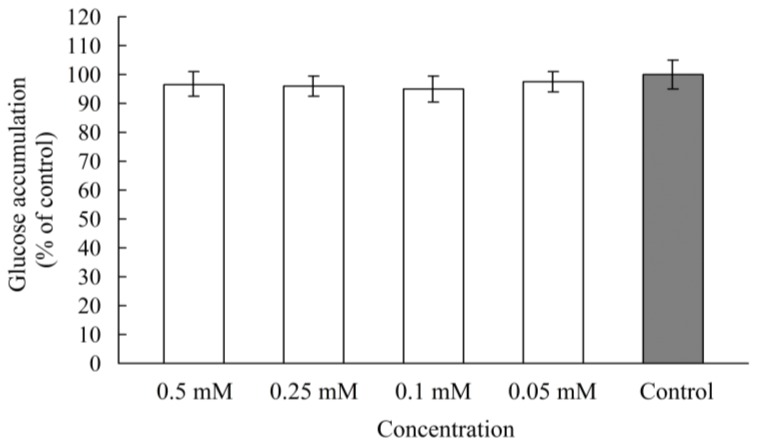
In the present study, we firstly compared rat intestinal α-glucosidase inhibitory activity by different ethanol-aqueous extractions from the dried fruits of Terminalia chebula Retz. The enzymatic assay showed that the 80% ethanol extract was more potent against maltase activity than both 50% and 100% ethanol extracts. By HPLC analysis, it was determined that the 80% ethanol extract had a higher content of chebulagic acid than each of 50% or 100% ethanol extract. Next, we investigated how efficiently chebulagic acid could inhibit sugar digestion by determining the glucose level on the apical side of the Caco-2 cell monolayer. The result showed that the maltose-hydrolysis activity was down-regulated by chebulagic acid, which proved to be a reversible inhibitor of maltase in Caco-2 cells. On the other hand, chebulagic acid showed a weak inhibition of sucrose-hydrolysis activity. Meanwhile, chebulagic acid did not have an obvious influence on intestinal glucose uptake and was not effective on glucose transporters. Further animal studies revealed that the oral administration of chebulagic acid (100 mg/kg body weight) significantly reduced postprandial blood glucose levels by 11.1% in maltose-loaded Sprague-Dawley (SD) rats compared with the control group, whereas the oral administration of chebulagic acid did not show a suppressive effect on postprandial hyperglycemia in sucrose- or glucose-loaded SD-rats. The results presented here suggest that chebulagic acid from T. chebula can be used to control blood glucose and manage type 2 diabetes, although clinical trials are needed.
在本研究中,我们首先比较了诃子干燥果实不同乙醇 - 水提取物对大鼠肠道α - 葡萄糖苷酶的抑制活性。酶活性测定表明,80%乙醇提取物对麦芽糖酶活性的抑制作用比50%和100%乙醇提取物更强。通过高效液相色谱分析确定,80%乙醇提取物中诃子鞣酸的含量高于50%或100%乙醇提取物。接下来,我们通过测定Caco - 2细胞单层顶端侧的葡萄糖水平,研究诃子鞣酸抑制糖消化的效率。结果表明,诃子鞣酸下调了麦芽糖水解活性,这证明它是Caco - 2细胞中麦芽糖酶的可逆抑制剂。另一方面,诃子鞣酸对蔗糖水解活性的抑制作用较弱。同时,诃子鞣酸对肠道葡萄糖摄取没有明显影响,对葡萄糖转运蛋白也没有作用。进一步的动物研究表明,与对照组相比,给麦芽糖负荷的Sprague - Dawley(SD)大鼠口服诃子鞣酸(100 mg/kg体重)可使餐后血糖水平显著降低11.1%,而给蔗糖或葡萄糖负荷的SD大鼠口服诃子鞣酸对餐后高血糖没有抑制作用。尽管还需要进行临床试验,但此处呈现的结果表明诃子中的诃子鞣酸可用于控制血糖和管理2型糖尿病。