Kim Sun-Ho, Jo Sung-Hoon, Kwon Young-In, Hwang Jae-Kwan
Department of Biomaterials Science and Technology, Yonsei University, Seoul 120-749, Korea; E-Mail:
Int J Mol Sci. 2011;12(6):3757-69. doi: 10.3390/ijms12063757. Epub 2011 Jun 8.
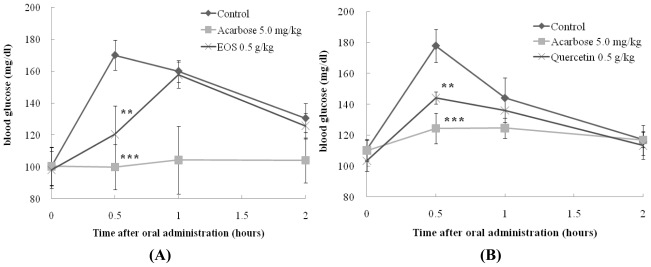
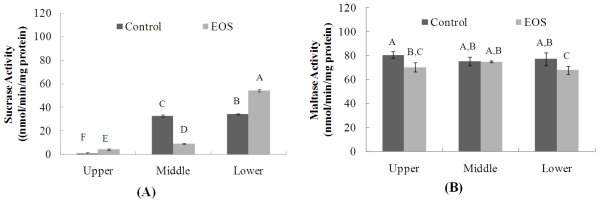
Diets high in calories and sweetened foods with disaccharides frequently lead to exaggerated postprandial spikes in blood glucose. This state induces immediate oxidant stress and free radicals which trigger oxidative stress-linked diabetic complications. One of the therapeutic approaches for decreasing postprandial hyperglycemia is to retard absorption of glucose by the inhibition of carbohydrate hydrolyzing enzymes, α-amylase and α-glucosidases, in the digestive organs. Therefore, the inhibitory activity of Korean onion (Allium cepa L.) extract against rat intestinal α-glucosidases, such as sucrase, maltase, and porcine pancreatic α-amylase were investigated in vitro and in vivo. The content of quercetin in ethyl alcohol extract of onion skin (EOS) was 6.04 g/100 g dried weight of onion skin. The in vitro half-maximal inhibitory concentrations (IC(50)) of EOS and quercetin, a major phenolic in onion, on rat intestinal sucrase were 0.40 and 0.11 mg/mL, respectively. The postprandial blood glucose lowering effects of EOS and quercetin were compared to a known type 2 diabetes drug (Acarbose), a strong α-glucosidase inhibitor in the Sprague-Dawley (SD) rat model. In rats fed on sucrose, EOS significantly reduced the blood glucose spike after sucrose loading. The area under the blood glucose-time curve (AUC(last)) in EOS-treated SD rats (0.5 g-EOS/kg) was significantly lower than in untreated SD rats (259.6 ± 5.1 vs. 283.1 ± 19.2 h·mg/dL). The AUC(last) in quercetin-treated SD rats (0.5 g-quercetin/kg) was similar to in EOS-treated group (256.1 ± 3.2 vs. 259.6 ± 5.1 h·mg/dL). Results from this study indicates that although quercetin does have blood glucose lowering potential via α-glucosidase inhibition, there are other bioactive compounds present in onion skin. Furthermore, the effects of two weeks administration of EOS in a high carbohydrate-dietary mixture (Pico 5053) on sucrase and maltase activities in intestine were evaluated in SD rat model. Compared to the upper and middle parts of intestine, the activities of sucrase in the lower parts of intestine remained significantly higher after two weeks of EOS treatment. These results indicate that EOS may improve exaggerated postprandial spikes in blood glucose and glucose homeostasis since it inhibits intestinal sucrase and thus delays carbohydrate absorption, although clinical trials are needed.
高热量且富含双糖的甜味食物的饮食常常导致餐后血糖过度飙升。这种状态会引发即时氧化应激和自由基,进而触发与氧化应激相关的糖尿病并发症。降低餐后高血糖的一种治疗方法是通过抑制消化器官中的碳水化合物水解酶α-淀粉酶和α-葡萄糖苷酶来延缓葡萄糖的吸收。因此,对韩国洋葱(葱属植物)提取物对大鼠肠道α-葡萄糖苷酶(如蔗糖酶、麦芽糖酶)以及猪胰α-淀粉酶的抑制活性进行了体外和体内研究。洋葱皮乙醇提取物(EOS)中槲皮素的含量为每100克干重洋葱皮6.04克。EOS和洋葱中的主要酚类物质槲皮素对大鼠肠道蔗糖酶的体外半数最大抑制浓度(IC50)分别为0.40和0.11毫克/毫升。在斯普拉格-道利(SD)大鼠模型中,将EOS和槲皮素的餐后降血糖作用与已知的2型糖尿病药物(阿卡波糖)(一种强效α-葡萄糖苷酶抑制剂)进行了比较。在喂食蔗糖的大鼠中,EOS显著降低了蔗糖负荷后的血糖峰值。EOS处理的SD大鼠(0.5克EOS/千克)的血糖-时间曲线下面积(AUC(last))显著低于未处理的SD大鼠(259.6±5.1对283.1±19.2小时·毫克/分升)。槲皮素处理的SD大鼠(0.5克槲皮素/千克)的AUC(last)与EOS处理组相似(256.1±3.2对259.6±5.1小时·毫克/分升)。这项研究的结果表明,尽管槲皮素确实具有通过抑制α-葡萄糖苷酶来降低血糖的潜力,但洋葱皮中还存在其他生物活性化合物。此外,在SD大鼠模型中评估了在高碳水化合物饮食混合物(Pico 5053)中连续两周给予EOS对肠道蔗糖酶和麦芽糖酶活性的影响。与肠道上部和中部相比,EOS处理两周后,肠道下部的蔗糖酶活性仍显著更高。这些结果表明,EOS可能改善餐后血糖过度飙升和葡萄糖稳态,因为它抑制肠道蔗糖酶,从而延迟碳水化合物吸收,不过还需要进行临床试验。