Nakajima Hideto, Unoda Ki-Ichi, Ito Takumi, Kitaoka Haruko, Kimura Fumiharu, Hanafusa Toshiaki
Department of Internal Medicine, Seikeikai Hospital, Sakai 590-0024, Japan.
Open Neurol J. 2012;6:51-7. doi: 10.2174/1874205X01206010051. Epub 2012 May 31.
Oxidative stress/free radical generation after ischemic stroke contributes to neuronal cell injury. We evaluated the utility of an oxidative stress marker, urinary 8-hydroxy-2-deoxyguanosine (8-OHdG), to demonstrate an association between the changes of 8-OHdG and outcomes after acute ischemic stroke.
We enrolled 44 patients (26 males and 18 females) who visited our hospital due to acute ischemic stroke. Urine was collected on admission and on Days 7, and 8-OHdG was measured by ELISA. The relationships between 8-OHdG levels, stroke subtypes, and clinical outcomes based on the NIHSS and modified Rankin Scale (mRS) upon discharge was evaluated.
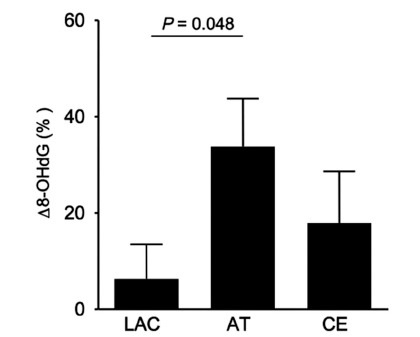
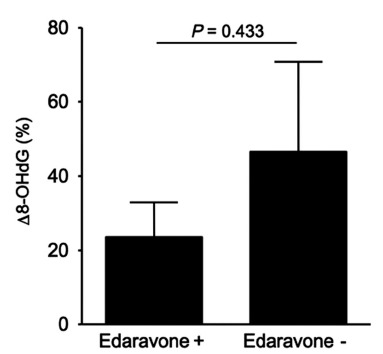
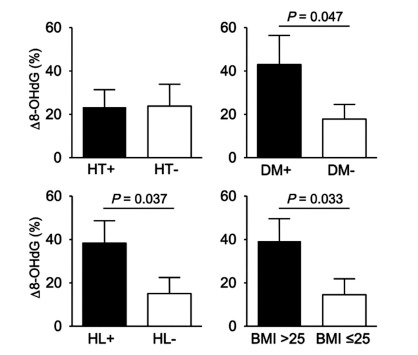
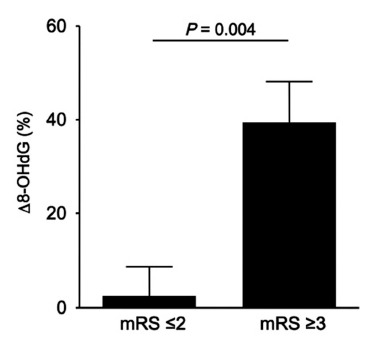
In the overall cohort, the mean urinary level of 8-OHdG on Day 7 was increased than that on Day 0. The 8-OHdG levels on Day 0 were not different between patients with poor and good outcomes. However, an increasing rate from Day 0 to 7 (Δ 8-OHdG) in stroke patients with a poor outcome(mRS ≥3) was significantly higher than those with a good outcome (mRS ≤2) (2.54 vs 39.44, p = 0.004).
The biochemical changes related to 8-OHdG and oxidative stress may be considered a marker of ischemic brain injury and clinical outcome of ischemic stroke.
缺血性卒中后氧化应激/自由基生成会导致神经元细胞损伤。我们评估了一种氧化应激标志物——尿8-羟基-2-脱氧鸟苷(8-OHdG),以证明8-OHdG变化与急性缺血性卒中后预后之间的关联。
我们纳入了44例因急性缺血性卒中前来我院就诊的患者(26例男性和18例女性)。在入院时、第7天收集尿液,并通过酶联免疫吸附测定法检测8-OHdG。评估了8-OHdG水平、卒中亚型以及出院时基于美国国立卫生研究院卒中量表(NIHSS)和改良Rankin量表(mRS)的临床预后之间的关系。
在整个队列中,第7天尿8-OHdG的平均水平高于第0天。预后不良和良好的患者在第0天的8-OHdG水平没有差异。然而,预后不良(mRS≥3)的卒中患者从第0天到第7天的升高率(Δ8-OHdG)显著高于预后良好(mRS≤2)的患者(2.54对39.44,p = 0.004)。
与8-OHdG和氧化应激相关的生化变化可能被视为缺血性脑损伤和缺血性卒中临床预后的标志物。