Stress Physiology and Molecular Biology Laboratory, School of Life Sciences, Jawaharlal Nehru University, New Delhi, India.
BMC Plant Biol. 2012 Jul 10;12:107. doi: 10.1186/1471-2229-12-107.
Metallothioneins (MT) are low molecular weight, cysteine rich metal binding proteins, found across genera and species, but their function(s) in abiotic stress tolerance are not well documented.
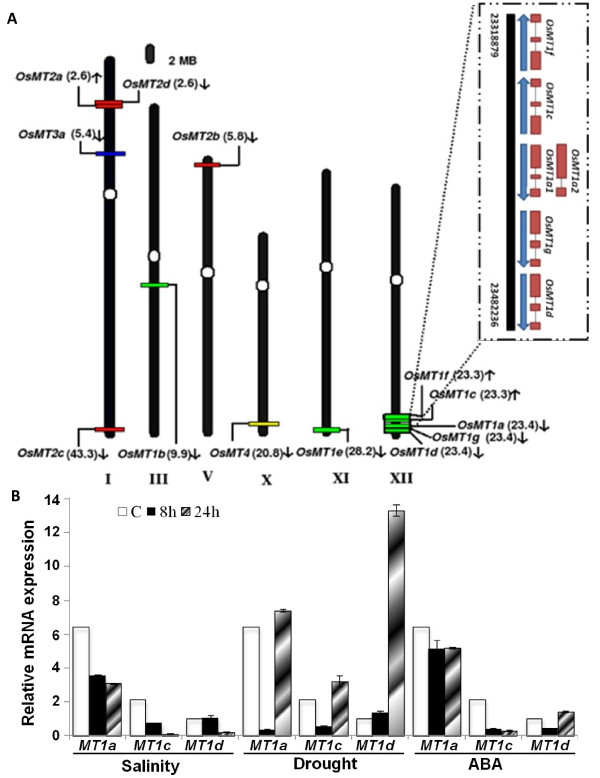
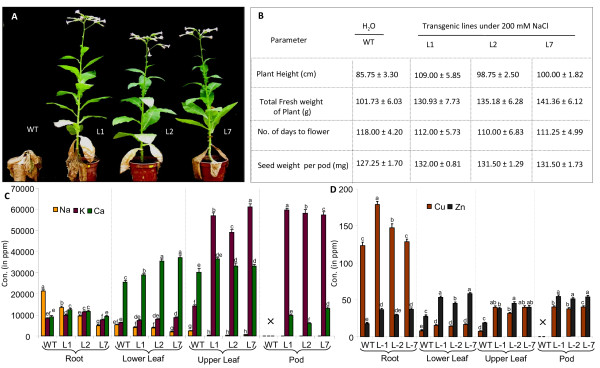
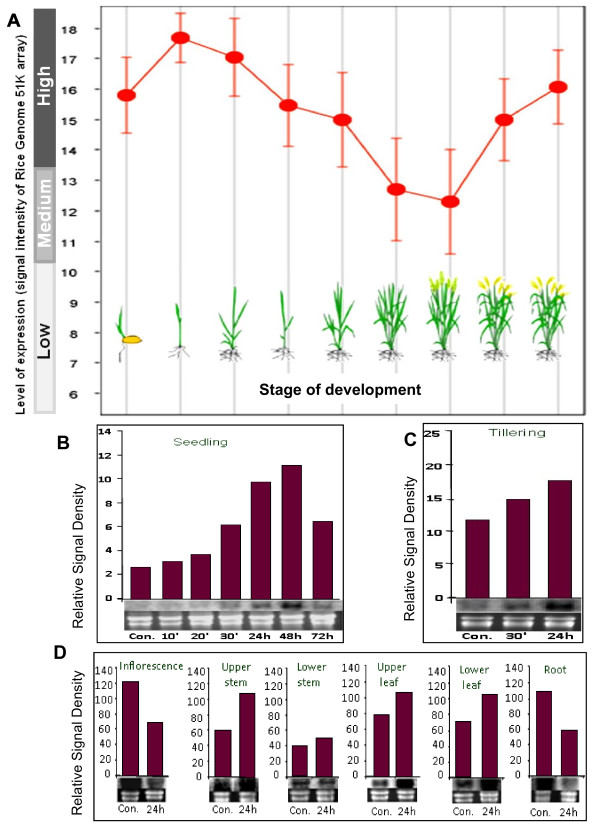
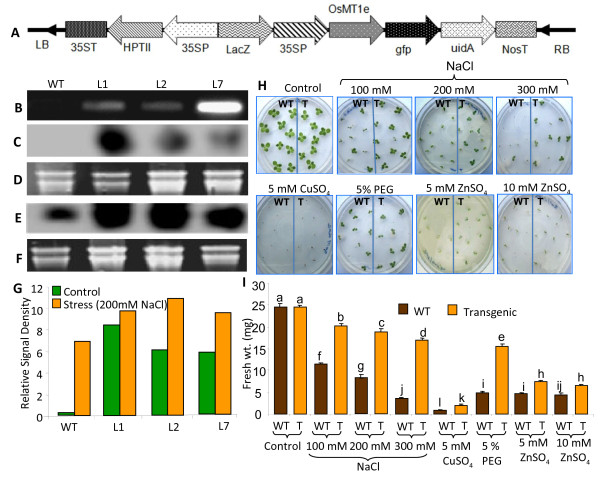
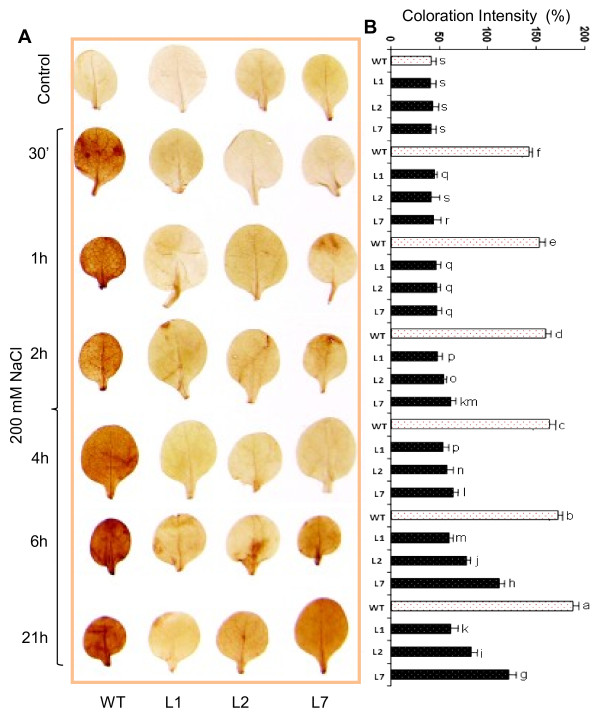
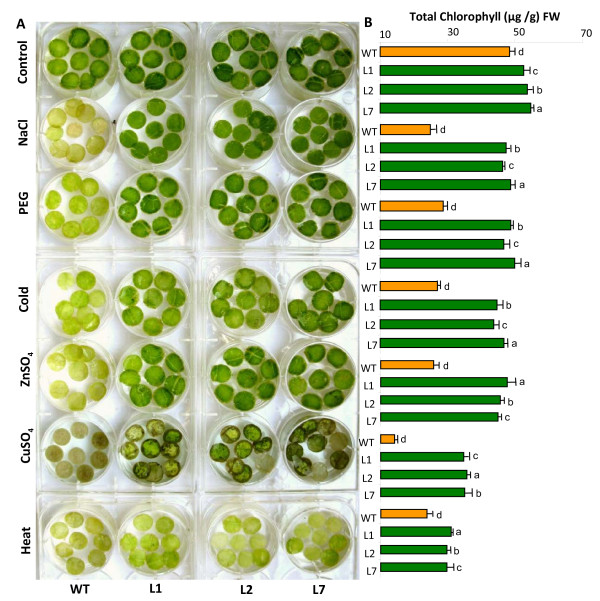
We have characterized a rice MT gene, OsMT1e-P, isolated from a subtractive library generated from a stressed salinity tolerant rice genotype, Pokkali. Bioinformatics analysis of the rice genome sequence revealed that this gene belongs to a multigenic family, which consists of 13 genes with 15 protein products. OsMT1e-P is located on chromosome XI, away from the majority of other type I genes that are clustered on chromosome XII. Various members of this MT gene cluster showed a tight co-regulation pattern under several abiotic stresses. Sequence analysis revealed the presence of conserved cysteine residues in OsMT1e-P protein. Salinity stress was found to regulate the transcript abundance of OsMT1e-P in a developmental and organ specific manner. Using transgenic approach, we found a positive correlation between ectopic expression of OsMT1e-P and stress tolerance. Our experiments further suggest ROS scavenging to be the possible mechanism for multiple stress tolerance conferred by OsMT1e-P.
We present an overview of MTs, describing their gene structure, genome localization and expression patterns under salinity and development in rice. We have found that ectopic expression of OsMT1e-P enhances tolerance towards multiple abiotic stresses in transgenic tobacco and the resultant plants could survive and set viable seeds under saline conditions. Taken together, the experiments presented here have indicated that ectopic expression of OsMT1e-P protects against oxidative stress primarily through efficient scavenging of reactive oxygen species.
金属硫蛋白(MT)是一种低分子量、富含半胱氨酸的金属结合蛋白,存在于各个属和物种中,但它们在非生物胁迫耐受中的功能尚未得到很好的证明。
我们从耐盐胁迫的水稻基因型 Pokkali 的消减文库中分离出一个水稻 MT 基因 OsMT1e-P,对其进行了特征描述。对水稻基因组序列的生物信息学分析表明,该基因属于一个多基因家族,由 13 个基因组成,有 15 种蛋白质产物。OsMT1e-P 位于第 XI 号染色体上,远离大多数聚集在第 XII 号染色体上的 I 型基因。该 MT 基因簇的各种成员在多种非生物胁迫下表现出紧密的协同调控模式。序列分析表明,OsMT1e-P 蛋白中存在保守的半胱氨酸残基。研究发现,盐胁迫以发育和器官特异性的方式调节 OsMT1e-P 的转录丰度。通过转基因方法,我们发现 OsMT1e-P 的异位表达与胁迫耐受性呈正相关。我们的实验进一步表明,ROS 清除可能是 OsMT1e-P 赋予多种胁迫耐受性的机制。
我们介绍了 MT 的概述,描述了它们在水稻中的基因结构、基因组定位和盐胁迫及发育过程中的表达模式。我们发现 OsMT1e-P 的异位表达增强了转基因烟草对多种非生物胁迫的耐受性,并且这些植物在盐胁迫条件下能够存活并产生有活力的种子。总的来说,这里提出的实验表明,OsMT1e-P 的异位表达主要通过有效清除活性氧来保护植物免受氧化应激。