CardioDx, Inc., Palo Alto, California, United States of America.
PLoS One. 2012;7(7):e40068. doi: 10.1371/journal.pone.0040068. Epub 2012 Jul 3.
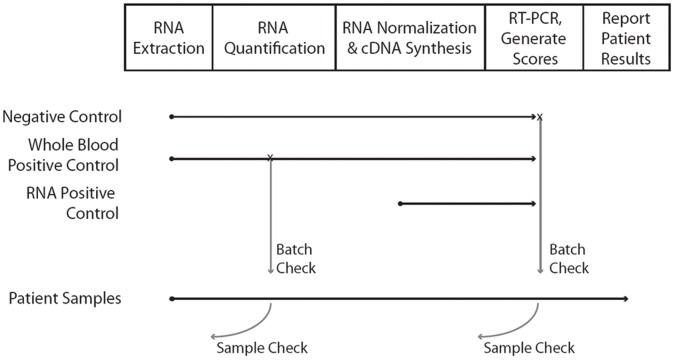
Corus CAD is a clinically validated test based on age, sex, and expression levels of 23 genes in whole blood that provides a score (1-40 points) proportional to the likelihood of obstructive coronary disease. Clinical laboratory process variability was examined using whole blood controls across a 24 month period: Intra-batch variability was assessed using sample replicates; inter-batch variability examined as a function of laboratory personnel, equipment, and reagent lots.
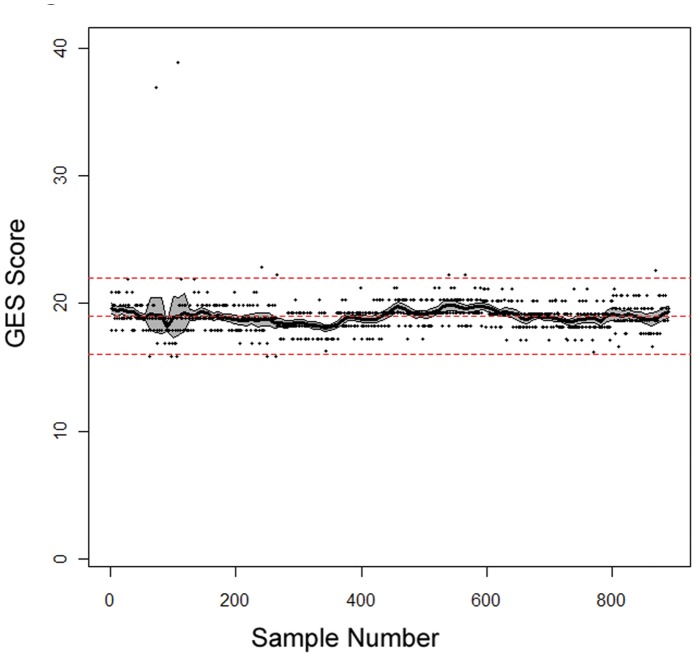
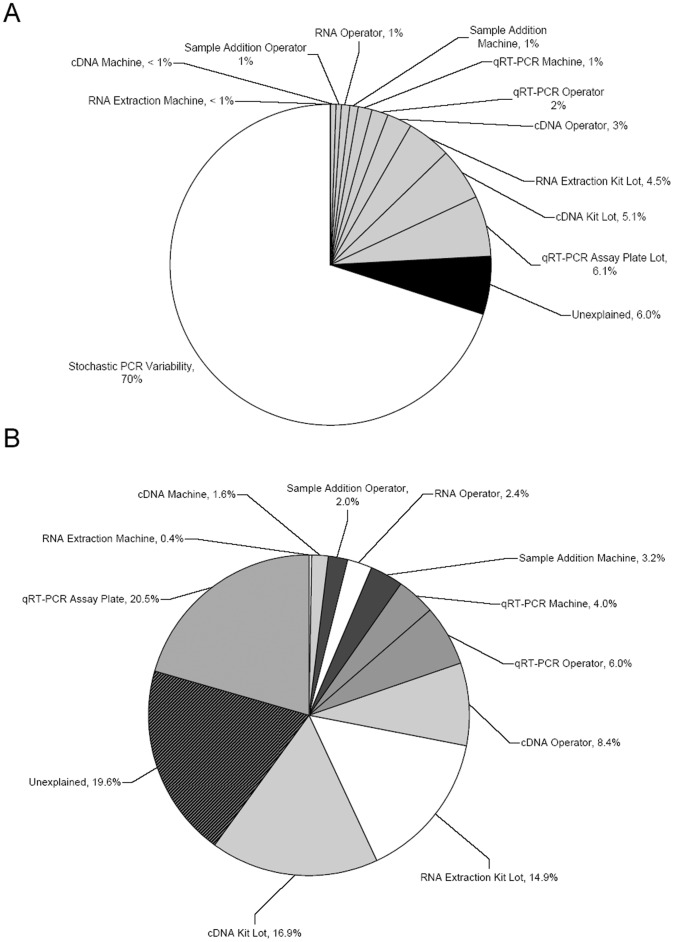
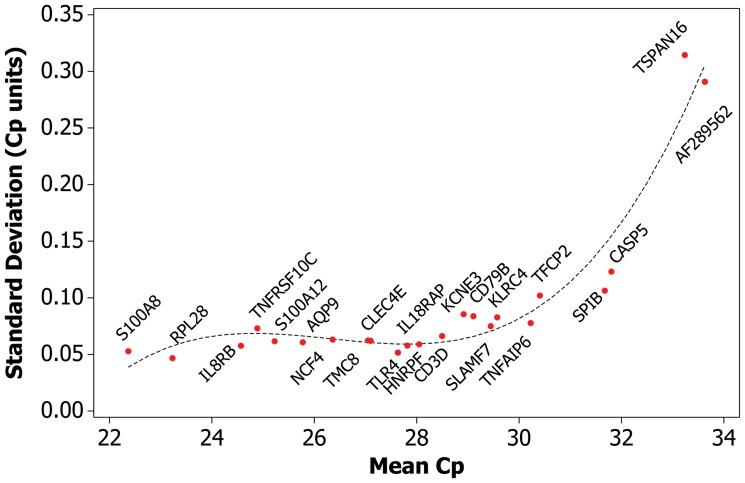
METHODS/RESULTS: To assess intra-batch variability, five batches of 132 whole blood controls were processed; inter-batch variability was estimated using 895 whole blood control samples. ANOVA was used to examine inter-batch variability at 4 process steps: RNA extraction, cDNA synthesis, cDNA addition to assay plates, and qRT-PCR. Operator, machine, and reagent lots were assessed as variables for all stages if possible, for a total of 11 variables. Intra- and inter-batch variations were estimated to be 0.092 and 0.059 Cp units respectively (SD); total laboratory variation was estimated to be 0.11 Cp units (SD). In a regression model including all 11 laboratory variables, assay plate lot and cDNA kit lot contributed the most to variability (p = 0.045; 0.009 respectively). Overall, reagent lots for RNA extraction, cDNA synthesis, and qRT-PCR contributed the most to inter-batch variance (52.3%), followed by operators and machines (18.9% and 9.2% respectively), leaving 19.6% of the variance unexplained.
Intra-batch variability inherent to the PCR process contributed the most to the overall variability in the study while reagent lot showed the largest contribution to inter-batch variability.
Corus CAD 是一种基于年龄、性别和全血中 23 个基因表达水平的临床验证测试,提供与阻塞性冠状动脉疾病可能性成正比的分数(1-40 分)。通过全血对照在 24 个月的时间内检查临床实验室过程变异性:使用样本重复评估批内变异性;作为实验室人员、设备和试剂批次的函数检查批间变异性。
方法/结果:为了评估批内变异性,处理了五批 132 个全血对照品;使用 895 个全血对照品估计批间变异性。方差分析用于检查 RNA 提取、cDNA 合成、cDNA 添加到检测板和 qRT-PCR 等 4 个过程步骤的批间变异性。如果可能,操作员、机器和试剂批次被评估为所有阶段的变量,总共有 11 个变量。批内和批间变异分别估计为 0.092 和 0.059Cp 单位(SD);总实验室变异性估计为 0.11Cp 单位(SD)。在包括所有 11 个实验室变量的回归模型中,检测板批次和 cDNA 试剂盒批次对变异性的贡献最大(p=0.045;分别为 0.009)。总体而言,RNA 提取、cDNA 合成和 qRT-PCR 的试剂批次对批间方差的贡献最大(52.3%),其次是操作人员和机器(分别为 18.9%和 9.2%),其余 19.6%的方差无法解释。
PCR 过程中的批内变异性是研究中总变异性的主要贡献者,而试剂批次对批间变异性的贡献最大。